
 E-Paper



Scientists write musical notation on coronavirus protein
At the heart of the experiment is the spike protein -- the component on the surface of the virus that gives it a crown-like appearance and the name coronavirus (‘corona’ meaning ‘crown’ in Latin).

 Prefer HTon Google


In times of social isolation, many are turning to the soothing notes of classical music, but for scientists, it might provide a new method to study the virus that has brought the world to its knees.
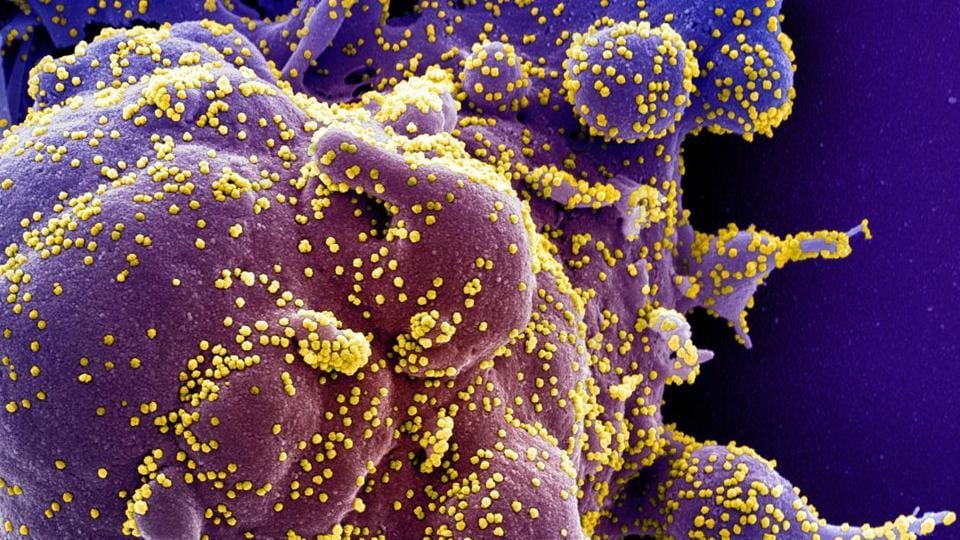
Researchers at the Massachusetts Institute of Technology (MIT) have translated the spike protein of Sars-Cov-2, the coronavirus that causes Covid-19, into music using a technique called sonification.
The audio, posted on SoundCloud in March, is meant to help researchers better understand the structure of the virus, which first emerged in China late last year and has infected more than a million people across the world in just over three months.
Over time, this audio format could help create drugs or find an antibody that can counter the virus’s effect, scientists say.
Click here for the complete coverage of the Covid-19 pandemic
At the heart of the experiment is the spike protein -- the component on the surface of the virus that gives it a crown-like appearance and the name coronavirus (‘corona’ meaning ‘crown’ in Latin). This protein is what binds the pathogen to host cells, often predominantly in the lungs. Its structure and relationship with the cell it infects is instrumental in understanding how the virus attacks the human body.
But why choose music over conventional methods of mapping the virus?
“Our brains are great at processing sound. We would need a high-powered microscope to see the equivalent detail in an image, and we could never see it all at once. Sound is such an elegant way to access the information stored in a protein,” Markus J Buehler, the MIT professor at the helm of the project, told the university’s on-campus publication, MIT News, on Thursday.
“We might also use a compositional approach to design drugs to attack the virus. We could search for a new protein that matches the melody and rhythm of an antibody capable of binding to the spike protein, interfering with its ability to infect,” Buehler added.
There is also a larger metaphor that shows why scientists are keen to translate the virus’s structure into sound. The “pleasing, relaxing sounds” convey the “deceitful nature of the virus, which hijacks the body” to exploit it, wrote Buehler in his description for the nearly two-hour long audio, ‘Viral counterpoint of the coronavirus spike protein’, that he posted on the music sharing platform, SoundCloud.
The process of sonification involves assigning amino acids that make up a protein to corresponding sounds by transposing their natural frequencies on a note in a specific musical scale. Other aspects of the protein are represented by altering the volume and duration of the notes, giving it rhythm.
Artificial intelligence algorithms are used to convert these musical scores into a composition that displays the “innate relationship” between amino acid and the protein structure, according to a methodology released on American Chemical Society (ACS) Publications by researchers Chi-Hua Yu, Zhao Qin, Francisco J Martin-Martinez and Markus J Buehler, who suggested the broad guidelines of the process of sonification.
This isn’t the first time microbiological data has been perceived through sound. A 2017 study converted information stored in a DNA sequence into music, which, it argued, could help the scientific community analyse its complex structure and any mutation that might occur.
Last month, a UK-based artist released a track titled ‘Sound of Covid-19’, albeit with no such scientific utility: the artist said the notes were a conversion of the genome sequence of Sars-Cov-2.


