
 E-Paper



SC seeks Centre, Tamil Nadu govt’s reply on Rajiv case convicts’ plea
The two convicts – S Nalini and RP Ravichandran – cited the order passed by the top court on May 18 in the case of one of the co-accused, AG Perarivalan, who was allowed to walk free


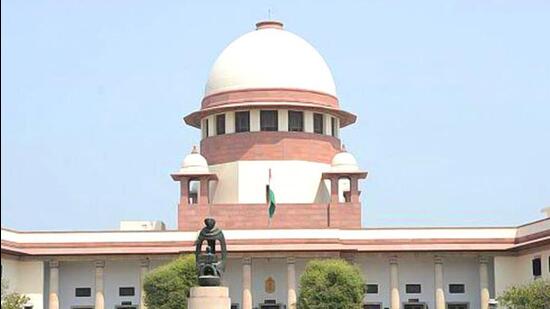
The Supreme Court on Monday sought the responses from the Centre and the Tamil Nadu government within three weeks on separate pleas filed by two life convicts in the former Prime Minister Rajiv Gandhi’s assassination case demanding their release pending the decision of the Tamil Nadu governor on their mercy pleas.
The two convicts – S Nalini and RP Ravichandran – cited the order passed by the top court on May 18 in the case of one of the co-accused, AG Perarivalan, who was allowed to walk free as his mercy plea remained pending with the Tamil Nadu governor since December 2015. The two convicts had spent over 30 years in custody and were similarly situated to Perarivalan as the governor had not acted on their mercy pleas despite the state government giving its nod on September 9, 2018.
Issuing notice on their pleas, a bench of justices BR Gavai and BV Nagarathna agreed to consider the matter next on October 14. The court allowed the petitioners to serve a copy of their plea to the Centre and the Tamil Nadu government and sought the assistance of additional solicitor general KM Nataraj, who had appeared on behalf of Centre in the earlier proceedings filed by Perarivalan.
The two convicts had approached the top court against a June 17 order passed by the Madras high court, refusing to grant them release.
Senior advocate Sanjay Hegde, appearing for the two convicts, informed the court that the two convicts were currently on parole granted by the state government last year when Covid-19 pandemic had peaked and prisons had to be decongested. He requested the court to grant bail, citing the Perarivalan’s case where the top court granted bail in March before ordering his release two months later by exercising its extraordinary power under Article 142.
The bench said, “It won’t be appropriate to pass orders ex-parte without hearing the other side.”
The two convicts stated that they were languishing in jail for over three decades. They were arrested in June 1991, within a month after the former Prime Minister was assassinated by a human bomb at Sriperumpudur on May 21, 1991. Nalini claimed she was granted parole on several occasions since 2016 and no adverse report was recorded against her as she complied with the parole conditions. During her period in jail, she even attained educational qualifications.
Ravichandran claimed in his petition that during the period from 2001 till June 2022, he remained out on various occasions for a period of 270 days. In his case, too, no adverse entry was recorded till date, his lawyers submitted.
The two convicts relied heavily on the judgment releasing Perarivalan as the top court held that the advice of the state government of September 2018 will be binding on the governor in the exercise of his pardon powers under Article 161. The state government’s nod was in favour of releasing all the seven convicts. After Perarivalan’s release, the other convicts serving life sentence include Nalini’s husband Murugan, alias Sriharan, Suthenthiraraja, alias Santhan, S Jayakumar, and Robert Payas, besides Nalini and Ravichandran.
The top court judgment of May held: “In the instant case, the Governor ought not to have sent the recommendation made by the State Cabinet to the President of India.” Besides the delay on part of the governor, what went in favour of Perarivalan was his satisfactory conduct in jail as well as during parole, the chronic ailments borne out from his medical records, his educational qualifications acquired during incarceration, and his prolonged incarceration.
“In the absence of any other disqualification and in the exceptional facts and circumstances of this case, in exercise of our power under Article 142 of the Constitution, we direct that the appellant is deemed to have served the sentence….The appellant, who is on bail, is set at liberty forthwith,” the top court had ruled.
The two convicts sought similar treatment by the apex court. Their petition was dismissed by the high court, which said, “The directions sought by the petitioner cannot be given by the court as it otherwise does not have power similar to what the Apex Court has under Article 142 of the Constitution of India.”
The high court further noted that the recommendation of the council of ministers of the Tamil Nadu government was sent by the governor to the President of India in January last year. This resolution was pending approval by the President.
This fact was common even to Perarivalan as the governor sent his plea for remission to the President on January 25, 2021. The Centre tried to justify this action by saying that the case was investigated by a central agency – the Central Bureau of investigation (CBI) – and the charge against Perarivalan pertained to an offence of murder and conspiracy, which falls under a central law – the Indian Penal Code.
Both Nalini and Ravichandran were convicted by a Special TADA (Terrorist and Disruptive Activities (Prevention) Act) court for being part of the conspiracy to assassinate Rajiv Gandhi and 15 other persons, including nine police personnel. In May 1999, the Supreme Court upheld their death sentence. But in 2014, they benefitted from a judgment of the Supreme Court, which commuted their death sentence to life imprisonment due to the inordinate delay in deciding their mercy petitions.


