E-Paper



Second batch of Indian military personnel to leave this month: Maldivian President Muizzu
Maldivian President Mohamed Muizzu said the withdrawal process is underway in line with agreements reached by the two sides

 Prefer HTon Google


NEW DELHI: The second batch of Indian military personnel responsible for operating an aviation platform in the Maldives will be withdrawn within April and the process of drawing down all such personnel will be completed by May 10, Maldivian President Mohamed Muizzu has said.
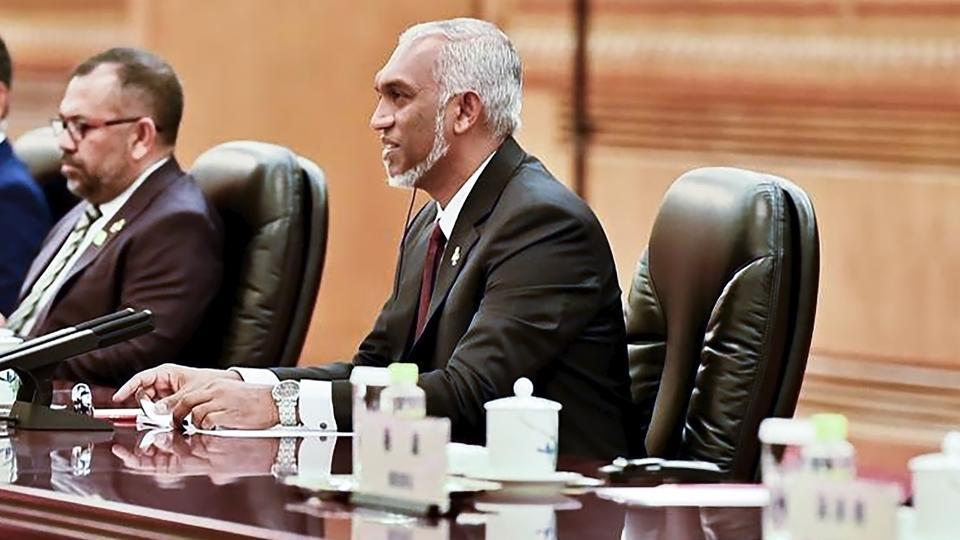
The remarks by the pro-China leader of the Indian Ocean archipelago at a public meeting on Tuesday came weeks after India replaced military personnel operating a helicopter with technical personnel early last month. He had earlier given an ultimatum for withdrawing some 80 Indian military personnel responsible for operating and maintaining two helicopters and an aircraft.
Muizzu said the withdrawal process is underway in line with agreements reached by the two sides, state-run Public Service Media reported. The withdrawal of foreign troops is “progressing as per the agreed timeline” and troops stationed with the second aviation platform will be withdrawn within the current month, while those responsible for the third platform will be withdrawn by May 10.
Reiterating his commitment to preserving Maldives’ independence, Muizzu said his government is “dedicated to fulfilling this promise”. The withdrawal of foreign troops from the Maldives is “being pursued in accordance with diplomatic norms and principles”, he contended.
In an apparent reference to relations with India, Muizzu said his government is committed to giving priority to the interests and vision of the Maldivian people in Parliament to ensure that “external agendas do not take precedence”. He also said the objective of strengthening defence and security relations with “friendly nations” is to safeguard the sovereignty and independence of the Maldivian people.
The Indian military personnel were stationed in the Maldives to operate two Advanced Light Helicopters and a Dornier aircraft provided by India that are mainly used for humanitarian assistance operations and medical evacuations.
Muizzu has sought to move the Maldives away from dependence on India in crucial sectors such as food security and defence following his victory in last year’s presidential election. Besides finalising arrangements with Sri Lanka for medical evacuation services, Muizzu’s government has signed an agreement with Turkiye for drones to be used for maritime surveillance, and another with China for supply of non-lethal military equipment and training.
He has also accused his predecessor Ibrahim Mohamed Solih of operating on the orders of a “foreign ambassador”. Though Muizzu stopped short of naming any country, his remarks were widely perceived as a reference to India.