
 E-Paper



Single higher edu body, nuclear energy among 10 bills on agenda in upcoming Parliament session
According to a bulletin issued by the Lok Sabha, 10 bills have been listed by the government in its legislative agenda for the upcoming winter session of Parliament, scheduled to be held from December 1 to 19

 Prefer HTon Google


A bill to allow private players in the nuclear energy sector and one to create a single body to regulate the higher education sector are among key legislations listed for introduction in winter session of Parliament, set to commence on December 1.
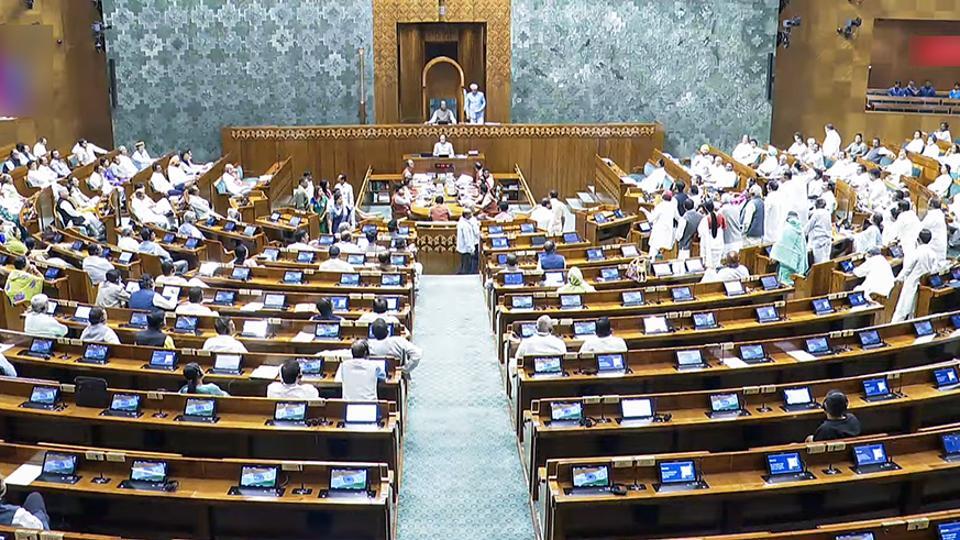
According to a bulletin issued by the Lok Sabha, 10 bills have been listed by the government in its legislative agenda for the upcoming winter session of Parliament, scheduled to be held from December 1 to 19.
The Atomic Energy Bill 2025 is set to allow private players in the tightly regulated sector where, so far, only reputed public sector companies could form joint ventures. NTPC has established NPUN, the NTPC Parnamu Urja Nigam, and plans to set up nuclear power plants across the country.
The bill comes months after the Union Budget 2025-26 outlined that “the government has set an ambitious target of 100 GW nuclear power capacity by 2047, positioning nuclear energy as a major pillar in India’s energy mix. This development aligns with the broader objectives of Viksit Bharat, ensuring energy reliability and reducing dependency on fossil fuels. To achieve this goal, strategic policy interventions and infrastructure investments are being undertaken, with an emphasis on indigenous nuclear technology and public-private collaborations,” a government press release had said in February this year.
The Higher Education Commission of India Bill, 2025 aims to set up a single regulator for higher education. It will subsume the University Grants Commission (UGC), the All India Council for Technical Education (AICTE) and the National Council for Teacher Education (NCTE), ending the current system where institutions running teacher education, professional and general courses must approach multiple regulators for approvals and compliance.
Medical and law education, regulated by National Medical Commission (NMC) and Bar Council of India (BCI) respectively, will not be brought under ambit of HECI, which is proposed to have three major roles -- regulation, accreditation and setting professional standards in higher education.
According to the bulletin, the bill aims “to enable and empower the universities and other higher educational institutions to achieve excellence in teaching-learning, research and innovation, through coordination and determination of standards in institutions for higher education or research and scientific and technical institutions”.
It also aims to constitute HECI in order “to facilitate the universities and other higher educational institutions to become independent self-governing institutions and to promote excellence through a robust and transparent system of accreditation and autonomy”.
A draft of the HECI Bill has been in the public domain since June 2018, and renewed efforts to make the HECI a reality were then initiated under Dharmendra Pradhan, who took over as Union education minister in July 2021.
The National Education Policy (2020) envisages the creation of HECI for “light but tight” regulation in higher education and says that “the regulatory system is in need of a complete overhaul in order to re-energise the higher education sector and enable it to thrive”.
In February 2025, the parliamentary standing committee on education, women, children, youth, and sports had raised concerns over proposed HECI as the principal regulator of higher education in India, warning that this would lead to excessive centralisation and inadequate representation of states.
The other new bills include The National Highways amendment bill to ensure faster land acquisition for highway projects. While land acquisition for roads and other public works come under the land and rehabilitation law, the new bill aims to give more relaxation for construction of highways.
The government will make further amendments to the companies Act, 2013 and LLP Act, 2008 to facilitate Ease of Doing Business, it will repeal 120 obsolete laws and a bill to create a Securities Markets Code Bill (SMC), 2025, which seeks to consolidate the provisions of the Securities and Exchange Board of India Act 1992, the Depositories Act 1996 and the Securities Contracts (Regulation) Act 1956 into a rationalised single Securities Markets Code.
The government is also planning to bring the 131st Constitution amendment bill to include the Union Territory of Chandigarh under the ambit of Article 240 of the Constitution, which empowers the President to make regulations for the UT and legislate directly.
The winter session will also see amendments to the insurance and arbitration laws and a bill to apply latest amendments of the GST law in Manipur.


