
 E-Paper



Special train from Kerala to Odisha transport stranded migrant workers
The Shramik Special trains are the central government’s initiative to move stranded migrant workers, students, pilgrims, tourists, and other people from different parts of the country amid the ongoing lockdown restrictions.

 Prefer HTon Google


Bhubaneswar: Around 1,200 migrant workers from Odisha, who are stranded in Kerala, boarded one of the half a dozen point-to-point Shramik Special trains, run by Indian Railways, on Friday evening, as the first batch of labourers will arrive in the state before the ongoing nationwide lockdown restrictions, which have been enforced to contain the spread of coronavirus disease (Covid-19) pandemic, end on May 3.
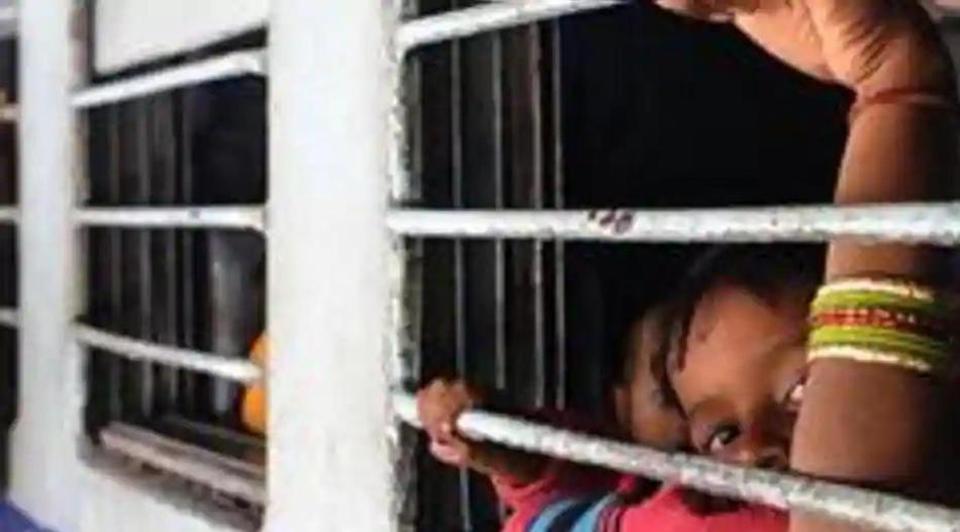
“The Shramik Special train carrying 1,200 migrant workers from Odisha has started from Aluva railway station in Kerala at 6 pm on Friday. The 24-bogey train would run non-stop for 1,836 kilometres,” said Asit Tripathy, chief secretary, Odisha. “Those who’re coming by this train have paid the base fare of Rs 430. It’s mandatory for each passenger to wear a mask. Social distancing norm and hygiene are being strictly enforced during the journey,” Tripathy added.
The Shramik Special trains are the central government’s initiative to move stranded migrant workers, students, pilgrims, tourists, and other people from different parts of the country amid the ongoing lockdown restrictions.
Over the last two days, 325 migrant workers from Gujarat’s Surat have arrived in Odisha’s Ganjam district on seven buses. Another 70 students, who were stranded in Rajasthan’s Kota, the country’s coaching hub for medical and engineering aspirants, have left for Odisha in a special bus, while 1,000 more are on their way back home.
The influx of people to the state comes amid Odisha reporting 149 Covid-19 positive cases, and half of them had a travel history to hotspots in neighbouring West Bengal. At present, there are 93 active Covid-19 cases in the state and one person has died so far.
On Friday, two new Covid-19 positive cases were reported from the state’s Bolangir district and both the infected persons had a travel history to Tamil Nadu, another hotspot.
The state government is apprehending another wave of Covid-19 positive cases, as it braces for the influx of six-lakh-odd migrant workers.
Earlier in April, Odisha faced a similar challenge after a section of the followers of the Islamic sect Tablighi Jamaat, who had gone to attend the international congregation held at Nizamuddin in New Delhi between March 13 and 15, returned home, leading to the first wave of Covid-19 positive cases in the state.
The Jamaat attendees have proved to be super-spreaders of SARS-CoV-2, which causes Covid-19, across the country.
The chief secretary said that adequate precautions were taken to prevent the spread of the infection, as the state prepares for the influx migrant workers. Each of the 1,200 people was screened prior to boarding the train and only those found asymptomatic were allowed to travel, he said.
Odisha government has also asked its counterparts to share the medical history of each and every person entering the state via 11 designed checkpoints.
State health department officials said that after the migrant workers from rural areas return home, they would have to undergo a compulsory 14-day quarantine in 7,000 makeshift medical facilities, which are equipped with 2.6 lakh beds. The state government would allow home quarantine for transgender, pregnant women, or those with physical and mental disabilities.
The migrant workers from urban areas would also be allowed to be home quarantined unless they themselves insist on staying in official quarantine facilities. The state has around 40,000 quarantine beds in urban areas.
“We’d also allowing paid quarantine facilities in designated hotels and lodges,” the chief secretary said.
“People staying at home or official quarantines would be stamped with indelible ink on their right hand mentioning their date of entry that will be used to calculate the quarantine period. Their swab samples will be tested and none of them would be allowed to go back to their respective homes during the quarantine period. Also, none of their family members will be allowed to meet them. Each person would get Rs 2,000 at the end of the quarantine period,” he added.


