
 E-Paper



Spectrum allocation to help eliminate train collisions due to human error: Rlys
The Union Cabinet last week allotted the spectrum to enable the country’s largest mass transport system to switch from its current 2G data network for better communications and operational safety


The five megahertz allocation of 4G spectrum to the railways will help eliminate train collisions due to human error through the Automatic Train Protection (ATP) System, the railway ministry said in a statement on Tuesday.
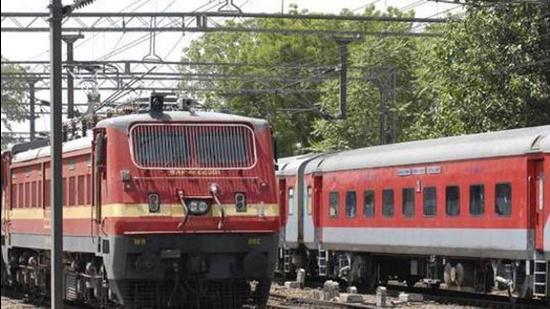
The Union Cabinet last week allotted the spectrum to enable the country’s largest mass transport system to switch from its current 2G data network for better communications and operational safety.
A switch to 4G is expected to enable real-time and faster operation of communication systems of the carrier. It will boost bandwidth and other technical parameters such as peak capacity.
“These systems prevent collisions due to any human error by Loco Pilot. In order to improve safety, a decision has now been taken to provide ATP systems on Indian Railways (IR) in a Mission Mode. So far IR was dependent on foreign technology for ATP systems. IR with Indian firms has now successfully developed indigenous cost-effective technology for ATP – called Train Collision Avoidance System (TCAS),” the statement said.
The statement said TCAS is being adopted under Prime Minister Narendra Modi’s Aatmanirbhar Bharat Abhiyan (Self-Reliant India).
The statement said TCAS has been approved for 37,300 km covering important routes in the first phase. “The roll-out of TCAS will eliminate train collision due to human error and enhance speed potential of IR thereby reducing travel time.”
The railways plans to invest around ₹55,000 crore for this modernisation of signalling and telecommunication.
It plans to use the spectrum allocation to provide long-term evolution (LTE) based mobile train radio communication for seamless communication between its running staff, the traffic controller, and maintenance personnel to enhance safety and security.
Railway Board member (infrastructure) Sanjeev Mittal said the project, which would considerably boost the safety of trains as well as movement across the network, will be completed in the next five years with an estimated investment of ₹25,000 crore. “The purpose of the LTE for Indian Railways is to provide secure and reliable voice, video and data communication services for operational, safety and security applications of the railways.”
The system will help in the deployment of a modern cab-based signalling system with automatic train protection. It is expected to increase safety and throughput in train operation and also help during foggy conditions.
The statement said LTE will be used for mission-critical voice communication with seamless connectivity in train operations between the driver, guard, station master, train traffic controller and maintenance staff. “It will also be used in monitoring limited video surveillance (live feed) through CCTV cameras in trains to enhance passenger security.”


