
 E-Paper



Staff shortage hits Anganwadi services: WCD report
Around the country, 38.2 million children below three years and older than six months avail of the anganwadi services in addition to 29.3 million children in the age group of three to six years.

 Prefer HTon Google


Anganwadi services, which cater to the early childhood needs of nearly 100 million children across the country, are confronting a severe staff crunch. Data with the union women and child development (WCD) ministry, accessed by HT, show widespread vacancies in Anganwadis across states, with a quarter of supervisory roles in as many as 18 states lying vacant.
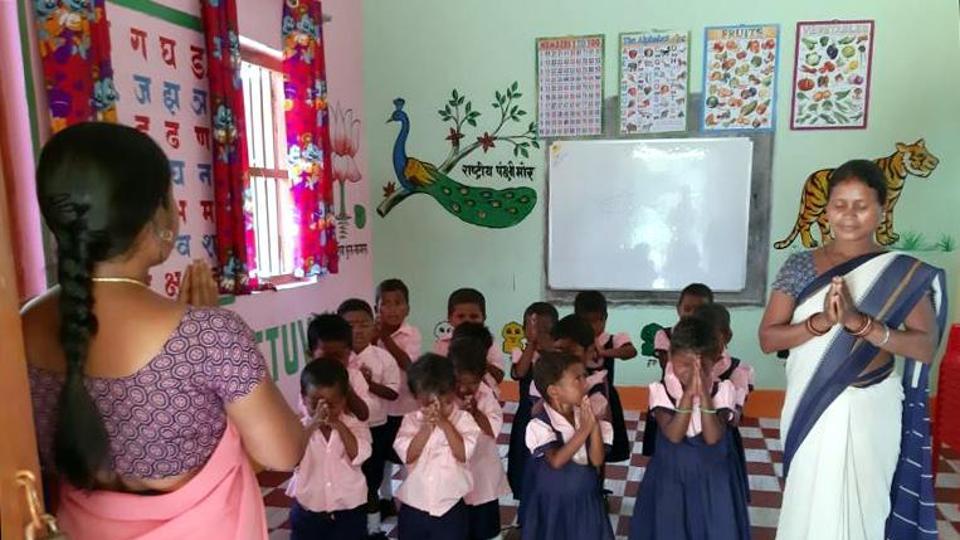
A state-wise assessment by the ministry shows that in some states, the proportion of vacancies is more than 80%; 11.45% of anganwadi centres are still functioning from kutcha .or mud-brick, buildings, and in at least five states, more than 15% of schools run by anganwadis don’t have a toilet
Findings of the WCD ministry were discussed with state representatives at a day-long meeting of several schemes in the capital on November 14.
Currently, while the Centre has sanctioned 1.4 million anganwadis, 1.377 million are operational. From these buildings, anganwadis workers try to meet the early childhood care, health and educational needs of three categories of children -- children between the ages of six months and three years, children between three and six years and children receiving preschool education. Apart from that, anganwadi centres also provide care to pregnant women and lactating mothers.
Around the country, 38.2 million children below three years and older than six months avail of the anganwadi services in addition to 29.3 million children in the age group of three to six years. Apart from that, 30.5 million children receive preschool education avail the services. And 16 million pregnant women and lactating mothers also avail of anganwadi services.
In the 2019-20 budget, a sum of Rs 19,927 crores was set aside for the services. Of this amount, WCD officials said, Rs 14,003 crore have already been released.
In 18 states and Union Territories, a quarter of the positions of Child Development Project Officers (CDPOs) remain vacant. These include Rajasthan (64%), Manipur (56%), Dadra and Nagar Haveli (50%), Daman and Diu (50%), Uttar Pradesh (49%), Maharashtra (48%), Karnataka (48%), Delhi (47%), Jharkhand (43%) and West Bengal (39%).
Structurally, anganwadi workers and helpers report to supervisors, who report to the CDPOs. CDPOs report to Central Monitoring Units, which sent a monthly report from their states to the WCD ministry.
Additionally, in over 12 states, the percentage of vacancies in the positions of supervisors was more than 25%. Among them are Puducherry (85%), West Bengal (68%), Bihar (58%), Tamil Nadu (55%), Daman and Diu (50%), Uttar Pradesh (48%), Tripura (42%), Punjab (37%) and Rajasthan (36%).
As for Anganwadi workers, in Bihar, Delhi, West Bengal and Uttar Pradesh, the vacancies stood at 14%, 14%, 10% and 10%. In the anganwadi system, Bihar had an 18% vacancy of anganwadi helpers, West Bengal of 16%, Uttar Pradesh of 13% and Tamil Nadu of 11%.
The data also show that several states have unoperational anganwadi centres. In Bihar, 9.5% of anganwadis are unoperational; in Jammu & Kashmir, the proportion of unoperational centes is 7.3%.
Around the country, 11.45% of anganwadi centres are functioning from mud-brick buildings, including all of the centres in Arunachal Pradesh, 95% of Nagaland’s and 86% of Manipur’s buildings. In Karnataka, 41% of anganwadi centres, in Assam, 37% and in Jharkhand, 34% do not have drinking water facilities.Fifty three percent of Assam’s, 51% of Arunachal Pradesh’s and 47% of Odisha’s anganwadis do not have toilet facilities.
In a similar assessment of the services in 2017, the WCD ministry stumbled upon over 10,000 vacancies and more than 34,000 unoperational centres, with 23,000 such in Bihar alone.


