E-Paper



Stage set for voting in Phase 1 of high-stakes Gujarat elections
Eighty-nine of Gujarat’s 182 seat assembly will go to the polls on Thursday, with the BJP hoping to consolidate its position in a region it faced some reverses five years ago, and safeguard its bastion from the Congress and the AAP, which is looking to make gains in its maiden outing.

 Prefer HTon Google


Eighty-nine of Gujarat’s 182 seat assembly will go to the polls on Thursday, with the Bharatiya Janata Party (BJP) hoping to consolidate its position in a region it faced some reverses five years ago, and safeguard its bastion from the Congress and the Aam Aadmi Party (AAP), which is looking to make gains in its maiden outing.
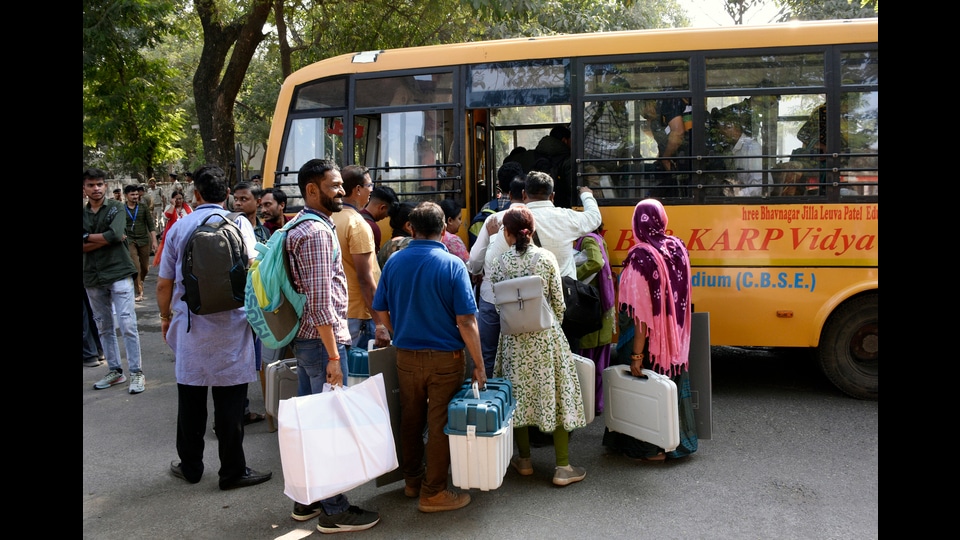
The second phase of the elections in 93 seats is scheduled for December 5, with results to be announced on December 8, along with those for Himachal Pradesh.
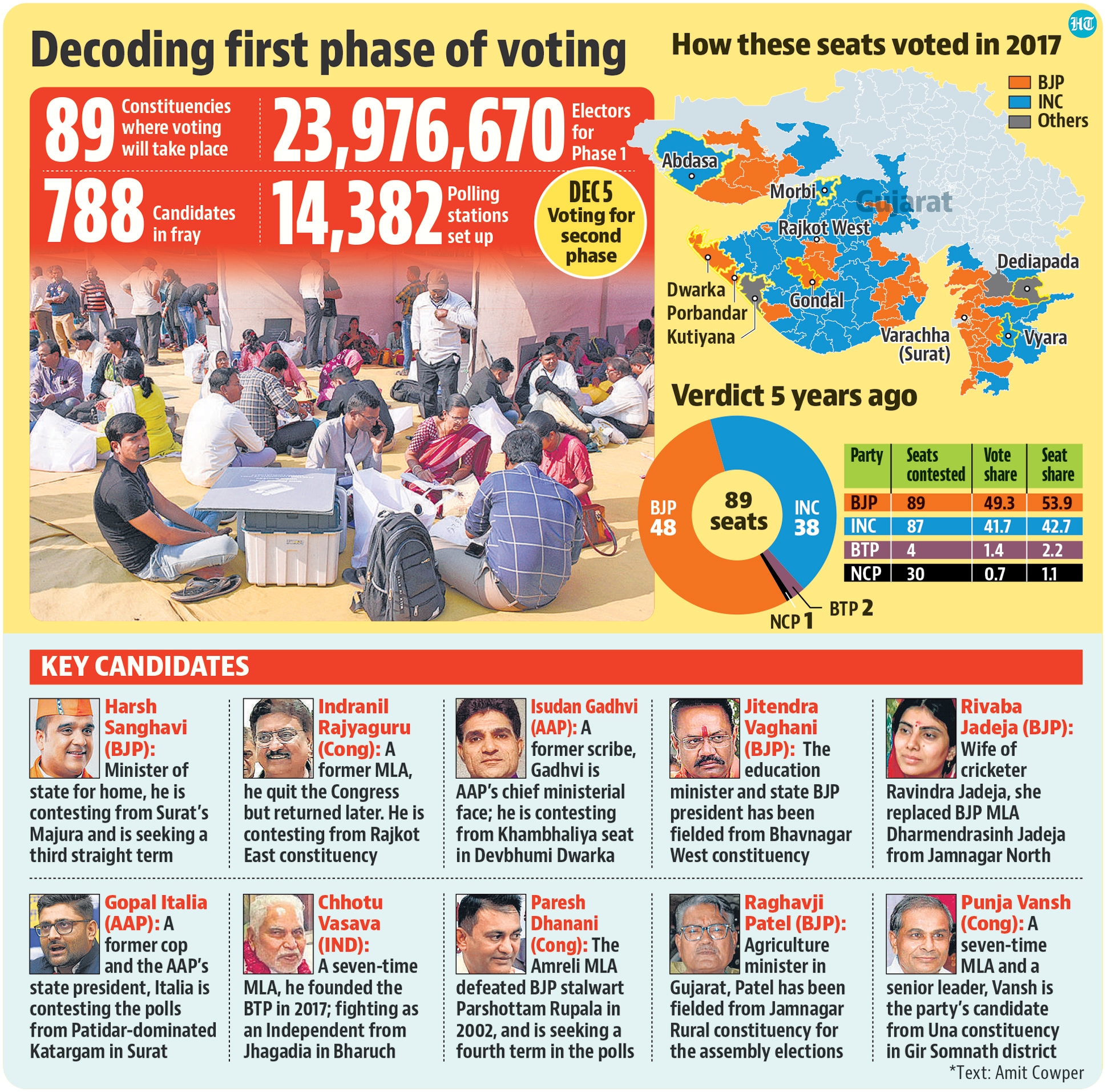
Gujarat chief election officer (CEO) P Bharti said 788 candidates were in the fray in the 89 seats across 19 districts of south Gujarat and parts of the Kutch and Saurashtra regions. Around 23.9 million of the total 43.5 million voters of the state will be eligible to exercise their franchise on Thursday.
In these 89 seats in 2017, the BJP won 48 with a voteshare of 49.3 %, and the Congress won 38 with 41.7% votes. This translated to a net pick-up of 16 seats by the Congress from 2012. Chhotubhai Vasava’s Bharatiya Tribal Party won two and the Nationalist Congress Party (NCP) one.
Also read: Arvind Kejriwal's handwritten note has 3 claims amid Gujarat poll heat. Watch
But this time, the BJP is buoyed by the absence of anger among farmers and small traders, and no movement for quotas among Patidars, a key vote bank in the state. Moreover, a number of leaders who fuelled the Congress’s best show in a generation in 2017 are now with the BJP.
Morbi constituency is among the crucial seats in this phase. The area is in focus in the wake of the bridge collapse that claimed 135 lives on October 30. The BJP has replaced its sitting MLA Brijesh Merja and fielded former MLA Kanti Amrutiya, whose photographs of swimming in the Machchu river during the rescue operations went viral.
In 2017, the BJP had suffered in Morbi and Amreli due to the Patidar agitation.
Of particular interest is the urban centre of Surat, a traditional BJP bastion where the party has swept the 12 seats in the city. This time, it is facing a spirited campaign from the AAP, which did well in local body polls last year and hopes to dent both the BJP and Congress vote banks
The BJP’s campaign was led by Prime Minister Narendra Modi, who addressed at least 25 rallies in Gujarat. Another 150 meetings were addressed by home minister Amit Shah, defence minister Rajnath Singh, BJP chief JP Nadda and Gujarat chief minister Bhupendra Patel.
“Modi is Gujarat’s honour and pride in the 21st century. And today, foul language is being used by the Congress for our prime minister,” Singh said in Ahmedabad, in reference to a controversial comment by Congress chief Mallikarjun Kharge earlier this week.
The Congress campaign was noticeably quieter, with Rahul Gandhi addressing two rallies. The party sought to cash in on local anti-incumbency by making 11 poll promises, including one million jobs, implementation of the old pension scheme and 300 units of free electricity. “A commission for the implementation of our manifesto will be formed and it will be turned into a government document when the Congress forms the government,” state incharge Ashok Gehlot said.
Also read: ‘Congress was soft on terror’: PM in Gujarat poll salvo
The AAP, whose entry in the Gujarat electoral fray made it the first triangular contest in the state since 1990, is hoping to make a splash. Delhi chief minister Arvind Kejriwal held at least 14 rallies for the first phase, and said that his party was campaigning not just to fight the elections, but also to win. The party – which is in power in Delhi and Punjab – has made a slew of promises such as providing 300 units of free electricity, implementing the old pension scheme, and improving education and health across the state.
AAP state unit chief Gopal Italia is fighting from Katargam and its chief ministerial face Isudan Gadhvi is contesting from Khambalia that will vote on Thursday.
On Wednesday, Punjab chief minister Bhagwant Mann brought “zero” electricity bills from his state that he said would be replicated if the AAP is voted to power. “The AAP promised Delhi it would give free electricity. At the time, opponents had said how will you do it, and we did. The same was true of Punjab. In Gujarat too we will give free electricity to people from March,” Mann said in Ahmedabad.