
 E-Paper



State’s post-facto consent to CBI is valid: Supreme Court
The HC had validated an investigation against two UP government officials after the accused had complained that the central probe agency started the investigation against them without obtaining consent of the state government


The Supreme Court (SC) has held that a state government’s post-facto (afterwards) consent would be valid for the Central Bureau of Investigation (CBI) to investigate corruption cases against government officials.
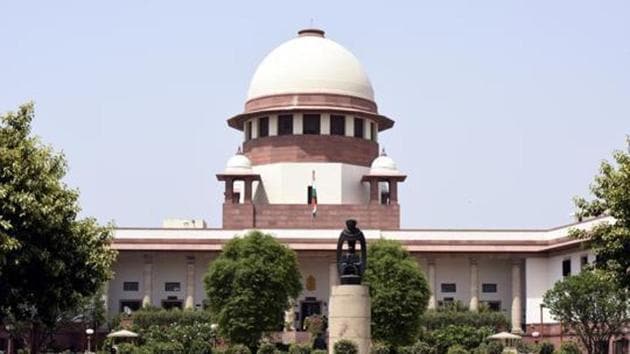
A two-judge SC bench, comprising Justices AM Khanwilkar and BR Gavai, who was dealing with a case on the matter from Uttar Pradesh (UP), upheld a verdict of the Allahabad high court (HC).
The HC had validated an investigation against two UP government officials after the accused had complained that the central probe agency started the investigation against them without obtaining consent of the state government under Section 5 and 6 of the Delhi Special Police Establishment (DSPE) Act, 1946.
The CBI had initiated proceedings against Ramji Singh, general manager (GM), and Yogendra Nath Pandey, assistant manager, of the District Industries Centre, Chandauli, after the duo had allegedly prepared false status reports to enable a company obtain subsidised coal from Northern Coalfields Limited, which is located in Singrauli in neighbouring Madhya Pradesh (MP).
Also Read: Delhi HC asks Centre to respond to plea seeking legal recognition of same-sex marriages
The CBI did not name the accused officials in the first information report (FIR), which was lodged on April 13, 2011.
Initially, the probe started after the then UP government had granted a general consent allowing the CBI’s jurisdiction within the state.
Later, the consent under Section 19 of Prevention of Corruption (PC) Act, 1988, was obtained on May 31, 2012.
The central probe agency found incriminating evidence against the two officials and they were charge sheeted in May 2012.
The sanction from the state under Section 6 of the DSPE Act, 1946, was obtained on September 7, 2018. The CBI contended that this post-facto consent was valid to prosecute the errant officials.
The UP government supported the CBI’s contention and argued in the HC that prior consent under Section 6 of DSPE Act, 1946, would not be mandatory.
The HC upheld the state government’s contention and gave a verdict in the latter’s favour on August 14, 2019, following which the guilty officials moved the apex court.
The SC bench endorsed the HC’s verdict.
It said: “The single judge found that the post-facto consent was sufficient for investigation by the CBI for the offences against the two public servants, whose names though did not find place in the FIR, but were found in charge sheet....we find no reason to interfere with the finding of the HC with regard to not obtaining prior consent of the state government under Section 6 of the DSPE Act, 1946.”


