E-Paper



State-run firms may not cut fuel prices anytime soon
International oil prices have fallen sharply over the past four weeks; this has resulted in reductions in the prices of commercial liquefied petroleum gas, aviation turbine fuel (ATF) and taxes on windfall gains

 Prefer HTon Google


State-run oil companies may not immediately lift the six-month long freeze on daily pricing of auto fuel rates despite nearly 30% plunge in average international prices of petrol and diesel from the June peak as they work towards recovering their past revenue losses , four people said.
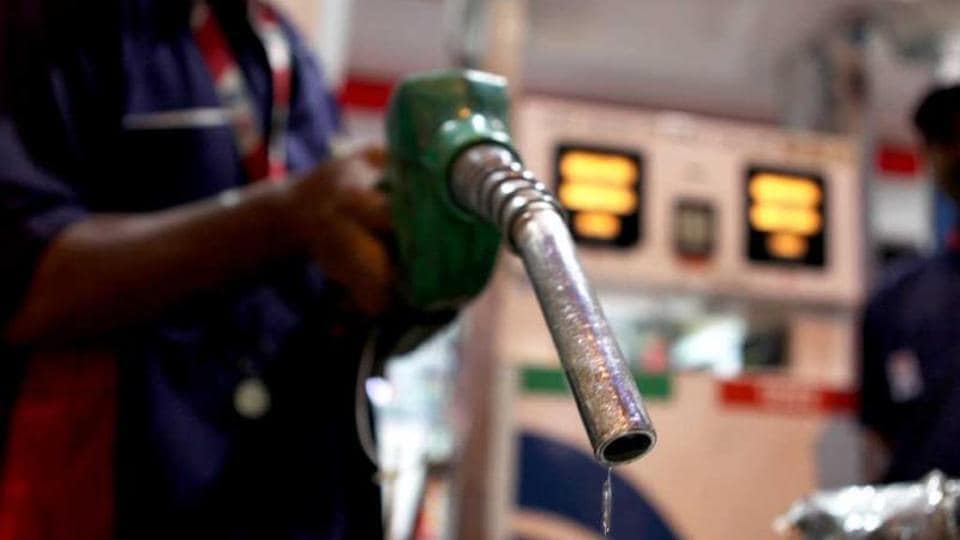
International oil prices have fallen sharply over the past four weeks; this has resulted in reductions in the prices of commercial liquefied petroleum gas, aviation turbine fuel (ATF) and taxes on windfall gains. But, public sector oil marketing companies (OMCs) are still bleeding, and are neither in a position to cut prices of petrol and diesel immediately nor return to the system of daily changes in pump prices of the auto fuels as the international oil market is volatile, the people aware of the development said requesting anonymity.
According to official data, India’s average crude oil import price fell by about 22% to $90.71 a barrel in the month of September compared the June peak of $116.01. Product prices fell even sharply. While average petrol price plunged 37% from $148.82 a barrel in the month of June to $93.78 in September, in case of diesel the fall is 28% to $123.36 per barrel in September compared to $170.92 a barrel in June.
One of the persons mentioned above said state-run OMCs – Indian Oil Corporation (IOC), Bharat Petroleum Corporation Ltd (BPCL) and Hindustan Petroleum Corporation Ltd (HPCL) – are making about ₹3-4 per litre margin on sale of petrol, but that the gains in diesel are still negligible. “It is estimated that in the second quarter of current fiscal year the three OMCs would together post a net loss similar to that of the previous quarter. Under these circumstances a status quo is expected for pricing of petrol and diesel.”
“The government will review financial conditions of OMCs and issue necessary directives accordingly,” a second person working in an economic ministry said. Even as many countries are facing energy supply disruptions, the government, though public sector OMCs, has not only ensured uninterrupted supply of petrol and diesel but also shielded consumers from fuel rate volatility, he added. India is world’s third largest crude oil consumer after the US and China and imports 85% of crude it processes.
Petrol and diesel pricing was deregulated in June 2010 and October 2014, respectively, but the government tacitly controls pricing of the two politically sensitive auto fuels. The three state-run OMCs enjoy monopoly in the domestic fuel retail with about 90% market share. Their combined net loss in April-June quarter (Q1 FY23) was ₹18,500 crore against a ₹9,238 crore net profit in Q1 of 2021-22.
Speaking on falling international oil prices at a function in Chennai, at the CNN News 18 Townhall on September 26, Finance Minister Nirmala Sitharaman said: “I’ll have to actually talk to the oil marketing companies to understand where their recovery levels are because, after all, there were times when they were even importing at 120 [$120 a barrel], 110, 118,… I don’t know what kind of losses they have made.”
The petroleum ministry, IOC, BPCL and HPCL did not respond to an email query on this matter.
A third person mentioned above said the pricing of different fuels require different approaches. “The benefit of a fall in international oil prices has already passed in the cases of commercial LPG and ATF; besides the windfall tax levied on crude, diesel and ATF has also been slashed. In the case of petrol and diesel, a calibrated approach is required because global rates of the two fuels are highly volatile.”
The finance ministry slashed windfall taxes on domestically-produced crude oil from ₹10,500 per tonne to ₹8,000 a tonne effective Sunday. While the levy on exports of diesel was halved to ₹5 a litre, tax on ATF exports was scrapped in the sixth review since the windfall tax was introduced from July 1. The levy is reviewed every fortnight and aligned as per the international price movements.
Meanwhile, state-run OMCs have also slashed ATF rates. According to IOC, jet fuel price has been reduced by about 4.5% to ₹115,520.27 per KL in Delhi from October 1. The company slashed prices of LPG sold for commercial use by 1.4% to ₹1,859 per 19 kg cylinder.