
 E-Paper



Sunderbans saving Kolkata from smoke of shifting cultivation in Eastern Ghats, suffering in turn
Experts say this is one of the many reasons behind the depletion of Sundari trees, a sweet-water mangrove species from which the world’s largest mangrove delta gets its name.

 Prefer HTon Google


Just like smoke from stubble burning regions of Punjab and Haryana spikes air pollution in Delhi every year during the winter, fumes from shifting cultivation in some states along the Eastern Ghats could have deteriorated the air quality in Kolkata, had it not been for the Sunderbans, scientists have recently found.
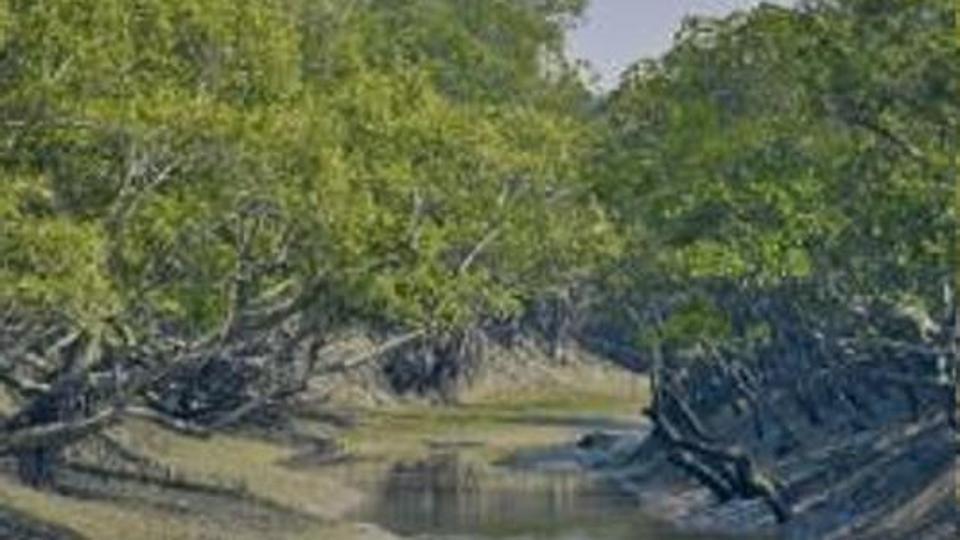
The new study by researchers from Bose Institute in Kolkata has revealed that the world’s largest mangrove delta in south Bengal acts like a green barrier against the smoke coming from further down south and stops it from reaching Kolkata.
“Biomass burning during slash and burn agriculture emits huge amount of pollution. Trajectory analysis shows that these pollution plumes, laden with vapours of sulphuric and nitric acid, ultimately reach the Sunderbans. The sea-salt particles and other biogenic particles in the air consume a large amount of these polluting gases. This saves Kolkata,” said Abhijit Chatterjee, associate professor of environmental sciences at Bose Institute, who led the study.
The study has been published in Chemosphere, an international peer-reviewed journal of Elsevier, in December 2019.
The Sunderbans covers more than 10,000 sq km across India and Bangladesh, of which 40% is in India. It’s thick and nearly impenetrable mangrove is home to many rare and globally threatened wildlife species such as the Royal Bengal Tiger.
Slash and burn agriculture, which is a form of shifting cultivation, is practised in tribal areas of Odisha, Andhra Pradesh, parts of Karnataka, Telengana and Tamil Nadu. It involves clearing the jungle on the hill slopes, burning the trees and growing crops on the ashes.
The scientists have warned that the toxic particles are reacting with sea salt particles present in the air and changing the latter’s properties. As these sea-salt particles help in the formation of rain clouds, change in their physical and chemical properties can have a negative impact on rainfall levels in the area.
“The air in the Sunderbans region is laden with salt, as it is located near the sea. The sea-salt particles help in the formation of rain clouds. But when these react with the fumes of sulphuric acid, nitric acid and other toxic elements brought by the southerly winds their physical and chemical properties are altered. The particles lose their potential to form clouds. This finally affects precipitation levels,” said Abhinandan Ghosh, another researcher in the team.
Sea-salts are primarily made of chloride particles. The average chloride depletion in PM10 (particulate matter of less than 10 microns in size) ranged between 70 and 74% over the Sundarbans, the researchers have found.
The study says that since biomass burning over Eastern Ghats occurs just before the monsoon, this phenomenon bears significant importance. Scientists have warned that the delta is already facing scarcity of fresh water due to several factors such as depletion of ground water levels, intrusion of saline water from the sea and drying of some rivers due to siltation in the upper reaches.
“Because of lack of sweet water not only the population of Sundari trees, the species from which the Sunderbans derive its name, is depleting but the growth of such trees is also getting stunted. Paddy farming and culture of giant fresh water prawns are also getting affected. Instead, culture of brackish water fishes such as Parshe, Bhetki and tiger prawn is increasing,” said Abhijit Mitra, former head of marine science department of Calcutta University.
The Sunderbans is often tagged as the savior of Kolkata as it had earlier saved the metropolitan city with a population of more than 4.5 million from the fury of cyclones such as Aila in May 2009 and Bulbul in November 2019 by acting as a barrier against strong winds.
Some of the fumes from these shifting cultivation areas however do manage to pass the mangrove cover and reach Kolkata and Darjeeling in north Bengal, the trajectory analysis has revealed.


