
 E-Paper



Support for BJP fell after 2019 Pulwama terror attack, claims new study
Milan Vaishnav and Jamie Hintson jointly wrote the research paper, titled “Who Rallies Around the Flag? Nationalist Parties, National Security, and the 2019 Indian Election”. It was published in the American Journal of Political Science


A new study published in the American Journal of Political Science (AJPS) has concluded that the 2019 terror attack in Kashmir’s Pulwama district - in which 40 members of India’s security forces were killed - had a negative impact on the Bharatiya Janata Party’s (BJP) support base in areas where it was the incumbent party.
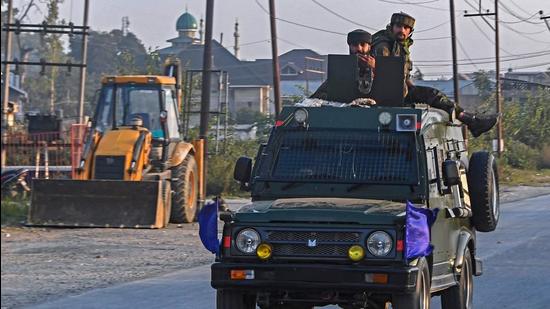
Milan Vaishnav, a senior fellow and director of the South Asia Program at Carnegie Endowment for International Peace, and Jamie Hintson, junior fellow at the Carnegie Endowment for International Peace, jointly wrote the research paper titled: “Who Rallies Around the Flag? Nationalist Parties, National Security, and the 2019 Indian Election”.
Vaishnav, who rolled out the paper’s argument in a series of tweets, wrote, “At a macro level, it’s widely accepted that the 2019 Pulwama terror attacks in Kashmir generated nationalist rallying that aided the BJP’s re-election campaign. Yet, we find those most acutely affected by the attacks were much less likely to rally behind the BJP.”
Also Read: NIA raids multiple locations in J-K in Jamaat-e-Islami case
The study claimed that nationalist governments in general are often well-placed to make the most of security-related crises and they are inclined to have hawkish views on national security policy.
However, Vaishnav argues in his paper, “Using granular booth-level data on electoral outcomes and village-level data, we find that proximity to the Pulwama victims’ funeral processions substantially ‘reduced’ BJP support in areas where it was the incumbent.”
“Our effects cannot be explained by prior electoral behavior, spatial correlation or personal connections to victims,” Vishnav wrote. “While several mechanisms could be at work, the preponderance of available evidence points to anti-incumbent blame as the principal driver [behind the presumed fall in BJP support].”
BJP spokesperson Gopal Krishna Agarwal played down the research paper’s argument, saying that such a sweeping conclusion cannot be drawn on the basis of just one survey.
“There are very huge negative impacts of the Pulwama attack. But the strong action taken by the government had brought out a very positive image of [Prime Minister Narendra] Modi that he means business,” Agarwal said.


