
 E-Paper



Supreme Court dismisses PIL seeking disqualification of candidates filing false affidavits
A bench of justices SA Bobde and Deepak Gupta told the petitioner, advocate AK Upadhyaya, that it was not appropriate for the court to issue such a blanket order as only a trial could determine whether a candidate had filed a false affidavit. This observation prompted the petitioner to withdraw his PIL.


The Supreme Court on Friday dismissed a public interest litigation (PIL) seeking a direction to declare any candidate who files a false affidavit guilty of corrupt practice and disqualified from holding office.
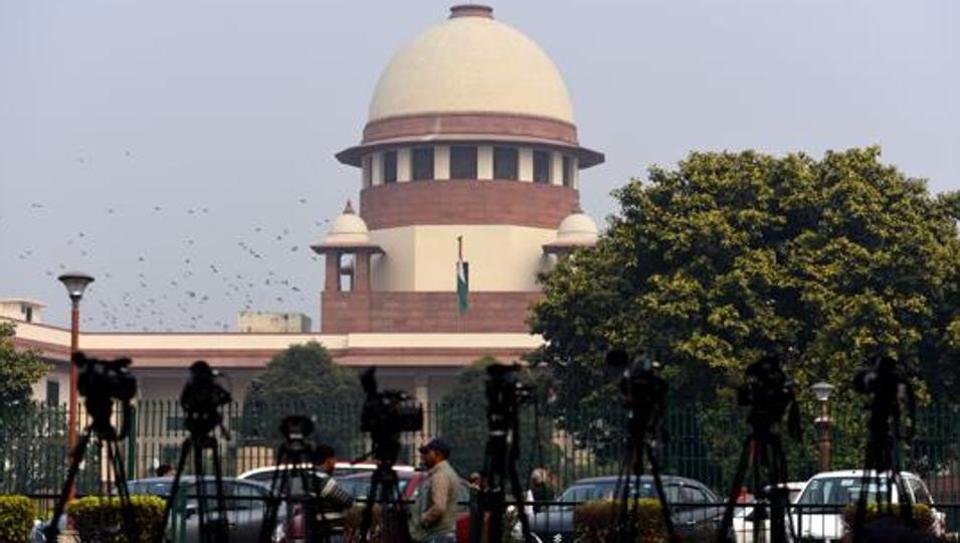
A bench of justices SA Bobde and Deepak Gupta told the petitioner, advocate AK Upadhyaya, that it was not appropriate for the court to issue such a blanket order as only a trial could determine whether a candidate had filed a false affidavit. This observation prompted the petitioner to withdraw his PIL.
“We see the force of your argument, but you do not see our view. You are arguing on the basis that the entire electorate is misled into believing a fact about a candidate if he or she files a false affidavit. But this argument can only be considered once evidence is led to establish it,” justice Bobde said.
The judge said an affidavit could be called false if it affected voting. “Unless it materially affects the election, how can we say it is false? For instance, say a candidate files an affidavit that his or her income is Rs 2 crore per year, whereas it is just Rs 1.98 crore. Technically... it is false information but how does such information mislead the electorate or affect voting?” the judge asked.
Under the Representation of the People Act, 1951, a candidate can be disqualified if he or she is found guilty and sentenced for three years and above. Section 125A of the act envisages a punishment of six months in jail or fine or both for a candidate who files a false affidavit or conceals any information in the affidavit at the time of filing nomination.
In his PIL, Upadhyaya suggested that any candidate found to have filed a false affidavit contrary to section 125A should be deemed to have exercised “undue influence”, hence guilty of a corrupt practice and liable to be disqualified from holding office. He said there was no follow-up action in the event of candidates filing false complaints.


