
 E-Paper



Supreme Court ends suo motu monitoring of river pollution, hands it back to NGT
The court said that multiple overlapping proceedings creates uncertainty about the nature of proceedings

 Prefer HTon Google


The Supreme Court on Tuesday ended its five-year oversight of river pollution caused by sewage discharge, observing that specialised bodies such as the National Green Tribunal (NGT) are better equipped to monitor such issues. The court directed all statutory authorities, states and the central government to continue filing status reports before NGT, where similar proceedings are already pending.
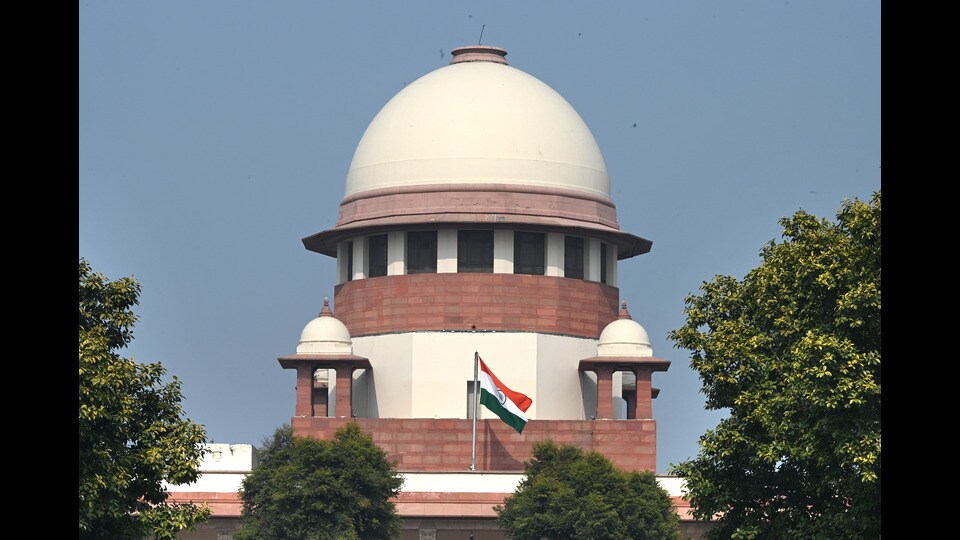
A bench of Chief Justice of India (CJI) Surya Kant said that it is for such matters that specialised tribunals such as NGT have been created. Taking exception to the January 13, 2021, order of the top court taking suo motu cognizance on this issue, the bench, also comprising justice Joymalya Bagchi, said, “It seems to us that instead of initiating suo motu proceedings this court ought to have asked NGT to monitor the situation till the desirable results are reached.”
The court referred to two past orders of NGT passed in September 2020 and February 2021 where NGT issued pan-India directions to all statutory authorities to address gaps in generation and treatment of sewage or effluent into rivers by setting up requisite number of common effluent treatment plants (CETPs) and sewage treatment plants (STPs).
The bench said, “Is it feasible to take up monitoring of all polluting rivers...The very purpose of creating tribunals was to have expert members to decide these issues. After we took suo motu cognizance, probably NGT is also reluctant to hear the matter. Much water has flown during the pendency of proceedings in the last five years.”
At the same time, the court emphasised that the issue of clean drinking water goes to the root of the right to life and dignity — a fundamental right protected under Article 21 of the Constitution of India. “Water is a basic need for survival of human beings, and right to life and human rights through Article 21 can be meaningfully served by providing source of water where there is none,” the bench said.
Additional solicitor general (ASG) Aishwarya Bhati appearing for the Centre said that since the issue is also pending before NGT, the government can submit the latest status reports either to this court or NGT.
The bench said, “We are of the view that multiple overlapping proceedings creates uncertainty about the nature of proceedings. The NGT order is subject to final review by this court. In light of the above, we are satisfied that it is high time suo motu proceedings be closed and proceedings before the tribunal, seemingly closed, be allowed to reopen.”
The court reminded NGT that under the NGT Act, the tribunal has vast powers to ensure statutory authorities, pollution boards, municipalities and local bodies meticulously comply with all environmental laws.
“The responsibility of NGT does not come to an end by passing an order. This has to be an ongoing process and if states, pollution boards or private players create impediments in fulfilling the law or orders of NGT, it becomes imperative for NGT to ensure necessary directions are issued from time to time,” the bench said.
The court directed all authorities of states and Union government, along with Central Pollution Control Board (CPCB) to submit fresh status reports to NGT and left it to the discretion of the tribunal to issue further directions on consideration of these reports.
What prompted the top court to take suo motu cognizance in January 2021 was a petition filed by the Delhi Jal Board (DJB) to stop the Haryana government from discharging pollutants into the Yamuna. DJB pointed out that the level of ammonia in river water flowing through Delhi had reached alarming proportions, which could not be treated by the CETP/STP set up by DJB.
The bench had said, “We find that in addition to the issue raised by present petition, it will be appropriate to take suo moto cognizance with regard to the issue of contamination of rivers by sewage effluents and ensure that the mandate is implemented by municipalities as far as discharge of sewage into rivers is concerned.” A start was made by dealing with the issue of contamination in river Yamuna.
The court had appointed senior advocate Meenakshi Arora as amicus curiae along with advocat Vanshaja Shukla to assist in the matter.


