
 E-Paper



Article 370: Can federating unit’s constitution be superior to that of the Union, asks SC
The Supreme Court questions the superiority of the constitution of a federating unit over the constitution of the Union, in relation to Article 370.

 Prefer HTon Google


New Delhi The Supreme Court on Wednesday asked as to how the constitution of a federating unit can be superior to the constitution of the Union, or have an overriding effect on the latter, as it pointed out that Article 370 of the Indian Constitution clearly has a “self-limiting character”, giving the President the authority to abrogate it through a certain procedure.
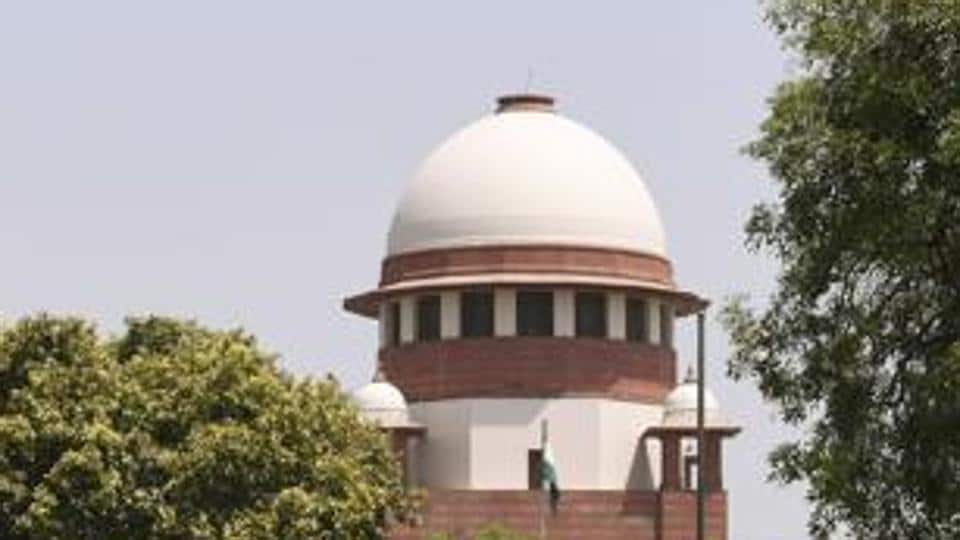
Hearing a clutch of petitions that have challenged the 2019 abrogation of Article 370 which granted J&K special status and restructuring of the state into two Union territories, the five-judge Constitution bench pointed out that anything decided by the constituent assembly of J&K could not bind the successive governments and executives unless an embodiment of such a mandate was found in the Indian Constitution.
The bench, which also comprised justices Sanjay Kishan Kaul, Sanjiv Khanna, Bhushan R Gavai and Surya Kant, raised a raft of queries for senior counsel Gopal Sankaranarayanan, appearing for one of the petitioners in the case, after the lawyer pressed that J&K Constituent assembly had taken a conscious decision to keep the special status of J&K intact while having its own Constitution.
To this, the bench pointed out that Article 370 may have two terminal points. First, after the J&K constituent assembly wrapped up in January 1957; second, when the President can abrogate the constitutional provision following the concurrence of the J&K constituent assembly.
“Interestingly, Article 370 is silent on the course of action after the constituent assembly has taken a decision. If there is complete silence in Article 370, then Article 370, possibly has worked itself out...In which case, we have two options. Your line of thinking would be that the constitution of J&K will fill in the void and that will be the supreme document. The other view possibly is - Can the constitution of a federating unit ever rise above the source of the federating unit?” it asked Sankaranarayanan.
Responding to Sankaranarayanan’s submission that the special provisions with respect to J&K was a result of the deference shown to the constituent assembly of J&K, the bench observed that there was no corresponding provision in the Indian Constitution to recognise any such rights for the valley state under the J&K constitution.
“It’s (Article 370) a provision in the Constitution which itself points out its self-limiting character. If the text itself shows its self-limiting character...but then your argument is that our Constitution should be so read to treat the constitution of J&K as overriding document which will apply in preference to our Constitution... How can that be?” it asked Sankaranarayanan, who replied that the J&K constitution defers to the Indian Constitution.
“So, really speaking, though J&K constitution framed itself in relation to the Indian Constitution, unless that relationship is embodied in the Indian Constitution, how will we bind the Dominion of India or the successor parliaments or executives here?” it asked.
While Sankaranarayanan argued that the recognition of constituent assembly of J&K in Article 370 was an evidence of the Indian Constitution recognising special status of J&K, the bench retorted: “Does that mean that anything said by the constituent assembly of J&K would bind the nation or parliament or executive here. Subsequent to 1957, it had to be embodied in a binding arrangement, to be reflected in our Constitution...which was never done.”
The court said that a batch of constitutional orders were issued between 1957 and 2019 to extend the provisions of the Indian Constitution to J&K since the idea was to gradually bring J&K into the mainstream. “And we are not saying at all that these constitutional orders were unconstitutional...Obviously, these were the statesmen who have operated this nation for last 70 years and we should not say what they did was something unconstitutional. They did that to further the course of governance in the nation,” it added.
The ninth day of the arguments in the matter culminated with the petitioners wrapping up their submissions. The Union government, through attorney general R Venkataramani and solicitor general Tushar Mehta, will commence its arguments on Thursday.
The bench is seized of a raft of petitions, filed by parliamentarians from the National Conference party, Kashmiri citizens, former bureaucrats and various organisations that have laid the challenge to the abrogation of Article 370 soon after the presidential order in August 2019.
On July 3, the Supreme Court notified the setting up of a new Constitution bench, comprising its five most senior judges. The new bench began day-to-day hearing in the case from August 2.



