
 E-Paper



Supreme Court scraps CBI probe, sets up SIT to investigate Bengal torture charge
The police officers have been told to submit weekly status reports before a bench to be constituted by the chief justice of the Calcutta high court


NEW DELHI: The Supreme Court on Monday appointed a special investigation team (SIT) of West Bengal police to investigate allegations of custodial torture of two women who took part in the protests following the rape and murder of a junior doctor at Kolkata’s RG Kar Medical College and Hospital.
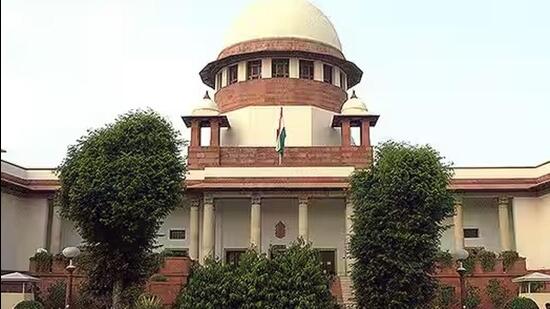
The top court’s order scraps the Calcutta high court’s decision of November 6 to hand over the case to the Central Bureau of Investigation (CBI). “We have a lot of faith in the young IPS officers,” a bench of justices Surya Kant and Ujjal Bhuyan said as it reconstituted the SIT set up by the state government with deputy inspector general (DIG) Akash Magharia, Howrah superintendent of police (SP) Swati Bhangalia and Howrah deputy commissioner (Traffic) Sujata Kumari Veenapani.
The police officers were directed to submit weekly status reports before a bench to be constituted by the chief justice of the high court.
On November 11, the top court stayed the high court’s order and directed the state to furnish a list of seven IPS officers, five of them women, who were serving in Bengal but did not belong to the West Bengal cadre.
“The SIT shall take over the investigation of the FIR forthwith without any delay. All records of the investigation be entrusted to SIT during the course of the day,” the bench headed by justice Kant said. The three officers were allowed to associate officers of their choice in the probe.
The Mamata Banerjee government approached the top court challenging the high court order, alleging that the high court had passed 88 orders transferring the investigation of various cases to CBI which had a demoralising effect on the state police and cast aspersions on their ability to conduct fair and dispassionate investigations.
The bench said, “No doubt, the CBI is a very professional investigating agency. But the question is how many matters it (CBI) will investigate...It will cast aspersions on the entire IPS force in the state.”
Senior advocates Kapil Sibal and Gopal Sankaranarayanan appearing for the state government submitted that it was difficult to accept that a case of alleged custodial torture of two women protestors could not be probed by senior officers.
The women victims represented by senior advocates Ranjit Kumar and Narender Hooda pointed out discrepancies in the hospital records to influence the outcome of the probe. As the FIR was registered at a police station in Diamond Harbour, the constituency of Trinamool Congress MP Abhishek Banerjee, Kumar said, “He is influential in the area and can exert pressure on the police.”
The bench addressed these concerns by asking the victims’ lawyers, “Just because something may be wrong with hospital records, how does it impinge upon the fairness of the probe? Do you think these officers cannot probe against their own?”
Recalling instances when the court had drawn officers from the state belonging to outside cadre to head SIT, the bench said, “The very purpose of having outside officers in the state was to infuse independence. The concept of bureaucracy post-Independence has completely changed. They have a lot of responsibility based on aspirations of people.”
When Hooda wondered if the officers would rise to the occasion, citing past statements by home secretary and DGP denying the allegations as ‘fictitious’, the bench replied, “They have done it in the past.”
The two women, Rebeka Khatun Molla and Rama Das, were arrested by the West Bengal police on September 7 and approached the high court seeking a CBI probe, alleging inconsistencies in the medical report. While the jail doctor found signs of hematoma in one of the legs which supports their allegations of custodial torture, the Diamond Harbour medical college report did not indicate any injuries on the body.
The court also addressed concerns for the safety of the two victims by directing them to approach the SIT in this regard. The order said, “The victims may approach the SIT for ensuring that no harm is caused to their life and liberty and the SIT shall take steps without any delay.”


