E-Paper



Remittances barely improving lives of Odisha migrant workers’ families: Survey
The study was done through home visits to 394 households of migrant workers in the 7 western Odisha districts of Bargarh, Sambalpur, Balangir, Jharsuguda, Sundargarh, Subarnapur and Deogarh

 Prefer HTon Google


The living condition of migrant workers’ families from western Odisha districts has not improved much despite the remittances sent home, generated from labouring in brick kilns or construction sites of southern Indian states, a study by Odisha’s Sambalpur University on migration, remittances and human development in Western Odisha has found.
The study by Centre of Excellence Regional Development and Tribal Studies of Sambalpur University revealed that 19.8 per cent of the migrants who were surveyed earned around ₹10,000 per month and 58.6 per cent migrants earned around ₹10,000-15000 per month. Just about 4 per cent earned more than ₹20,000.
“Around 97.9% migrant households said they use the remittance to purchase food, followed by purchase of clothes for family members, house electrification, acquire drinking water facility, purchases of television, Cable connection and purchase home appliances. However, 40.7% of the migrant households said their living condition has not improved at all, whereas 36.8% households said their living condition has improved to some extent. Only one fourth of migrant household (22.6%) said that their living condition has improved,” said Prof Arun Acharya of social anthropology department who led the study that was done in the month of July and August this year.
The study was done through home visits to 394 households of migrant workers in the 7 western Odisha districts of Bargarh, Sambalpur, Balangir, Jharsuguda, Sundargarh, Subarnapur and Deogarh.
Three fourth of total migrants sampled were between the ages of 21 to 35 years. In term of educational qualification, more than 90% migrants had completed secondary, high school and college level education. As the data indicates, majority of people have migrated to Tamil Nadu (46.7%), followed by Andhra Pradesh (13.7%), Karnataka (8.1%) and Telengana (8.1%).
Acharya said 58.4% of surveyed migrant households have low level of human development, whereas one fourth (37.6%) migrant households reported medium human development and 4.1% migrant households high human development. “As majority of migrant households perceived that their living condition has not at all improved after migration of their family, it indicates that remittances sent by the migrants of Western Odisha have not contributed much for the improvement of the household living conditions,” said Acharya.
Also Read: Odisha questioned about sex racket allegations in Kalahandi School
In 2018 World Bank and Odisha higher education department jointly established a Centre of Excellence on Regional Development and Tribal Studies and one of the main objectives of this centre is to analyse the migration and livelihood pattern of the people of western Odisha.
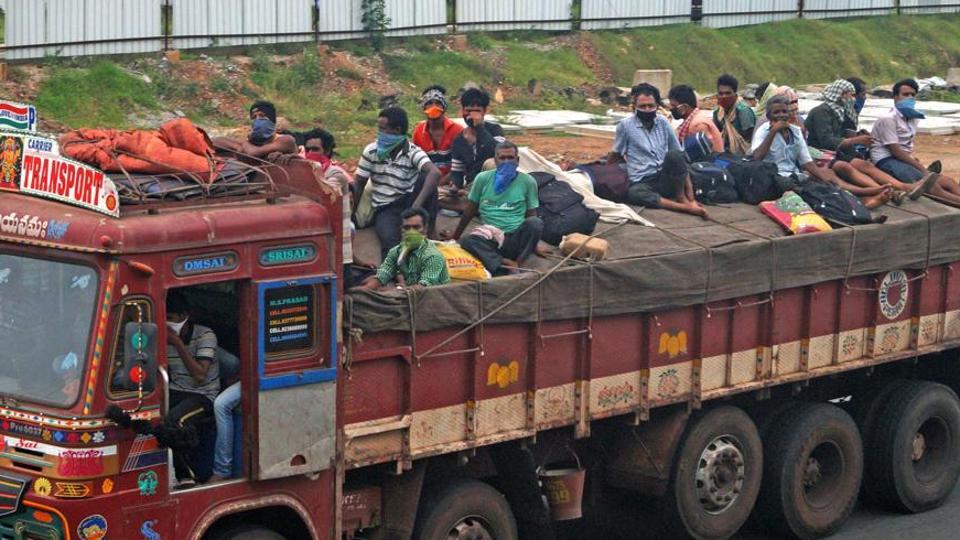
Migration to the southern states like Telangana, Andhra Pradesh, Tamil Nadu, Karnataka and Kerala is an annual feature in western Odisha, infamous for poverty. In districts like Bolangir, Nuapada, Bargarh and Sambalpur people start flocking to Kantabanjhi railway station to board two trains heading to Visakhapatnam – the Korba-VSKP Link Express and the Durg-VSKP Passenger.
A large study in coastal and western Odisha, coordinated by the Centre for Migration Studies, Ajeevika Bureau in 2014 among 99,523 households found that 30.83 per cent of the total households had one or more members migrating for work. This amounted to an estimated 1.53 million migrants from the region, of which 0.58 million were from Western Odisha. The state labour department has not conducted any studies to find out the scale of annual migration to southern states.