E-Paper



Take remedial measures to stop cases under scrapped Section 66A: Supreme Court
The court order came on a petition filed by NGO People’s Union for Civil Liberties (PUCL) for issuing directives to the Union government and subordinate courts in the country to make sure cases are not registered under Section 66A, and nobody is arrested or prosecuted under this quashed law.

 Prefer HTon Google


Asking states and Union territories to take “remedial measures”, the Supreme Court on Tuesday called it a matter of “serious concern” that criminal cases are still being registered under Section 66A of the Information Technology Act though the provision was quashed by the top court in 2015.
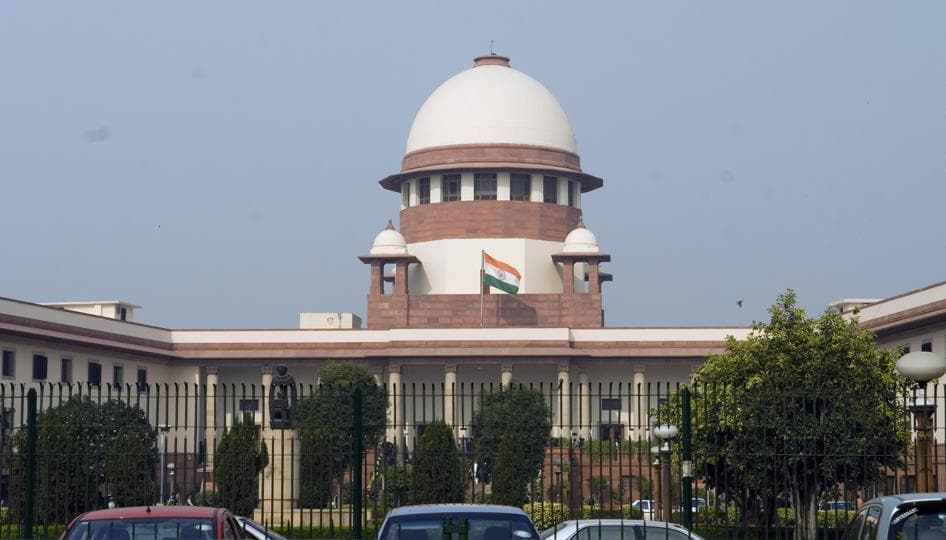
A bench of Chief Justice of India (CJI) Uday Umesh Lalit and justice S Ravindra Bhat took note that several lawyers representing different states have assured the court that the respective police departments have been duly instructed not to invoke Section 66A, which authorised the police to arrest people for social media posts construed “offensive” or “menacing”.
“However, there still appear to be some instances where the concerned provision has been invoked and the offences in that behalf are still pending consideration. It is a matter of serious concern that despite the pronouncement of this court, offences under Section 66A are still being registered,” the court said in its order.
It sought the assistance of advocate Zoheb Hossain, who was appearing on behalf of the Union government, to get in touch with the chief secretaries of all states where offences are still being registered and impress upon them the need to take corrective steps expeditiously.
“States are directed to supply all information as required by Mr Hossain. Let the entire exercise be finished in 3 weeks,” ordered the bench, fixing the matter after three weeks.
The court order came on a petition filed by NGO People’s Union for Civil Liberties (PUCL) for issuing directives to the Union government and subordinate courts in the country to make sure cases are not registered under Section 66A, and nobody is arrested or prosecuted under this quashed law.
Senior advocate Sanjay Parikh, appearing for the NGO, cited a study conducted by Internet Freedom Foundation and Civic Data Labs, to show that 1,307 new cases were registered in the last six years under the law that was scrapped. Maharashtra topped the list with 381 cases, followed by Jharkhand (291), and Uttar Pradesh (245).
While hearing PUCL’s plea in July 2021, the court said it was “shocking” and “distressing” that there was a fivefold increase in the registration of cases under Section 66A of the Information Technology Act though the provision was quashed by the top court in 2015. At the time, it requested Attorney General KK Venugopal to ascertain that suitable instructions are issued to all states and UTs by the Union home ministry to stop registering cases under this provision. Subsequently, the ministry issued advisories to states and UTs.
Section 66A was brought into the statute by the second United Progressive Alliance government in 2009. After a clutch of petitions challenged the validity of the law citing its abuse and vagueness, the National Democratic Alliance government told the court in 2014 that the provision would be administered in a reasonable manner and that a panel was being set up to review its applicability.
Underlining the supremacy of the right to freedom of speech and expression and the “chilling effect” Section 66A had on this fundamental right, the court, in its 2015 judgment, quashed the law noting that governments may come and go but Section 66A will go on forever and, what is otherwise invalid, cannot be saved by assurances.
It termed Section 66A “open-ended and unconstitutionally vague”, adding nothing short of quashing the law in its entirety could suffice since this provision “arbitrarily, excessively and disproportionately” invaded the right to free speech, right to dissent, right to know, and had a “chilling effect” on constitutional mandates.