
 E-Paper



Tamil Nadu does not need compulsory third language: Congress' Karti Chidambaram
The comments come amid a raging controversy over the implementation of the National Education Policy, which mandates a three-language policy.

 Prefer HTon Google


Congress Lok Sabha MP Karti Chidambaram on Friday said that Tamil Nadu does not need a compulsory third language and that the state is “well-served” by its existing two-language curriculum.
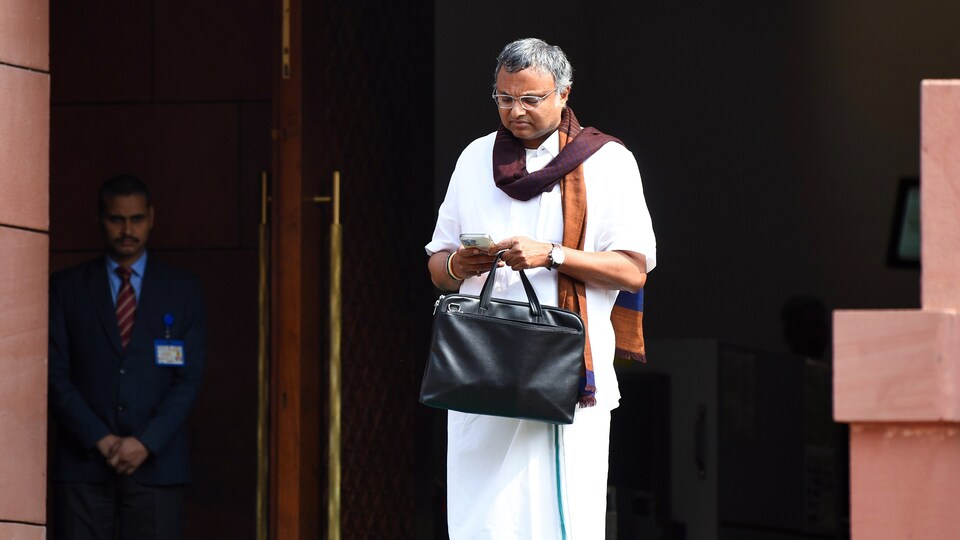
"Tamil Nadu is well served with a two-language (Tamil and English) formula curriculum... We don't need a compulsory third language... Whenever they (BJP) talk about a third language, it is only Hindi imposition, which Tamil Nadu will never accept…" Karti Chidambaram was quoted as saying by ANI.
The Congress MP also warned that if Tamil Nadu accepts Hindi as the third language, the BJP government would eventually claim a shortage of Hindi teachers in the state, resulting in a surge of non-native speakers being hired in government schools.
"English connects us to the world of science and commerce... If we accept the third language as Hindi, the BJP government, in its devious manner, will suggest that there are not enough Hindi teachers in Tamil Nadu... and soon, many non-native speakers will be working in our government schools. BJP's hidden agenda is to distort our cultural history..." he said, according to ANI.
Also Read | ‘Which 3rd language is taught in North’: MK Stalin questions Centre over NEP
Further, he pointed out that English connects Tamil Nadu to global science and commerce and that the introduction of Hindi would only serve the BJP's “hidden agenda” to distort the state's cultural history.
Meanwhile, Congress MP Manickam Tagore also slammed BJP's signature campaign in support of the National Education Policy in Chennai, accusing the party of being “anti-Tamil Nadu”.
"BJP workers are stopping school children, offering them biscuits, and pleading with them to sign a paper on the language issue. This desperation shows that the BJP can never truly connect with Tamil Nadu. It has always been anti-Tamil Nadu, and such deceitful tactics will not work," Tagore was quoted as saying by ANI.
Language row
The comments come amid a raging controversy over Hindi, specifically against the backdrop of the National Education Policy, which mandates a three-language policy – something that states such as Tamil Nadu see as a proxy for Hindi imposition.
Also Read | VP Dhankar questions ‘confrontational stance on languages’ amid row over NEP
The DMK wants Tamil Nadu’s two-language policy of English and Tamil, which has been in place since 1968, to continue. It has accused the BJP of trying to impose Hindi through the three-language policy.
Union education minister Dharmendra Pradhan, however, has clarified that the NEP’s three-language policy is designed to promote all Indian languages.
"National Education Policy (NEP) 2020 should give importance to Indian languages. All Indian languages have equal rights, and all should be taught in the same way. This is the objective of the NEP. Some people in Tamil Nadu are opposing it for political purposes. We have not said anywhere in the NEP that only Hindi will be taught," Pradhan has said.


