E-Paper



Tata begins training employees for Gujarat chip plant
Tata Electronics has partnered with Taiwan’s chip major Powerchip Semiconductor Manufacturing Corporation to build the fab at Dholera Special Investment Region

 Prefer HTon Google


Tata Electronics has begun training employees in Taiwan for its $11-billion semiconductor fabrication facility in Gujarat, with more batches set to travel to the island from next month, people familiar with the matter said on Wednesday.
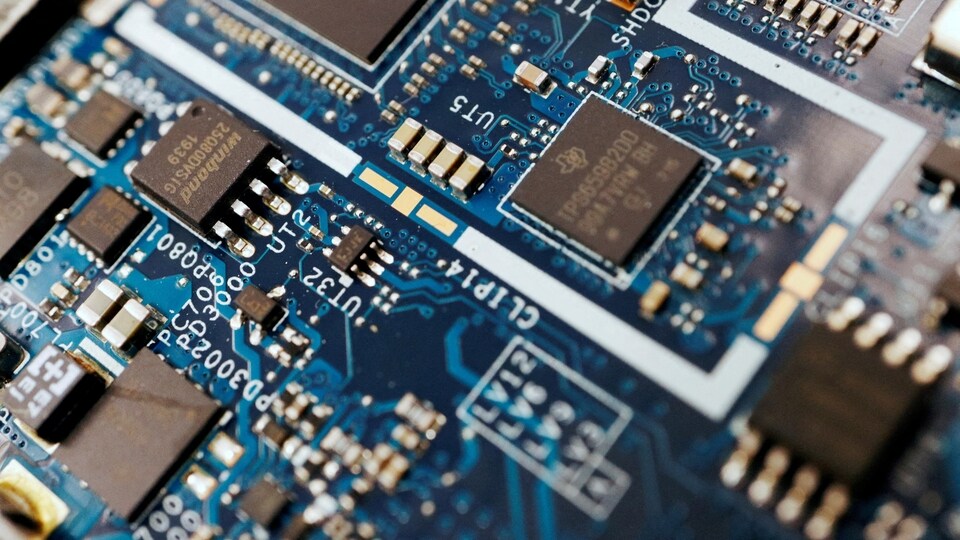
Tata Electronics, a wholly owned subsidiary of Tata Sons, has partnered with one of Taiwan’s chip majors, Powerchip Semiconductor Manufacturing Corporation (PSMC), to build the fab at Dholera Special Investment Region. The first chip is expected to roll out from the facility by the end of 2026.
The first batch of Tata Electronics employees currently being trained by PSMC are Indian nationals living in Taiwan who were recently hired by Tata Electronics, two people familiar with the development said on condition of anonymity. More batches of Tata Electronics employees from India are expected to join them from October, they said.
“In all, about 200 people will be trained initially by PSMC in the very specialised skills required for this venture,” one of the people said.
ALSO READ- Mumbai rain: Schools, colleges to remain shut on Sept 26; flights, trains disrupted
An external spokesperson of Tata Group, responding to an email query, declined to comment on the development. An Indian official aware of the development, requesting anonymity, said the venture between Tata Electronics and PSMC is a significant industrial development to make India future ready.
“The Taiwanese firm has the required technology and Tata Group has the requisite IT exposure. The two are an ideal fit for high value manufacturing, which requires specific training of the local workforce in batches. The government is committed to support such requirements with necessary regulatory approvals,” the official said, declining to give company-specific information.
Tata Group plans to train thousands, including on-the job training and upgrading of skills, and visas for this purpose won’t be an issue, the official added.
On February 29, the government approved Tata Electronics’ proposal to build the fab in Dholera, a significant move under the “Make in India, for the world” campaign.
India has wooed Taiwan’s chip majors, including Taiwan Semiconductor Manufacturing Company (TSMC) and PSMC, and smaller firms that play a key role in semiconductor supply chains as part of New Delhi’s ambitious plans to become a leading player in manufacturing chips needed for both consumer products and sensitive security equipment.
ALSO READ: Paracetamol, Pan D among 53 medicines to fail drug regulator's quality test; raise safety concerns
The two people cited above said Tata Electronics has hired a few employees of TSMC for its venture in Dholera in order to build up the management needed for the crucial project.
Before groundbreaking was done in Dholera in March, PSMC chairman Frank Huang said the venture will involve transfer of technology and will begin with 28 nanometer (nm) chips.
Tata Group has said the AI-enabled fab will be capable of making up to 50,000 wafers a month. It will manufacture chips for applications such as power management IC, display drivers, microcontrollers and high-performance computing logic to meet the needs of sectors such as automotive, computing and data storage, wireless communications and artificial intelligence.
The Indian official cited above said: “The project has the government’s blessings as India wants to become self-reliant in chip manufacturing, a component necessary for all futuristic industrial developments.”
ALSO READ- Jammu and Kashmir assembly election: 20 of 26 assembly segments see lower turnout than 2014
At the same time, the Taiwanese side has pushed Tata Group to get Air India to launch direct flights to Taipei as part of steps to improve connectivity and boost trade and investments, the people cited above said. There are currently no direct flights between the two sides and Taiwan’s airlines such as China Airlines and EVA Air don’t have the capability to start flights to New Delhi, they said.
India’s external affairs ministry and Taiwan’s labour ministry are also finalising arrangements for the first batch of Indian workers to be sent to the island early in 2025 under the memorandum of understanding (MoU) on migration and mobility signed in February this year, the people said.
This group is expected to comprise workers for the construction and manufacturing sectors, and the number of workers is yet to be finalised, they said. Taiwan could hire up to 100,000 Indians to work in factories, farms and hospitals.
India and Taiwan don’t have formal diplomatic relations, though both established representative offices in each other’s capitals in 1995. Besides the Taipei Economic and Cultural Center in New Delhi, Taiwan set up an office in Chennai in December 2012 and has plans to enhance its presence in the country by setting up a new office in Mumbai.