E-Paper



Team Trump uses India-Pak ceasefire to justify tariffs, court rejects defence
The administration told the court that the India-Pakistan ceasefire “was achieved only after” both countries were offered “trading access with the US."

 Prefer HTon Google


Despite the US government’s argument that new tariffs were crucial to supporting the 10 May ceasefire between India and Pakistan, a federal trade court has blocked President Donald Trump from imposing the tariffs, ruling that he exceeded the legal authority granted to him.
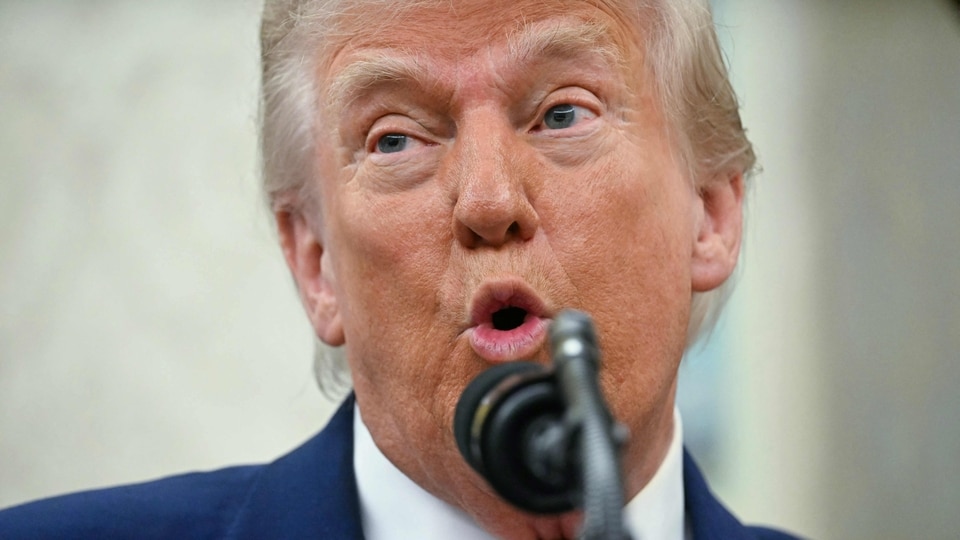
The administration told the court that the ceasefire “was achieved only after both countries were offered trading access with the US to avert a full-scale war.” However, the court ruled against the government.
The case originates from tariffs announced by Donald Trump on 2 April, which proposed a 10% tax on most imports and even higher duties on goods from China and the European Union. Trump referred to the plan as “Liberation Day” and later paused some steeper tariffs while seeking trade deals.
A panel of three judges at the New York-based Court of International Trade ruled on Wednesday that, "The court does not pass upon the wisdom or likely effectiveness of the President's use of tariffs as leverage."
What Team Trump said while defending Trump’s ‘arbitrary’ tariffs
In a court filing on 23 May, US Secretary of Commerce Howard W Lutnick defended Trump’s controversial use of emergency powers to impose steep tariffs, calling the move a vital tool of foreign policy.
The statement came in response to a lawsuit brought by attorneys general from 12 Democrat-led states, who argued that Trump’s invocation of the International Emergency Economic Powers Act (IEEPA) to levy tariffs — including a 26% duty on Indian imports — was “unlawful and arbitrary.”
Lutnick warned that restricting the president’s authority under IEEPA would “have ripple effects across every domain in which economic instruments are used for strategic effect.”
Citing one example, he said, “India and Pakistan, two nuclear powers engaged in combat operations just 13 days ago, reached a tenuous ceasefire on 10 May 2025. This ceasefire was only achieved after President Trump interceded and offered both nations trading access with the United States to avert a full-scale war.”
Lutnick further warned that “an adverse ruling that constrains presidential power in this case could lead India and Pakistan to question the validity of President Trump’s offer, threatening the security of an entire region and the lives of millions.”
The official also argued that the tariff strategy effectively pressured China into trade negotiations. He claimed the tariffs compelled Beijing, which the US accused of fueling drug inflows and siphoning American manufacturing jobs, “to the negotiating table.”
India rejected US' role in ceasefire understanding
India has firmly rejected claims by Trump and his cabinet that the United States played a role in brokering the May 10 ceasefire, which followed four days of cross-border military action.
According to Indian officials, the halt in hostilities was achieved through direct talks between the two nations’ military leadership.
The confrontation began on 7 May, when India launched strikes on nine terror bases in Pakistan and Pakistan-occupied Kashmir under Operation Sindoor in the wake of the Pahalgam terror attack that killed 26 people.