
 E-Paper



Temple e-offerings show slow progress in Kerala amid lockdown
After the lockdown prevented people from travelling, major temples in the state including the Guruvayur Sri Krishna temple and the Sabarimala temple decided to take the e-route to salvage their financial position.


Temples in the state are not doing well in the age of social distancing and quarantines and lockdowns with the online offerings facility offered by popular places of worship not finding too many patrons.
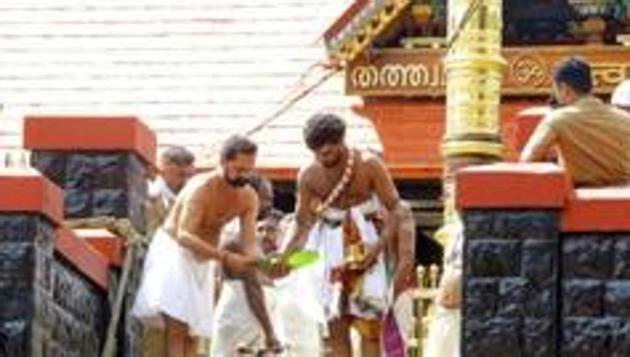
After the lockdown prevented people from travelling, major temples in the state including the Guruvayur Sri Krishna temple and the Sabarimala temple decided to take the e-route to salvage their financial position. But data shows that virtual offerings are yet to catch on with devotees.
At Guruvayur, for instance, electronic offerings began on April 14, the day of the Vishu festival, with much fanfare. In 10 days since, the collections have been a meagre Rs 22,840. On average, donations (hundi collections) before the lockdown were in the region of Rs 4 crore to Rs 5 crore a month. The temple also used to receive gold, silver, even diamonds as contributions. And the saily sevas (prayers) used to bring in money too.
“It seems devotees are yet to catch on to virtual offerings. We have to popularize it more. Many feel direct offerings after praying at the temple will do good. In changing times we have to do away with winding queues and crowding. In the given scenario, a virtual offering is the best alternative and it will pick up with time ,” said a senior official of the temple board. The temple was closed on March 21, three days before the countrywide lockdown began.
His optimism may be misplaced.
“We used to visit Guruvayur temple on the first day of every Malayalam month. In the changed scenario, usual darshan is impossible. Since we are old fashioned people, virtual donations or online offerings have failed to enthuse us. So we are waiting for these dark clouds to disappear for a real darshan, ” said Sulochana Nair, a retired teacher.
The most sought after prayer at Guruvayur ”Udayasthmana” pooja (which literally means worship from sunrise to sunset), has been booked for the next 30 years, till 2050 and fresh bookings have been closed.
The temple used to have a prayer that involved the offer of an elephant to the deity but it was stopped in 2008 after the number of pachyderms in the temple increased; it now has 56 elephants, the largest collection of captive elephants in the country. In 2001, then Tamil Nadu CM Jayalalithaa offered an elephant to the temple after her landslide victory. For some time, the temple accepted a symbolic offer of a pachyderm -- Rs 10 lakh was paid by the devotee and an elephant was understood to have been offered -- but this was stopped after some time.
In Sabarimala too , virtual offerings have failed to pick up. The Travancore Devasom Board (TDB), which runs the temple, tried to encourage online offerings and said a few people would be deployed at the hilltop temple to perform these rituals, but collections have remained sparse -- below Rs 1 lakh over the past 10 days.
The revenue from Sabarimala is usually used to fund smaller temples in south Kerala and for salaries of 3500-odd employees of the TDB. “True, online offerings are yet to pick up. It is just the beginning. We have to popularise them. We are planning a campaign towards this,” said TDB president N Vasu. For now though, the TDB has asked its employees to forgo a month’s salary .
The Sabarimala temple was closed after monthly pooja on March 18.
Despite the government warning people not to crowd the temple, at least 14,000 devotees trekked to the shrine after thermal screening and other formalities in the first week of March. This forced TDB to cancel the 10-day temple festival at the end of March and the Vishu festival on April 14 (although both would have anyway been cancelled after the lockdown was announced on March 24) . Two years ago the state witnessed large-scale violence when the government tried to implement the Supreme Court verdict that allowed women of all ages to enter the temple and worship the presiding deity Lord Ayyappa. The court decided to refer the issue to a larger bench last year.


