
 E-Paper



The low-down on Census, NPR exercises | HT explainer
The census data collected is used for planning and policymaking and provides valuable inputs about the impact of government policies.


Census officials will start visiting every household between April 1, 2020, and September 2020 for listing types of homes and household amenities and to update the controversial National Population Register (NPR).
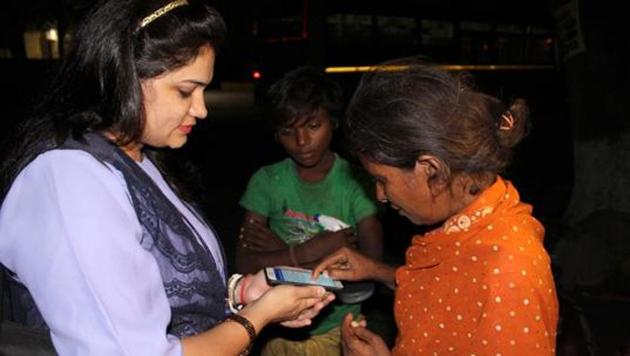
Here is a primer on the powers of the officials and whether the information they seek can be denied.
What is the census and why is it important?
The Census is a decadal exercise for the collection of data on households and various demographic, socioeconomic and other parameters of the entire population. The data is disseminated through various reports. The data collected is used for planning and policymaking and provides valuable inputs about the impact of government policies. Data is also used for demarcation of constituencies and allocation of representation in Parliament.
What is the history of the census?
The Census website cites the Rig-Veda and notes that some kind of population count was maintained as far back as 800-600 BC. ‘Ain-e-Akbari’, a document related to administration during Mughal emperor Akbar’s time, had data on population, industry, wealth etc. The British conducted the first modern Census non-synchronously between 1865 and 1872 across different parts of the country. A more synchronous Census was held in 1881. Since then, Censuses have been carried out every 10 years. The next Census will be the 16th such exercise since 1872 and the eighth since Independence.
How is the census conducted?
It is done in two phases. In the first phase, known as house listing, details of all buildings, permanent or temporary, are taken with their type, amenities, and assets. The second, known as population enumeration, seeks demographic, economic and social details from all individuals. As part of population enumeration, information on whether a person is an Indian or not and about one’s religion is also sought. Over 3 million enumerators would collect data on close to 1.3 billion residents in India for the 2021 Census.
How is 2021 census different?
In 2010, details for the National Population Register (NPR), a comprehensive biometric database of all “usual residents” in India, were sought along with the Census and Socio-Economic Caste Census (SECC). In 2015, the NPR was updated. The NPR data is again being updated and added information on places of birth of an individual’s parents and mother tongue will be asked for the first time. There will, however, be no SECC. As part of house listing from April to September, information related to cereals people in a household consume and whether a transgender person heads a family will be asked for the first time. The house listing exercise will create 30 data sets for all households. As the questionnaire for population Census has not been notified, it is not known what new questions would be asked from individuals in the second phase of the Census to be conducted from February to March 2021.
Why is census being done with the NPR?
Like 2010, the 2020 house listing exercise will have a separate provision to update the NPR. The NPR has data on 1.19 billion Indians and a biometric-based unique identification number, called Aadhaar, linked data of 600 million people. The Census,NPR exercises have been clubbed as the Census Act of 1948. So it would be difficult for any household under the listing exercise to refuse information for NPR as both would be conducted by the same person and at the same time.
Can states refuse to update NPR?
Legal experts say the states cannot refuse to implement the NPR or NRC as both are notified under the Citizenship Act, a subject on the Central list. Constitution’s Article 356 makes it mandatory for states to follow the Centre’s directions. However, a state can challenge the direction in the Supreme Court.
What is the penalty for not sharing information?
For all offences under the Census Act, including “intentionally giving a false answer or refusing to answer”, the Census Act prescribes a fine of ~1,000. A similar fine has been prescribed under the NPR. For destroying data collected, the law
What are the powers of census officials?
According to the Census Act, any person associated with the exercise is “deemed to be a public servant within the meaning of the Indian Penal Code”. This gives the person powers to seek any document, summon any individual and initiate legal proceedings against anyone for defying his or her orders. Section 7 of the Act empowers the Centre to seek information from residents. Section 8 says a person is legally bound to answer.
Is sharing information sought a must?
Yes. The Census law clearly says that information has to be provided for all questions. As the Registrar General of India or Census commissioner has the authority to collect data for the NPR, sharing the information for it becomes a must. Although no documents are to be provided for the NPR or Census, an officer is bound to note down Aadhaar or driving licence number if a person possesses them.
Can states change questions asked for the census, NPR?
The Census law states that answers to all questions notified have to be sought from respondents by employees notified by the states. As NPR is notified under the Citizenship Act, 1955, a central law, the state governments are legally bound to collect all information sought. The rules notified in 2003 give powers to notify the questions for the NPR for the entire country to Census Commissioner without relaxation for states to alter the questions.


