
 E-Paper



The truth about Indian troops in Maldives
India has only crews and technicians for its patrol vessel, Dornier aircraft and two ALH, all in Maldivian colours.

 Prefer HTon Google


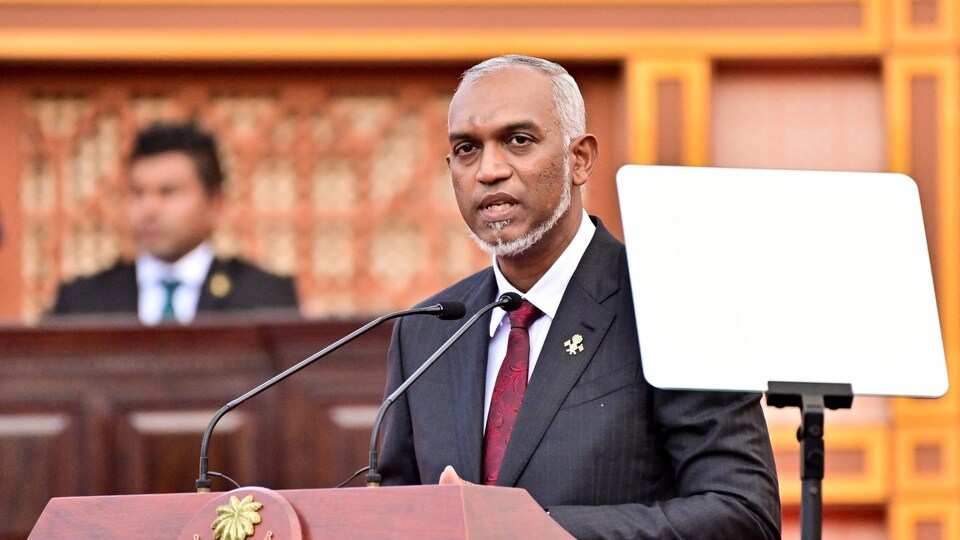
Less than 24 hours after taking oath as President of Maldives, Mohammed Muizzu on Saturday followed up on his 'Out India campaign' by formally requesting India to withdraw its military personnel from his country. However, Muizzu’s rhetoric and demand for the withdrawal of “Indian troops” need a closer examination of the actual nature of India's engagement in the island nation.
Firstly, contrary to Muizzu's assertion, India doesn't station troops in the Maldives. The fact is that India has only crews and technicians for its patrol vessel, Dornier aircraft, and two ALH helicopters, all adorned in Maldivian colours, for specific purposes such as medical evacuation, surveillance, and air rescue operations.
These assets play a crucial role in humanitarian missions rather than representing a military force. To label these assets as "Indian troops" is not just a misrepresentation but a falsehood.
Since 2019, there have been a total of 977 missions, with the majority dedicated to providing essential medical support to the Maldivian population. The limited air surveillance activities are a fraction of the overall operations, signalling a focus on humanitarian endeavours.
A more detailed breakdown of the missions allows us to discern the specific areas where these assets are deployed.
| Mission Type | Total Missions (2019-2023) |
|---|---|
| Medical Evacuation | 461 |
| Search and Rescue | 148 |
| Air Patrol | 69 |
| Miscellaneous | 22 |
The total number of missions shows an increasing trend from 2019 to 2022, reaching the highest in 2022 with 262 missions. However, there is a notable decrease in 2023 (up to October) with 159 missions compared to the previous year.
At a time when the Maldives is facing the dire consequences of climate change, with rising sea levels threatening its existence, India is well-positioned to provide immediate humanitarian relief. India has also invested significantly in the Maldives, amounting to over 1.5 billion dollars.
It is crucial for Muizzu to recognize that India is the Maldives' true ally, as demonstrated by its strategic investments, humanitarian efforts, and commitment to regional stability. Rather than pursuing an "Out India" campaign, Muizzu should focus on building a stronger partnership with India.


