
 E-Paper



Three IAF units get Air chief’s citation for Ladakh role
The units are No. 47 Squadron equipped with upgraded MiG-29 fighters, the 116 Helicopter Unit consisting of advanced light helicopter Mark IV (ALH Mk IV) Rudra and 2255 Squadron Det which operates the OSA-AK-M surface-to-air weapon

 Prefer HTon Google


Three units of the Indian Air Force were on Friday awarded the Chief of Air Staff’s ‘unit citation’ for their role in strengthening India’s military posture in eastern Ladakh after a border row erupted with China last year, officials familiar with the development said on Friday.
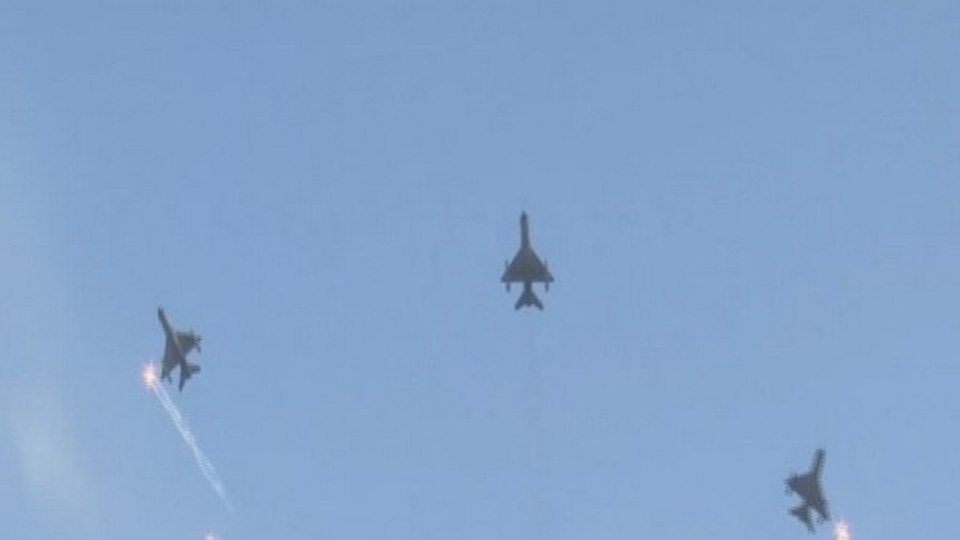
These units are No. 47 Squadron equipped with upgraded MiG-29 fighters, the 116 Helicopter Unit consisting of advanced light helicopter Mark IV (ALH Mk IV) Rudra and 2255 Squadron Det which operates the OSA-AK-M surface-to-air weapon, the officials said. It is customary for the IAF to announce ‘unit citations’ on IAF Day (October 8).
India and China have been locked in a border standoff for 17 months and both sides are carrying out negotiations to reduce tensions.
“In May 2020, the No. 47 Squadron was deployed for air defence as well as air-to-ground operations in the northern sector, and carried out extensive operations at high altitude,” said one of the citations.
After the February 2019 Balakot airstrikes by the IAF, the MiG-29 squadron was deployed in an air defence role and flew extensively to ensure that there was no misadventure by Pakistan.
After the Galwan Valley skirmish in June 2020, the 116 Helicopter Unit was deployed for offensive operations at a high-altitude airfield in the Ladakh area. “The unit quickly established the first-ever high-altitude attack helicopter detachment in the region and executed day and night operations, including air-to-ground weapons delivery at high altitude,” said another citation.
Also read: No Chinese soldier detained, no structural damage - Govt on Tawang standoff
A trust deficit persists between the Indian and Chinese armies after their soldiers were involved in the brutal clash along the contested LAC. The Galwan Valley clash of June 15, 2020, was the first deadly skirmish between Indian and Chinese troops along LAC in more than five decades, and it pushed the bilateral relationship to a breaking point - it left 20 Indian soldiers and an undisclosed number of Chinese troops dead.
The 2255 Squadron Det was mobilised for air defence activation in Ladakh following the Galwan Valley skirmish.
“Since then, the squadron has undertaken various innovations to sustain serviceability and reliability of its equipment. This has enabled it to maintain its operational readiness in harsh climatic conditions,” said a third citation.
The IAF played a critical role when border tensions with China peaked last year. It projected its capability to carry out day-and-night, all-weather combat missions in the sensitive sector, with front-line fighter jets, attack helicopters and multi-mission choppers. IAF also deployed its new Rafale fighter jets in the Ladakh sector as part of India’s overarching plan to strengthen its military posture in the region.
The air force’s MiG-29 fighter jets, Sukhoi-30s, Apache AH-64E attack helicopters and CH-47F (I) Chinook multi-mission helicopters are among the platforms that have operated in the Ladakh sector.
IAF’s C-17 Globemaster III transport aircraft were used to move soldiers, tanks and infantry combat vehicles to the sector, while C-130J Super Hercules aircraft have undertaken sorties to the advanced landing ground in the strategic Daulat Beg Oldie (DBO) sector to support the military’s forward deployments.
The IAF also flew the army’s K9 Vajra-T self-propelled artillery guns to Ladakh earlier this year.


