E-Paper



Tibetan leadership opened back-channel talks with China, says head of govt in exile
The opening of back channel communications comes at a time when India and China are locked in a military standoff in Ladakh

 Prefer HTon Google


The Tibetan government-in-exile has opened back-channel communications with China more than a decade after the breakdown of formal talks though there is no expectation of an immediate breakthrough, according to the head of the Central Tibetan Administration (CTA).
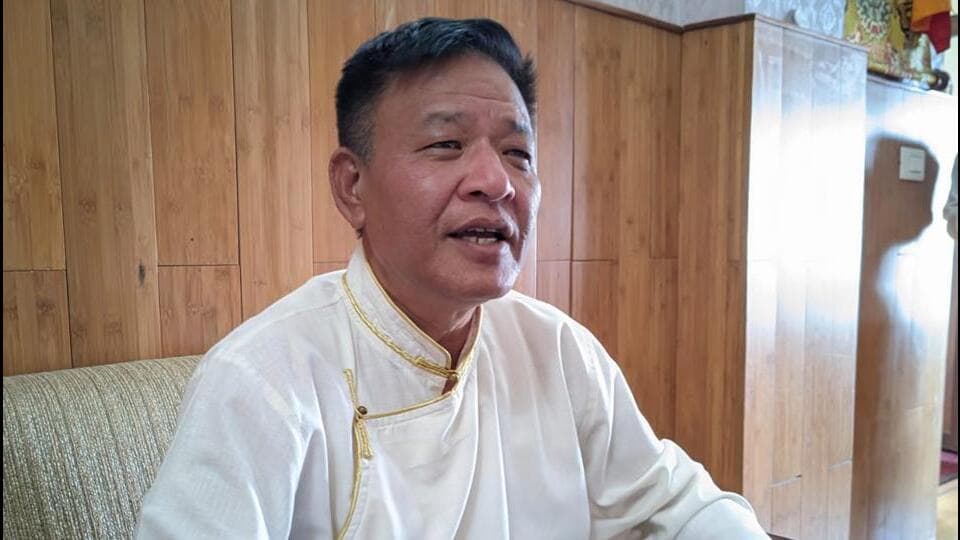
Penpa Tsering, the Sikyong or political leader of the government-in-exile based in this Himachal Pradesh town, said his interlocutor has been dealing with “people in Beijing”, and “other elements” on the Chinese side have sought to reach out to the Tibetan leadership.
“We do have back channel [communications] since last year, but we have no immediate expectations. It has to be long-term. We keep the communications going, it has been almost more than a year since we started the back channels,” Tsering said.
“They [the Chinese] are reaching out to us, it’s not us reaching out to them. But to hope for something at this juncture? It is not realistic,” Tsering told a small group of reporters at his office in Dharamshala.
The back channel communications, described by Tsering as “very informal”, represent the first contact between the CTA and Chinese authorities since formal talks between an envoy of the Dalai Lama and Chinese representatives broke down in 2010 after nine rounds of dialogue.
Norzin Dolma, the Kalon or Tibetan minister for information and international relations, too acknowledged the back channel communications and said there is no certainty of any “concrete or substantive outcome” from these contacts.
During formal talks between 2002 and 2010, the Tibetan side presented a document known as the “memorandum on genuine autonomy for the Tibetan people”, which encapsulated its demands and proposals “in terms of the middle way policy”, to China in 2008, Dolma said. Following misgivings on the Chinese side about these proposals being a demand for “independence in disguise”, the CTA submitted a formal note to Beijing that sought to address misunderstandings before the talks ended abruptly.
The opening of back channel communications comes at a time when India and China are locked in a military standoff in Ladakh sector of the Line of Actual Control (LAC) that has taken bilateral relations to a six-decade low. The Tibet Autonomous Region and other areas falling within the historic borders of Tibet are among the regions where the Chinese side has bolstered its military presence since the face-off began in May 2020.
Tsering said the CTA works very closely with the external affairs ministry and Indian security agencies on the issue of Tibet and both sides have “always enjoyed a very transparent relationship”. He also acknowledged that the “Chinese belligerence on the border” had resulted in the Tibetan issue getting highlighted in India.
“Now we have a lot of media attention, from intellectuals, [and] a lot of people writing about the need for a change in the Indian government’s position on Tibet,” he said. “As and when there is friction between India and China, there is always a little more focus.”
Pointing to India’s foreign policy becoming “more vibrant” and the growth oof India’s influence around the world, Tsering said: “We would definitely want India to be a little more vocal [on the issue of Tibet] at multilateral forums such as the UN.”
Noting that India doesn’t make statements on Tibet during the periodic review of human rights in China by the United Nations Human Rights Council, Tsering said: “Normally, [other] countries look at the leadership of India because India is one country that knows Tibet historically...So, in that sense we would like them to be a little more vocal.”
Endorsing the Indian government’s position that relations with China cannot be normalised without the disengagement of troops at friction points on the LAC, Tsering noted that China has shifted the focus of its foreign policy towards the Global South as part of efforts to compete with India in leading developing countries.