
 E-Paper



TN FM bats for streamlining of distribution of subsidies
The subsidies have been a major part of Tamil Nadu’s expenditure due to the welfare politics of the state. The idea for reformation to reorient subsidies only to the poor digresses from welfare schemes to all. He Rajan cited the case of cash doles and 100 free units of electricity, which is meant to support have-nots also reaching the haves and that it is being misused.


Tamil Nadu is likely to tighten the screws on state expenditure with finance minister Palanivel Thiaga Rajan advocating urgent course correction in rolling out subsidies, pushing for making them more targeted rather than universal. The revised budget, to be presented on Friday, is expected to demonstrate the way on how these profound reforms are to be carried out.
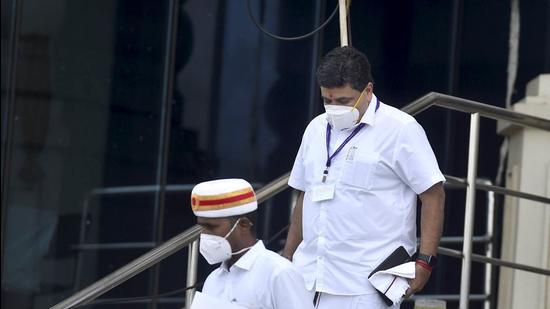
The subsidies have been a major part of Tamil Nadu’s expenditure due to the welfare politics of the state. The idea for reformation to reorient subsidies only to the poor digresses from welfare schemes to all. He Rajan cited the case of cash doles and 100 free units of electricity, which is meant to support have-nots also reaching the haves and that it is being misused.
Going by the trends in expenditure, according to the White Paper on the state’s finances that Rajan released on Monday, development expenditure of Tamil Nadu has been declining while expenditure in subsidies has rapidly increased. “There is strong evidence of inefficiency in the delivery of subsidies, with a considerable portion being misdirected or diverted,” Rajan had said after releasing the white paper. He batted for developing targeted and cost-effective alternative means of delivering the intended financial assistance to stakeholders. This is to be done in a way without compromising on the delivery of essential commodities and services to vulnerable sections but the jury is out on how this can be executed.
Subsidies that amounted to ₹4,841.8 crores in 2006-07 have risen to ₹62,338.8 crores in 2020-21. In other words, subsidies which accounted for 12.6% in 2006 have currently risen to 27% of the state’s total revenue expenditure. The remaining being used for salaries, operations, grant-in aids, pension and interest payments. Even if Covid-19 pandemic was considered, where several handouts were given due to the lockdown, subsidies reached 19.5% total expenditure in 2018-19, and the white paper says this is misgovernance.
Power subsidy is the highest (at 1.10% GSDP) among all the other subsidies. This is a double whammy as the state government is also losing money on the power sector due to mounting losses of the electricity board (Tamil Nadu Electricity Board and Tamil Nadu Transmission Corporation). It’s followed by food subsidy (0.49% of GSDP) and transport subsidy (0.19% of GSDP).
“The growth in the power subsidy is particularly alarming, and it currently represents more than 1% of GSDP,” the paper stated. And though Tamil Nadu provides rice free to all rice cardholders from 2011 through the Public Distribution System (PDS), a significant portion of the subsidy on rice is met through the National Food Security Act, 2013, and the state further subsidises it to provide free rice. The state also covers entirely to provide edible oil and Tur Dal at subsidised prices.
The PDS system which is universal doesn’t exclude based on income criteria and distribution is done through more than 33,000 fair shops across the state. Out of the five different family cards in circulation in Tamil Nadu, rice cardholders are the highest at ₹2.07 crores. The new DMK government promised ₹4000 to every rice card holder on its first day after taking charge. This cash dole reached even the well to do, according to the finance minister. “A few are benefiting, and many are losing,” he said. “The system has been taken over by vested interests. The vested interests oppose the reforms and engage in propaganda to stop this reform.” When it’s for all it’s neither social justice nor economic prudence, he added.
Currently, there is an absence of a mechanism to assess a ration card holder’s income, their tax slabs and those who are entitled. “That’s fundamentally an inefficient system,” says K E Raghunathan, convener, Consortium of Indian Association. “If that has been done, then the worry of misusing these funds is a negligible amount.”
As a first step, if the state were to demarcate those below the poverty line and re-categorise the cards, rice hard holders will fall way below ₹2.07 crores. “We need to re-look at subsidies and remove those who are not entitled,” says political analyst Maalan Narayanan. “Define the target and decide on the process of transfer. This is the right time to do it because it’s a burden on the government but it requires political will, and the party may not take such bold decisions ahead of the local body polls.” The finance minister too had said that these reforms are his opinion, but he would abide by chief minister M K Stalin’s final call.
But Raghunathan differs that when the state is facing a financial crisis, now may not be the right time to focus on this reform being suggested which is similar to Narendra Modi’s digitisation drive in 2014 to be transparent, and ensure government support reaches the right target. “I would call this minimum scale pilferages, and if we try and correct it now,” he says. “The numbers say this. Without considering last year, the average deficit is about ₹30,000 crores. These kinds of misuses maybe around ₹7000 crores. For that, you’re going to spend time and money just on data collection, which will be a penny-wise and pound-foolish exercise.”
While subsidies are being argued, the drop in development expenditure in Tamil Nadu from 62.9% in 2011-12 to 57.5% in 2018-19 means the social insurances for the people of Tamil Nadu have fallen in terms of education, medical and public health, water supply and sanitation, housing and on economic services including agriculture, irrigation, industry and minerals, transport and communication.


