
 E-Paper



QUAD committed to Indo-Pacific, to meet on May 24
HT learns that the QUAD summit will happen on May 24 unless the Australian government wants a postponement.

 Prefer HTon Google


The much-awaited QUAD summit is expected to be held in Tokyo around May 24, provided the Australian general elections on May 21 do not result in an unfavorable outcome for incumbent Prime Minister Scott Morrison.
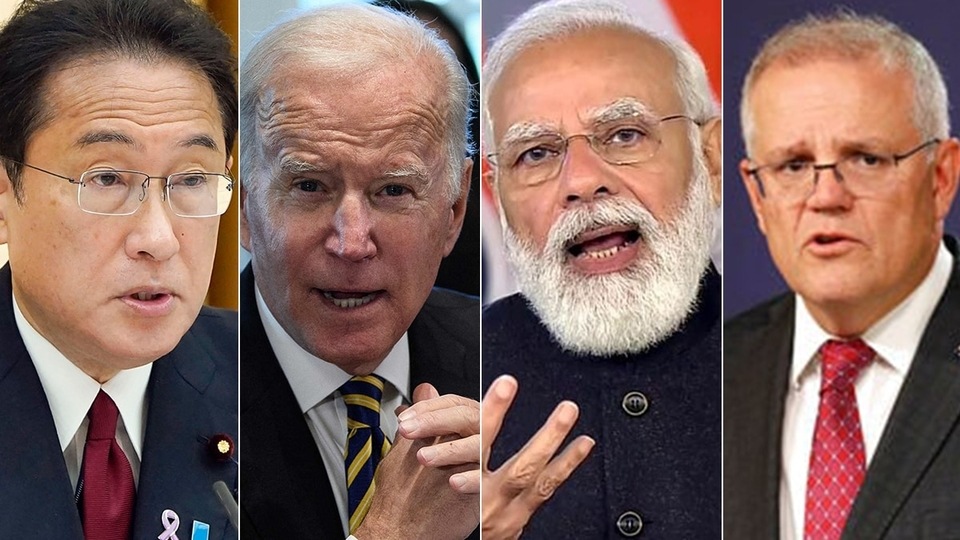
According to diplomats based in Washington and Tokyo, while US President Joseph Biden, Japanese PM Fumio Kishida and Prime Minister Narendra Modi have converged on May 24 as the date for the QUAD meeting, the Australian Foreign Ministry wants to wait for the May 21 election results before confirming.
HT learns that the QUAD summit will happen on May 24 unless the Australian government wants a postponement. That may happen if the incumbent loses; as things stand Morrison’s opponent from the Labour Party, Anthony Albanese, is doing better than expected, though the former is still ahead, but only just.
India, led by PM Modi is looking forward to the QUAD summit with Washington firmly committed to New Delhi on convergence in the Indo-Pacific and making the grouping a powerful instrument of law-abiding democratic countries. Apart from the odd friction on Human Rights, the India US two-plus-two dialogue went off well with both countries showing close convergence on most issues, the diplomats said. It is understood that the Biden administration gave a commitment that it is in for the long haul in the Indo-Pacific despite its immediate preoccupation with Russia’s ongoing invasion of Ukraine.
HT learns that the Americans are keen on the May 24 date for the summit as President Joe Biden is expected to travel to East Asia including Japan during that time.
The QUAD summit’s agenda was defined at the February meeting of the foreign ministers of the countries and the video conference of their leaders in March with all countries agreeing to work together on a shared agenda and vision for the Indo-Pacific and beyond. Apart from open and free Indo-Pacific, the QUAD has changed gears and moved on to vaccine support, emerging and critical technologies, counter-terrorism and counter-radicalization, and building resilient and trusted supply chains not dependent on one country.
With the war in Ukraine showing no signs of ending, the QUAD leaders will discuss the conflict initiated by Russian President Vladimir Putin and also work on getting Asean countries such as Indonesia and Philippines involved in the shared vision of Indo-Pacific, the diplomats added. The QUAD leaders will also share their assessment of Chinese belligerence towards Taiwan and its deep reluctance to disengage and de-escalate on its East Ladakh border with India after the Chinese PLA’s transgressions in the area in May 2020.
Although China calls QUAD a confrontational bloc or Asian NATO, the QUAD leaders — there are also very close bilateral ties between the members — have always emphasized that they have a much broader global good agenda than just confronting China, the diplomats pointed out .


