
 E-Paper



Top court seeks Centre’s response on code to regulate pharma corruption
The petitioners demanded framing of a Uniform Code of pharmaceutical marketing practices to have the force of law which can be enforced against the drug manufacturing companies with penal provisions for those who violate the code.


The Supreme Court has sought the Centre’s response on a petition to make pharmaceutical companies equally liable for openly bribing doctors with free gifts, travel packages and hospitality in exchange for prescribing their drugs.
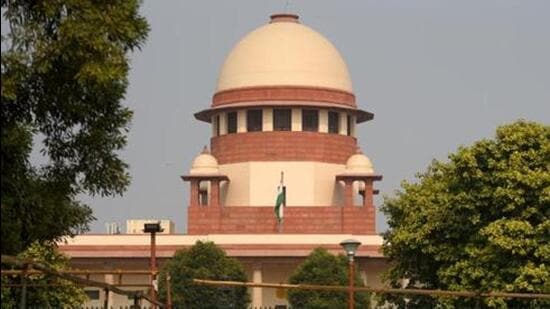
A bench of justices Dhananjaya Y Chandrachud and Surya Kant sought the response from the Centre within six weeks after hearing arguments on the petition advanced by senior advocate Sanjay Parikh.
The petition was filed by a group and two individuals, the group being the federation of medical and sales representatives association of India having representation across 300 cities. The secretary of this association was the second petitioner followed by Amitava Guha, the national coordinator of Jan Swasthya Abhiiyan, a NGO which keeps a close watch on the working of the pharmaceutical industry.
The petition said, “There are abundant examples that show how corruption in the pharmaceutical sector endangers positive health outcomes and puts patients’ health at risk. As violations of this kind have become a recurring phenomenon and are progressively becoming more pervasive, the petitioners pray that a statutory code of ethical marketing for the pharmaceutical industry, with penal consequences, be established to curb such practices for the enforcement of the fundamental right to health of the people of India.”
Advocate Aparna Bhat who filed the petition told the Court that presently the Indian Medical Council (Professional conduct, Etiquette and Ethics) Regulations of 2002 prescribe a code of conduct for doctors in their relationship with pharmaceutical and allied health sector industry. As per this Code, acceptance of gifts and entertainment, travel facilities, hospitality, cash or monetary grants by medical practitioners from pharmaceutical companies is prohibited.
However, this Code is enforceable against doctors and does not apply to drug companies. “This leads to anomalous situations where doctors’ licenses are cancelled for misconduct which is actuated, encouraged, aided and abetted by pharmaceutical companies. The pharmaceutical companies go scot-free,” said the petition.
“We will issue notice and post this matter after six weeks. Let us see what the government has to say on this,” the bench remarked.
The petitioners demanded framing of a Uniform Code of pharmaceutical marketing practices to have the force of law which can be enforced against the drug manufacturing companies with penal provisions for those who violate the code. Till such time, the law is put in place, the petitioners urged the Court to consider laying down guidelines to regulate unethical medical practices by pharma companies.
Last month, the top court had come down hard against the practice of freebies given by pharmaceutical companies to doctors in a judgment which held that no tax exemption is available on freebies spent by companies towards promotion of their products.
It said, “It is a matter of great public importance and concern, when it is demonstrated that a doctor’s prescription can be manipulated and driven by the motive to avail the freebies offered to them by pharmaceutical companies, ranging from gifts such as gold coins, fridges and LCD TVs to funding international trips for vacations or to attend medical conferences.”
The petition quoted a study and said, “A study noted that top seven pharmaceutical companies together had spent Rs. 34,186.95 crores in marketing spend in eight years making drugs expensive.” The study further stated that sales promotion constitutes 20% of the cost of drugs which makes these medicines far from the reach of the common man.
Contrasting the position that exists in other countries, the petition said, “Numerous countries, including the United States, France, Germany, Hungary, Italy, U.K., Venezuela, Argentina, Russia, China, Hong Kong, Singapore, Australia, South Korea, Philippines, Malaysia and Taiwan have enacted stringent laws to curb corruption in the pharmaceutical sector.” This has been achieved by enacting laws to prevent or regulate bribery in private sector or by bringing special laws in this regard to regulate corruption in pharmaceutical sector.


