E-Paper



Top court to hear Places of Worship Act pleas in April
CJI Sanjiv Khanna, who was sitting in a two-judge combination for the day, emphasised that the matter requires a three-judge bench, leading to its deferment.

 Prefer HTon Google


The Supreme Court on Monday adjourned the hearing on multiple petitions concerning the validity and enforcement of the Places of Worship (Special Provisions) Act, 1991, to the first week of April, citing a lack of quorum.
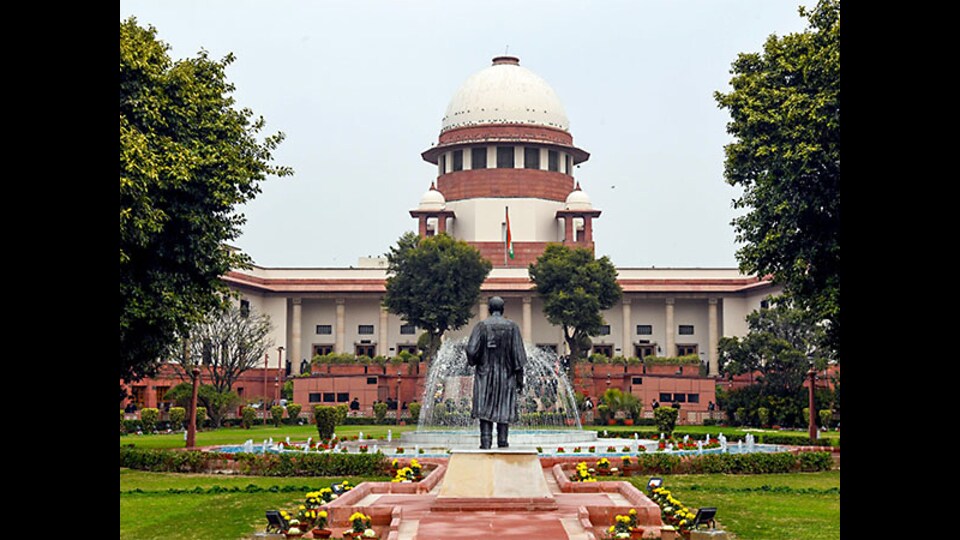
Chief Justice of India (CJI) Sanjiv Khanna, who was sitting in a two-judge combination for the day, emphasised that the matter requires a three-judge bench, leading to its deferment. The CJI also expressed concern over the growing number of fresh petitions and applications related to the act. In its last hearing, the top court had paused a batch of petitions, where Hindu groups are seeking worshipping rights in mosques, until the case is decided.
When the proceedings began on Monday, senior advocate Indira Jaising, appearing for one of the petitioners, sought clarity on whether the matter would be taken up during the day’s proceedings. Responding, CJI Khanna stated: “It won’t be taken today. It’s a three-judge bench matter. We are in a two-judge bench combination today.”
Jaising further noted that the framing of issues in the case was pending, to which the CJI replied that the task will also be undertaken by a three-judge bench. Indicating a tentative timeline, justice Khanna said that the case will be heard “sometime in March”.
The CJI also expressed concern over the growing number of fresh petitions and applications related to the act. When a lawyer mentioned filing a new petition, CJI Khanna remarked: “There’s a limit to which new petitions could be admitted. We will see...”
Later in the day, when the matter was called out, the bench scheduled the next hearing in the week commencing April 1. The court also lamented that with scores of fresh pleas being filed, the docket concerning the case was becoming “unmanageable”. The bench then proceeded to pass a short order clarifying that all fresh petitions in the case will stand dismissed but these petitioners will have the liberty to for file applications raising new grounds in the pending matter.
Senior counsel Abhishek Manu Singhvi, Dushyant Dave, MR Shamshad, among others, appeared for the parties demanding dismissal of Bharatiya Janata Party (BJP) leader and advocate Upadhyay’s petition. Solicitor general Tushar Mehta represented the Union government.
On being pointed out that the Centre was yet to submit its affidavit in the matter, the court responded that there were fresh petitions and applications being filed on a daily basis. “Everyone says that they are not raising new grounds…May be that is why (the affidavit is yet to be filed),” rued the bench.
The primary petition challenging the act was filed in 2020 by Upadhyay. The plea argues that the legislation discriminates against Hindu, Sikh, Jain and Buddhist communities by freezing the religious character of places of worship as they stood on August 15, 1947, while making an exception for the Ram Janmabhoomi-Babri Masjid site in Ayodhya which was already in courts at the time.
The act has become a focal point in legal and political debates, with several Hindu litigants arguing that it infringes upon fundamental rights by restricting their ability to reclaim places of worship allegedly altered during historical invasions. BJP leaders, including Subramanian Swamy and Upadhyay, have been among the most vocal critics of the act, advocating for its annulment.
On the other side, political and religious organisations, including All India Majlis-e-Ittehadul Muslimeen chief Asaduddin Owaisi and Muslim groups such as Jamiat Ulama-i-Hind, have staunchly defended the act. Owaisi’s petition, which was tagged with related cases by the Supreme Court on January 2, calls for strict enforcement of the law, arguing that it is essential to maintaining communal harmony and preserving India’s secular framework.
Amid the ongoing legal battle, the Congress entered the fray last month by filing an application in the Supreme Court to oppose the challenges to the act. The Congress contended that the act is a “cornerstone of secularism” and accused the petitioners of attempting to undermine constitutional principles. Rashtriya Janata Dal (RJD) MP Manoj Jha also filed an intervention application in November, asserting that the act does not violate any fundamental rights.
On December 12, a special three-judge bench comprising justices Sanjay Kumar and KV Viswanathan, along with CJI Khanna, issued an order barring all courts in the country from entertaining fresh suits or conducting surveys to determine the religious character of places of worship. This decision came in response to escalating litigation by Hindu groups seeking surveys of various mosques, including the Gyanvapi mosque in Varanasi and the Shahi Idgah Masjid in Mathura, in suits alleging that the Islamic structures were built after demolishing temples. The directive effectively stayed proceedings in nearly 18 such lawsuits that had fuelled communal and political tensions.
During the same hearing, the apex court also granted the Union government four weeks to clarify its stance on the act, a response that has been pending for over two years despite the growing number of petitions. The Supreme Court had admitted pleas challenging the Act in March 2021, but the Centre is yet to file a conclusive affidavit outlining its position.