
 E-Paper



Trump's Nobel Peace Prize obsession shaping his policy from India to Venezuela? What his claims and actions reveal
Trump's pursuit of “peace” legacy appears to be influencing high-stakes decisions; and he makes no secret of his desire, from press meets to social media to UN

 Prefer HTon Google


Donald Trump is defined often as unpredictable — the word “mercurial” is preferred by diplomats and politicians — but there appears to be at least one clear pattern in his administration's foreign policy, which analysts suggest is fueled by his decade-long desire for the Nobel Peace Prize.
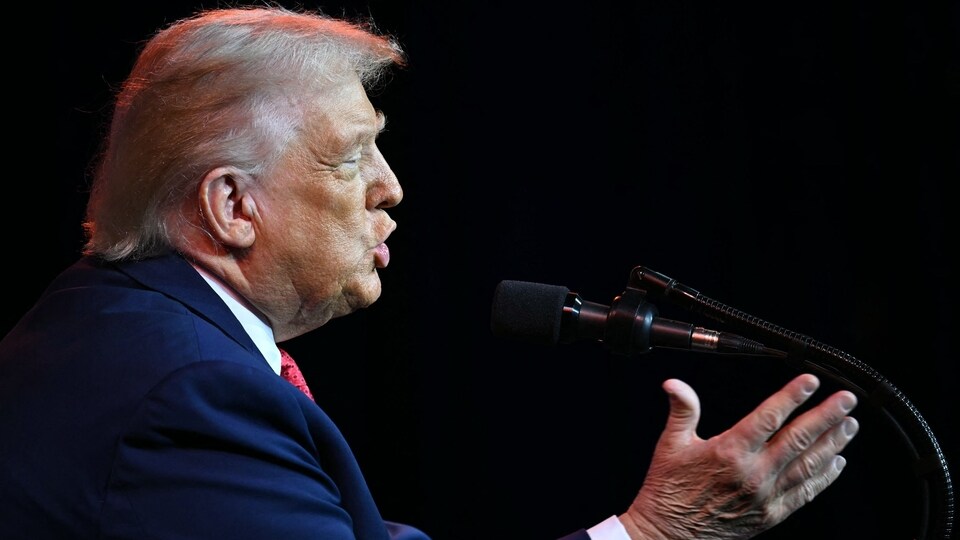
Trump has seen at least four previous US presidents receive the honour, including Barack Obama whose joke at a party is often meme material for why the real estate tycoon ran for President at all.
His pursuit of a “peace” legacy appears now to be influencing high-stakes decisions: from trade tariffs on India to leadership transitions in Venezuela.
And he has made no secret of his desire for the Nobel Peace Prize, stating it upfront in press conferences to Truth Social posts to the United Nations stage.
He repeated this on Wednesday too, saying he had “ended eight wars” and that “without my involvement, Russia would have ALL OF UKRAINE right now”.
“Norway, a NATO Member, foolishly chose not to give me the Noble Peace Prize,” he posted on Truth Social.
European members of security grouping NATO have been having strong disagreements with Trump over his stance on Russia's war on Ukraine, and his repeated threats to annex Greenland from Denmark after the action in Venezuela.
Last year, Venezuelan opposition leader Maria Corina Machado was chosen for the Nobel, and she insisted that she's dedicated it to Trump.
But Trump is not interested in putting her upfront in his plans for Venezuela after President Nicolas Maduro.
Also read | Warning from US embassy in India for student visa holders
Fracas in Caracas: Trump drops main oppn leader from Maduro replacement list
Even when the political landscape of Venezuela has been thrown into suspense following US-led strikes and the capture of Maduro and his wife, Cilia Flores, by American forces, the change has not been drastic in one sense.
The Trump administration has been hesitant to move toward immediate elections, with Secretary of State Marco Rubio labeling such a move as "premature".
Instead, Trump has asserted that the United States will be "running" the country for the time being, focusing on "fixing" it rather than facilitating a quick democratic handover. The current leadership has fallen to falling Vice President Delcy Rodriguez, whom opposition leaders describe as a hardliner that "nobody trusts". But he appears to have US backing for now.
Passed Over: ‘Ultimate Sin’ of Maria Machado
Opposition leader Maria Corina Machado was a key figure not so long ago, even winning a primary poll to challenge Maduro before being banned by his regime. Trump, however, has withheld his endorsement for her.
Sources close to the White House have told news agencies that her acceptance of the Nobel Peace Prize, which Trump has been eyeing, as the “ultimate sin”. Reports suggest that had Machado turned down the award and claimed that ‘it rightfully belongs to Trump’, she “might be the President of Venezuela today”.
Trump, in fact, has publicly questioned her potential, claiming she lacks "respect" within her own country, despite her assertions that she is “ready to serve”.
Nobel effect on India too
Trump’s quest for the Nobel is also inextricably linked to his efforts to end the Russia-Ukraine conflict, a mission that has placed India in a difficult diplomatic position.
In August 2025, the Trump administration doubled tariffs on Indian imports to 50%, a move largely seen as a pressure tactic to force New Delhi to resolve the “Russian oil issue”. Trump recently hinted at further tariff hikes, stating that while Prime Minister Narendra Modi is a “good guy”, he knows the US President is "not happy" with India's continued purchase of Russian oil.
Trump had previously claimed that PM Modi "assured" him India would stop these purchases, an assertion that the Indian government has denied. The administration alleges that India is "profiteering" and "making billions" from reselling Russian oil, which they claim fuels the war in Ukraine.
Amid this, a trade deal between India and the US hangs in limbo as talks continue for nearly a year now.
Operation Sindoor, and Trump's truce claims
Then there is his claim of “brokering” peace between India and its sworn enemy neighbour, Pakistan.
To strengthen his case for the Nobel committee, the Trump administration has aggressively marketed the President as a prolific peacemaker. While the Russia-Ukraine war remains unresolved despite Trump's "day one" promise, he views a potential resolution to the war in Gaza as a major step toward the prize.
White House Press Secretary Karoline Leavitt has claimed that since his return to power in January 2025, Trump has brokered “on average, one peace deal or ceasefire per month”. The US list of includes conflicts between Cambodia and Thailand, Egypt and Ethiopia, Rwanda and the DR Congo, and Serbia and Kosovo, plus India and Pakistan.
Trump has personally made the bold claim of “solving eight wars”, calling himself a man of peace even ahead of the US strike in Venezuela. He continues to make military threats to Colombia, Greenland, and other places, with Iran being in focus next.
For India, his claim of having forced an end to Operation Sindoor in May 2025 have spelt a diplomatic tightrope. This operation came after a terror attack in Kashmir's Pahalgam, and India has maintained that its bilateral matters are not governed by "foreign cues". This, reports have said, is among reasons why he continues to “blow hot, blow cold” towards Modi-led India.
Trump has got an endorsement from Pakistan, though.
Top Democratic leader Rahm Emanuel has blamed President Donald Trump's ego for having “thrown away 40 years of meticulous strategic planning” with India over his Nobel prize desire. He also raised serious questions over Trump's coziness towards Pakistan, saying Trump's son was “getting money from Islamabad”.
“He threw it all away because Modi would not say that the President deserves a Nobel Peace Prize for the ceasefire (with Pakistan),” said Emanuel, a former aide of Barack Obama who also served as ambassador to Japan during Trump's administration not too long ago.
Wait for Nobel continues
PM Shehbaz Sharif has loaded him with praises, and Trump has returned the favour, also adding words of admiration towards Pak military boss Asim Munir.
Another big endorsement came from Israel Prime Minister Benjamin Netanyahu, who faces charges of “genocide” in Gaza.
Trump has got a newly-instituted Peace Prize from football governing body FIFA in the meantime.
But the Nobel Peace Prize wait will at least be till October next — if at all the five-member committee appointed by the Norwegian parliament chooses him.


