
 E-Paper



UK court leans on India’s assurances, denies Nirav Modi fresh shot at extradition
Nirav Modi, accused of defrauding Punjab National Bank of ₹6,498 crore, has been lodged in a UK prison since his arrest by Scotland Yard on 19 March 2019.

 Prefer HTon Google


An attempt by fugitive diamantaire Nirav Modi to reopen his extradition proceedings (decided against him in 2022), failed on Wednesday when the High Court of Justice in London refused his plea, primarily on assurances given by the Indian government that he would not be interrogated by any of the five investigating agencies, Central Bureau of Investigation, Enforcement Directorate, Department of Revenue Intelligence, Serious Frauds Investigation Office, and the Income Tax department, if extradited to India.
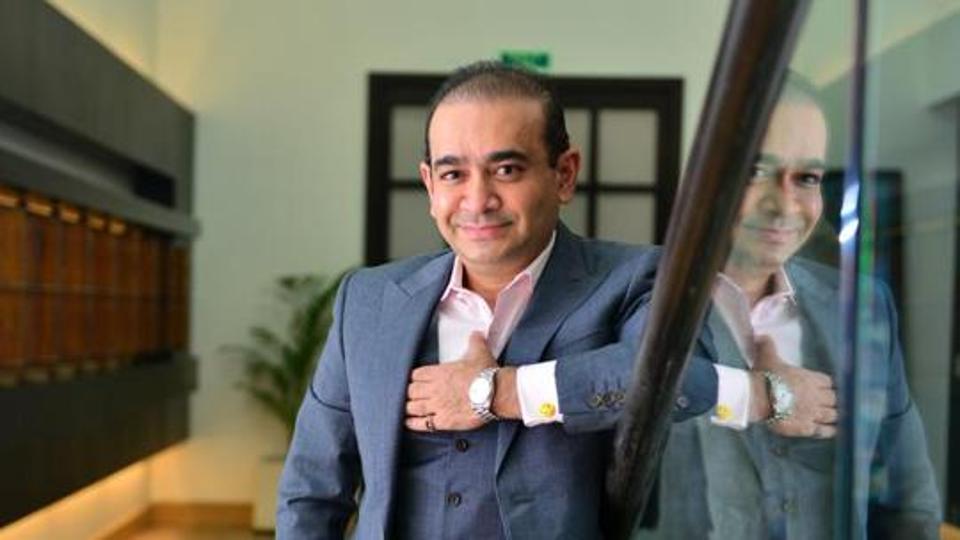
In an 18-page judgement, reviewed by HT, the bench of Lord Justice Jeremy Stuart-Smith and Justice Robert Jay ruled that the circumstances seeking reopening the extradition are “not exceptional”. The judges recognised India’s assurances, terming them “specific and not general and vague”, adding that they were given “in good faith” and with the intention that they should be binding.
Following the decision, CBI said in a statement that Modi’s challenge was “successfully overcome” with sustained and coordinated efforts of the agency. It said that matter was “strongly argued by the Crown Prosecution Service (CPS) advocate (Helen Malcolm)”, “ably assisted by a dedicated team of CBI, including investigating officers who travelled to London for the hearing (last week)”.
What was Nirav Modi’s appeal?
In his appeal, filed in August 2025 and argued through a renowned UK based extradition lawyer, Edward Fitzgerald (who has appeared for other Indian fugitives including Sanjay Bhandari), Nirav Modi said “if he is returned to India he will be interrogated and be subject to torture and ill-treatment”.
Modi backed his plea by citing the February 28, 2025 UK high court judgement in the Sanjay Bhandari case, which stated that “Bhandari would be at real risk of extortion, torture or violence in Tihar jail, from other prisoners or prison officials” and refused his extradition to India. The court, in April 2025, disallowed India’s appeal to the Supreme Court, making Bhandari a free man in London.
ALSO READ | Ex-PNB clerk seeks discharge in ₹13,700-crore Nirav Modi fraud case, hearing on April 13
To bolster his argument of interrogation by Indian agencies and subsequent torture, Modi produced two expert witnesses , Ashul Agarwal (an Indian lawyer) and a former Supreme Court judge Deepak Verma.
Fitzgerald submitted that there are clear parallels between the Bhandari and Nirav Modi cases, including the UK HC’s observation that Bhandari “is, or would be perceived to be, a wealthy man”. Fitzgerald contended that “torture and ill-treatment by investigating agencies in India remain endemic and commonplace because the situation has not improved since Bhandari was published in February 2025”.
Modi’s lawyer also observed before the UK high court that Nirav Modi is a particularly “big scalp” for the government of India. He further said that a risk of further questioning (of Modi) by all five of the relevant investigating agencies remains. “Further, there is no effective monitoring system in place in India….” he argued.
Fitzgerald relied on the fact that other extraditees have been interrogated following extradition, including British middleman Christian Michel (in the AgustaWestland VVIP chopper probe).
Citing testimony of his two expert witnesses, Fitzgerald submitted that “ investigating agencies are independent of the government of India, the (Indian government’s) assurances are not binding on them, and that the latter cannot instruct them what to do or not to do”.
Indian government’s response and arguments
To contest Modi’s claims, the Indian government sent two sovereign assurances to the UK saying that Modi would not be interrogated by any of the agencies and will face trial in court.
The first assurance was given on September 10, 2025. It was sent by the ministry of external affairs and stated that “neither the CBI nor the ED is empowered under Indian law to interrogate Modi after he is extradited in connection with the offences for which he is being extradited, and in any event, there is no intention or need to interrogate Modi because these cases are ready to proceed to trial”.
ALSO READ | Nirav Modi will only face trial, won't be interrogated by agencies: India to UK
It also said that “without prejudice to the above, all the five investigating agencies of India including CBI have confirmed in writing that his custodial interrogation is not required by them and even if it is required at any stage in the future, the same will not be done without taking prior consent [of the UK]”.
The second assurance was given on December 2, 2025 by Rakesh Pandey, joint secretary in the ministry of home affairs (MHA) to His Majesty’s government in the UK. It stated that “the extradition of Nirav Modi is sought only for the judicial trial in India for the above-mentioned cases of CBI and ED in India. Following his extradition to India, Mr Modi will not be interrogated by CBI in relation to the matters for which extradition is sought or in relation to any other allegations or proceedings. In future, if any need arises for his interrogation in relation to the other ongoing cases by CBI, the same will be done only with prior recourse to the UK courts/authorities for permission as per the conditions laid down by the UK courts/authorities”.
“Modi will not be interrogated by the ED in relation to the matters for which extradition has been sought or in relation to any other allegations or proceedings. Modi will not be interrogated by any other investigating agency (including the SFIO [Serious Fraud Investigating Office], DRI [Directorate of Revenue Intelligence] and CBDT [Central Board of Direct Taxes]) in relation to any ongoing allegation or proceeding. In accordance with the Rule of Specialty, Nirav Modi will not be subjected to any trial concerning offences beyond the scope of the extradition offences without taking consent of the government of the UK. Even after such a consent is granted, the Government of India will not transfer him from the Arthur Road Prison to any other prison in India. There are fully functional video conferencing facilities available in Arthur Road Prison through which Modi can be produced before any outstation court in India,” Pandey’s assurance said.
Thereafter, CBI, through its Superintendent of Police, Amit Kadam, provided an affidavit on December 9, 2025 confirming that in relation to the proceedings brought against Modi by the agency “the trial court was now seized of the matter and the investigating agency had no further role to play”. A similar affidavit was given by ED’s assistant director Suryakant Swarnkar on December 9, 2025.
On February 12, 2026 the Indian High Commission in London sent a note verbale to His Majesty’s government stating that all matters relating to extradition are within the exclusive powers of the central government of India and the assurances provided are binding and will be scrupulously adhered to by all the law enforcement agencies/authorities in India.
High court’s ruling in India’s favour
The bench of Lord Justice Jeremy Stuart-Smith and Justice Robert Jay found the assurances “specific and not general and vague,” given by a ministry of home affairs official competent to bind the government of India, the state of Maharashtra, and all five agencies.
They said assurances had been given “in good faith and with the intention that they should be binding”, adding that they had “not been given with an eye to wriggling out of them.”
But the judgment made clear how close the outcome had been. The court acknowledged that the Bhandari ruling presented a “worrying picture” of the use of proscribed treatment to obtain confessions, which it characterised as “commonplace and endemic.”
“The jurisdiction to re-open an extradition appeal requires the existence of exceptional circumstances as well as the identification of a real injustice that must be obviated. When Modi’s case came before us in the autumn of 2022, the material underpinning the decision in (Sanjay) Bhandari was either not available or was not drawn to our attention. This Court’s judgment in Bhandari presents a worrying picture of the use of proscribed treatment to obtain confessions which was characterised as ‘commonplace and endemic’. Were it not for the statements made and assurances given by the government of India between September 2025 and February 2026, culminating in the note verbale to which we accord considerable weight, we would be minded to re-open this appeal in the exercise of this exceptional power,” the court said on Wednesday.
India did not contest that the Bhandari findings applied to Modi, resting its case entirely on the quality of the assurances, the order noted as the court accepted this approach.
“Understandably, the government of India has not sought to contend that the findings in Bhandari do not apply to Modi but rests its case entirely on the quality of the assurances that it has given,” it added.
It stated that the bilateral relationship between the UK and India, the high-profile nature of the case, and Modi’s guaranteed daily access to lawyers and a medical team under , as promised under assurances, all weighed in India’s favour — even though the new assurances will not be formally monitored. The court also observed that while India is not a signatory to the UN Convention Against Torture, it was satisfied that torture is not permitted under Indian law.
The same bench dismissed Modi’s appeal against extradition in November 2022, and subsequently refused him permission to approach the UK Supreme Court.
Nirav Modi’s profile
Accused of defrauding Punjab National Bank of ₹6,498 crore — part of a total ₹13,578 crore fraud, with around ₹7,000 crore linked to his uncle Mehul Choksi — Modi has been in a UK prison since his arrest by Scotland Yard on March 19, 2019, on the basis of India’s extradition request. A district judge at Westminster Magistrates’ Court ordered his extradition on February 25, 2021.
Modi was declared a fugitive economic offender under the Fugitive Economic Offenders Act, 2018. The Enforcement Directorate has attached assets worth ₹2,598 crore under the Prevention of Money Laundering Act, and ₹981 crore has been restored to the victim banks.


