
 E-Paper



‘Unaccounted’ cash deals worth ₹1,000 cr in TASMAC, says ED
Evidence revealed direct communication between distillery companies and senior TASMAC officials, exposing efforts to secure increased indent orders and undue favours.

 Prefer HTon Google


The Enforcement Directorate on Thursday said that incriminating data related to transfer postings, transport tender, bar licence tender, indent orders favouring few distillery companies, excess charge of ₹10-30 per bottle by the Tamil Nadu State Marketing Corporation Limited (TASMAC) were recovered during raids conducted in Chennai on March 6.
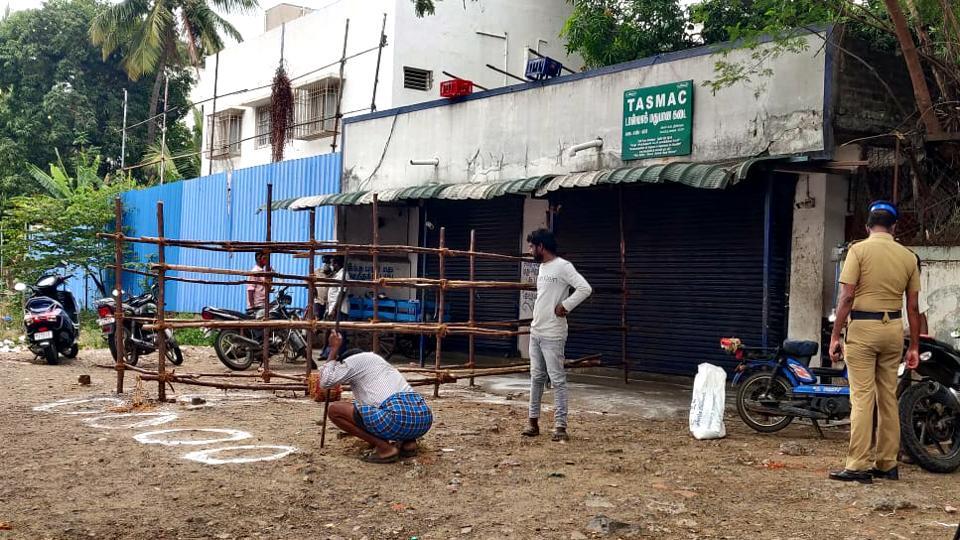
The ED said that its searches in various premises across many districts of Tamil Nadu under the provisions of Prevention of Money Laundering Act (PMLA), 2002, for various offences related to TASMAC and its associated entities and people was based on multiple FIRs. TASMAC comes under Senthil Balaji who is minister for excise besides electricity. Balaji is currently out on bail after being arrested by the ED in 2023 in another money laundering case involving jobs in the transport department.
The FIRs registered are on charges of TASMAC shops collecting excess amount than the actual MRP, distillery companies offering kickbacks to the officials of TASMAC for supply orders, senior officials of TASMAC indulging in collection of bribes from the retail TASMAC shops and for transfer and posting of TASMAC staff.
“Evidence of manipulation in TASMAC’s transport tender allocations has been found,” ED said in a statement on Thursday. “A glaring issue is the mismatch between the KYC details of the applicant and the Demand Draft (DD), suggesting that the final successful bidder did not even obtain the requisite DD before the application deadline. Additionally, tenders were awarded despite having only a single applicant in the final bid.”
They also found that TASMAC paid over ₹100 crore annually to transporters. Evidence revealed direct communication between distillery companies and senior TASMAC officials, exposing efforts to secure increased indent orders and undue favours.
The ED said it found “incriminating” data related to transfer postings, transport and bar licence tenders, indent orders “favouring” few distillery companies, excess charge of ₹10-30 per bottle by TASMAC outlets, with the “involvement” of TASMAC officials, during the searches.
“The above findings establish the occurrence of various offences under the Prevention of Corruption Act, 1988 and generate Proceeds of Crime (POC) as defined under the provisions Distilleries and Bottling companies,” the ED said. “Searches revealed large-scale financial fraud involving distillery companies-SNJ, Kals, Accord, SAIFL, and Shiva Distillery-along with bottling entities such as Devi Bottles, Crystal Bottles, and GLR Holding, exposing a well-orchestrated scheme of unaccounted cash generation and illicit payments. Investigations reveal that distilleries systematically inflated expenses and fabricated bogus purchases, particularly through bottle-making companies, to siphon off over ₹1,000 crore in unaccounted cash. These funds were then used for kickbacks to secure increased supply orders from TASMAC.”
Bottling companies played a critical role in this fraudulent scheme by inflating sales figures, the ED said, which in turn allowed distilleries to route excess payments, which were later withdrawn in cash and returned after deducting commissions. “This collusion between distilleries and bottling companies was done through manipulation of financial records, concealed cash flows, and systematic evasion,” the ED said. “The findings confirm a network where unaccounted cash was deliberately generated through inflated and bogus expenses and subsequently utilized for purposes leading to huge profits.”
Further probe is underway to examine the role of employees and associates related to TASMAC, distillery and bottle-making companies. The DMK government did not react to ED’s statement.


