Trading of isabgol seeds stopped at Unjha Agricultural Produce Market Committee (APMC), Asia’s biggest spice market, for more than a month after conflicting rulings on Goods and Services Tax (GST) left traders unsure about how to bill isabgol coming from Rajasthan.
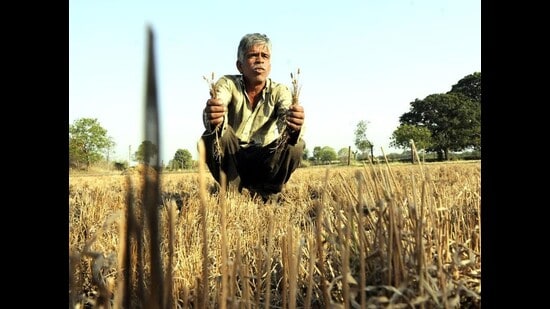
“It’s been more than a month now that trading has halted. Traders, including myself, are confused about how to do billing for Rajasthan traders. Our association is holding discussions with various governments, including Gujarat, Rajasthan and the Centre, but no decisive outcome has come out so far,” said Jayanti Patel, a farmer and trader who has been working at Unjha APMC since 1975.
The confusion is over whether isabgol seeds bought from farmers through APMC auctions should be treated as fresh seeds, which attract Nil GST, or dried seeds, which attract 5% GST.
The Gujarat Authority for Advance Ruling (AAR), in a ruling on May 29, 2026, held that isabgol seeds bought in their natural and unprocessed form were fresh seeds and attracted Nil GST. The case was filed by Unjha-based trader Jigneshkumar Narayandas Patel, who trades as Akshar Traders.
Also Read:Ban on gutkha, pan masala in Gujarat extended for another year; effective from September 13
{{/usCountry}}Also Read:Ban on gutkha, pan masala in Gujarat extended for another year; effective from September 13
{{/usCountry}}The Rajasthan AAR, however, took a different view from the Gujarat AAR on the same issue. In its July 27 ruling in the case of Surendra Bucha, it held that the seeds were dried and attracted 5% GST. In four rulings issued on July 29, the authority also held that isabgol seeds stored in dry and ventilated conditions were dried and attracted 5% GST.
The rulings have created uncertainty among traders in Unjha, where a large part of Rajasthan’s isabgol reaches for processing and further trade.
“This is a ₹5,000-crore trade and around 30-35 lakh bags are traded every year. Around 60,000 to 70,000 farmers are involved in the trade and 8,000 to 10,000 workers are involved in processing units,” said Ashwin Nayak, president of the Isabgol Processors Association.
About 70% of isabgol is produced in Rajasthan and 30% in Gujarat, Nayak said. Rajasthan produces around 2 million bags a year. Around half of this comes directly to Unjha, while the rest reaches the market through smaller yards in Rajasthan.
“Ultimately, it all comes to Unjha,” Nayak said.
Unjha has around 80-90 isabgol processing units, while about 10 are located in Rajasthan, he said. The seeds are processed into isabgol husk, around 90% of which is exported, mainly to the United States and Europe. The remaining 10% is sold in the domestic market.
The GST issue had been under discussion in the industry for several years. Under the earlier Value Added Tax regime, isabgol was zero-rated in Gujarat, Nayak said. After GST was introduced, the industry understood that fresh isabgol seeds would attract Nil GST while dried seeds would attract 5%.
The problem was deciding when the seeds ceased to be “fresh”.
The industry continued paying 5% GST while seeking clarity from the government. According to Nayak, commission agents were also reluctant to shift to Nil GST because they feared scrutiny over bills issued earlier.
The industry then decided to seek an advance ruling. Nayak said the GST Council meeting was pending and the association approached the AAR because it has one member each from the Central and state tax administrations.
The Gujarat ruling of May gave traders clarity and trading resumed at Unjha in July, Nayak said. The subsequent Rajasthan rulings again created uncertainty over consignments coming from the state.
Also Read:Two-day-old baby among three killed in Rajasthan crash
The issue has become more important for the industry because about 90% of processed isabgol is exported. Nayak said tariff-related problems in the United States added pressure on exporters, who already have to block money in GST until refunds are processed.
“We have orders six to 12 months in advance, so we need to procure the commodity to cover those orders. If we pay GST, the money remains blocked until we get the refund,” he said.
The association has now filed a fresh application before the Rajasthan AAR and expects a ruling in about a month, Nayak said.
“We have made a representation to Gujarat agriculture minister Jitubhai Vaghani and are hopeful that the issue will be resolved soon by the GST Council or the Centre,” said Dinesh Patel, chairman of Unjha APMC.
It is also seeking the GST Council’s intervention. The association wants the Council to settle the issue and provide a common tax position for isabgol seeds across states.
“When the GST Council meets, we want this issue to be taken up as an agenda item. We want one clear position for all,” Nayak said.
Until then, the industry has decided not to resume trading, Nayak said.
Gujarat additional chief secretary, finance, T Natarajan declined to comment on the matter.