E-Paper



Unprecedented climate crisis hit on India: Study
India faced severe climate impacts in 2024, with record heat exposure costing 247 billion labor hours and air pollution causing 1.7 million deaths in 2022.

 Prefer HTon Google


India’s struggle with climate change intensified dramatically in 2024, with heat exposure costing the nation a record 247 billion potential labour hours and air pollution claiming over 1.7 million lives in 2022, according to the 2025 report of the Lancet Countdown on Health and Climate Change.
The annual publication, which tracks 50-plus peer-reviewed indicators linking health and climate change, revealed that 12 of 20 health risk indicators set concerning new records last year. People in India were exposed to 19.8 heatwave days on average in 2024, with 6.6 days attributable directly to climate change.
Heat exposure in 2024 translated to a record 419 hours per person in lost labour capacity—124% more than in the baseline period of 1990-1999. The agriculture sector bore the brunt with 66% of losses, while construction accounted for 20%. The associated potential income loss reached US$194 billion.
Compared to 1990-1999, people experienced 366 additional hours during which ambient heat posed a moderate or higher risk of heat stress during outdoor physical activity—a record high that affects both work capacity and sleep quality, with implications for physical and mental health.
Anthropogenic air pollution claimed 1,718,000 lives in India in 2022, representing a 38% increase since 2010. Fossil fuels contributed to 752,000 deaths (44% of the total), with coal alone responsible for 394,000 deaths, primarily from power plant emissions (298,000 deaths). Petrol use in road transportation accounted for 269,000 deaths.
The monetised value of premature mortality from outdoor air pollution reached US$339.4 billion in 2022—equivalent to 9.5% of the nation’s GDP.
Household air pollution from polluting fuels was associated with 113 deaths per 100,000 people in 2022, with rural areas experiencing higher mortality rates (125 per 100,000) than urban areas (99 per 100,000).
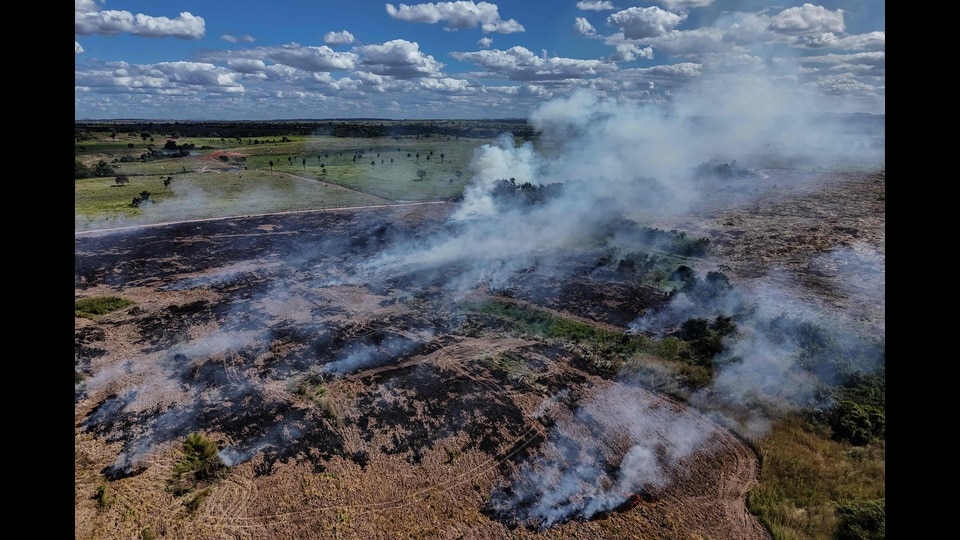
Wildfire smoke was responsible for an annual average of 10,200 deaths from 2020 to 2024, up 28% from 2003-2012. Globally, 2024 recorded 154,000 deaths from wildfire smoke-derived particulate matter.
Land experiencing extreme drought surged 138%, from 14.1% in 1951-1960 to the 2015-2024 period. Between 2020 and 2024, 35% of India’s land area experienced at least one month of extreme drought annually. Globally, a record 61% of land area faced extreme drought in 2024.