
 E-Paper



Unprecedented crisis in Lanka, Centre tells MPs
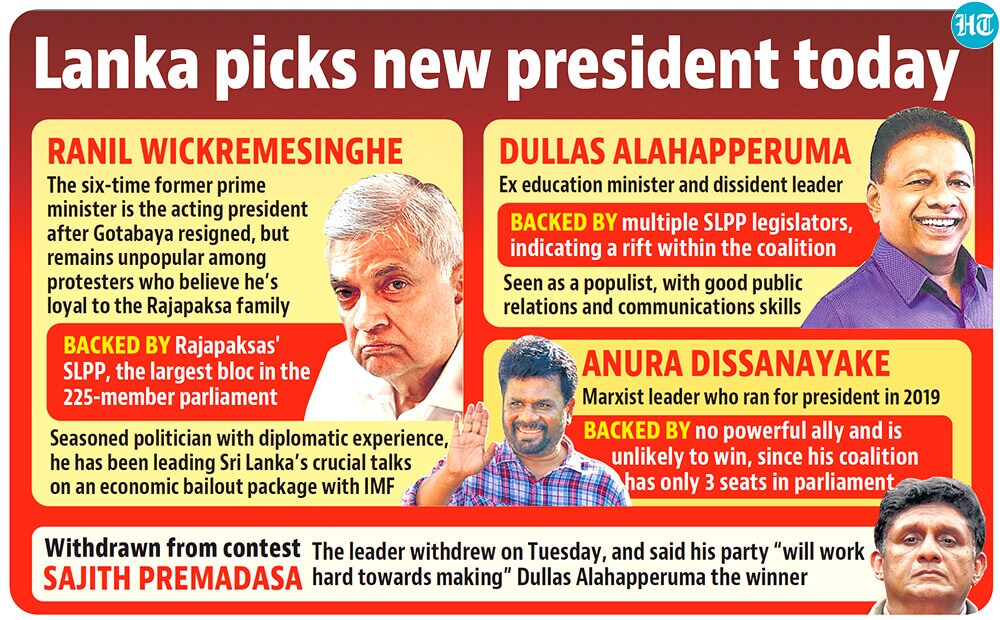
The Sri Lankan parliament is set to pick a new president on Wednesday to serve out the rest of Rajapaksa’s term till August 2024, with acting president Ranil Wickremesinghe, and lawmakers Dullas Alahapperuma and Anura Kumara Dissanayake, the contenders.

 Prefer HTon Google


The “big lessons” for India from the economic crisis in Sri Lanka are the need for fiscal prudence and good governance, external affairs minister S Jaishankar said on Tuesday, following a briefing for all political parties on the state of affairs in the island nation.
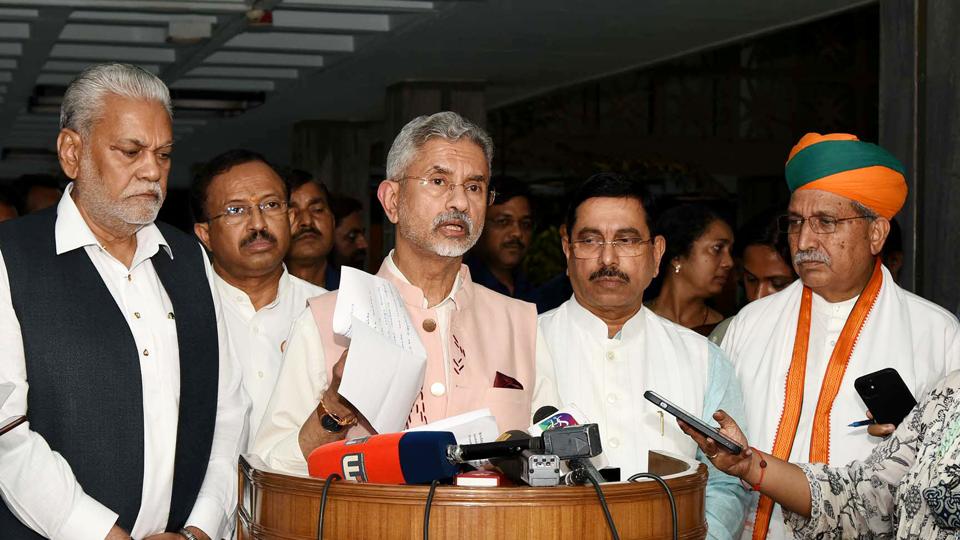
Jaishankar told the MPs that Sri Lanka is facing a “very severe crisis” and the situation is “unprecedented” in terms of the political and financial consequences. “It is a very close neighbour and so naturally [there is a] level of concern and worry that there would be a spillover to India,” he said.
Also Read| Sri Lankan oppn leader makes an appeal to PM Modi: ‘Keep helping regardless of…'
Noting that New Delhi has extended assistance worth $3.8 billion to Colombo this year, he added, “No other country has given this level of support to Sri Lanka.”
Talking to reporters after the briefing in Parliament House, Jaishankar dismissed concerns that India could go the same way as Sri Lanka, which has been plunged into political turmoil since Gotabaya Rajapaksa resigned from the post of president last week following unprecedented public protests over the country’s worst economic crisis.
The Sri Lankan parliament is set to pick a new president on Wednesday to serve out the rest of Rajapaksa’s term till August 2024, with acting president Ranil Wickremesinghe, and lawmakers Dullas Alahapperuma and Anura Kumara Dissanayake, the contenders. The political uncertainty has added to the island nation’s concerns about the lack of foreign exchange to tackle a severe shortage of fuel and food.
Jaishankar told the MPs that the “big lessons to be drawn” from the situation in Sri Lanka were the need for fiscal prudence and good governance. “Fortunately, in this country, in the leadership of the prime minister, we have both in very ample measure,” he said.
Leaders of some political parties took exception to the central government’s presentations during the briefing on the fiscal performance of individual states, and said the focus should instead have been on the Union government.
Jaishankar said the central government’s presentation was data-based and there was “no political intent” behind it. It was a comparative study to show which states have been fiscally prudent, he said.
Of the 45 parties that were invited, 28 attended the briefing. There were two presentations — one from the political and foreign policy perspective that focused on Sri Lanka’s economic crisis and political turbulence, and another by the Union finance ministry on all Indian states, which compared expenditure to revenues and liabilities to GSDP.
Jaishankar said the finance ministry’s presentation also looked at the growth rate of liabilities of various states, borrowings, mortgaging of assets and unpaid power dues. He added that the MPs were concerned about the lessons that can be learnt from Sri Lanka, especially in the context of “misplaced speculation” in the media about India facing a similar situation.
According to Kesava Rao of the Telangana Rashtra Samithi, during the presentation on economic aspects, a reference was made to some states borrowing more than their GDP, which did not go down well with representatives of parties from Tamil Nadu, Andhra Pradesh and Telangana.
Also Read| 'Talks with IMF progressing…July will be difficult': Sri Lanka's Wickremesinghe
“The minister unnecessarily brought in the economic situation of the states, there was strong objection to that. Several members felt that there was no immediate relevance to bring up the borrowings by states and, if at all, the Centre’s borrowings too should have been mentioned. The Centre itself has 59% liabilities as compared to its GDP,” Rao said.
The government, for its part, said the names of theses states were mentioned only because their borrowings are high and the data was of a comparative nature.
Saugata Roy of the Trinamool Congress said his party supports the government on foreign policy issues but wants to know what the future course of action will be. He said MPs objected to the reference to the “lack of financial prudence by some of the states”.
“We felt there was no need to bring up the issue of borrowings by the states…,” Roy said.
Assadudin Owaisi of the AIMIM questioned whether Rajapaksa fled from Sri Lanka to Singapore with help from the Indian side.
“Did Gotabaya Rajpaksa want to come to India and was refused by GoI? If yes, why? Did NSA facilitate his flight to Maldives & then Singapore?” Owaisi said in a tweet.
He said in another tweet that the government had called an all-party meeting on the Sri Lanka crisis but “used the opportunity to raise unrelated issues about finances of Indian states”.
He added: “@DrSJaishankar in his initial remarks said that there’s a ‘misinformed campaign & comparison between India & Sri Lanka’. If so why did DEA have to make a presentation? Many opposition parties opposed this politicisation.”
Jaishankar said during the briefing that the focus now is on Sri Lanka’s negotiations with the International Monetary Fund (IMF) for a bailout package. “Whatever support we can give them in terms of working with the relevant agencies, we will do,” he said.
A senior official, requesting anonymity, said India will help Sri Lanka in coming out of the economic crisis.
“India has already sent food, fuel and fertilisers to help the Sri Lankan people, and it is helping to ensure food security. But much will depend on its government as sovereign countries interact through governments. The political situation in Sri Lanka is still developing and much will depend on the new formal regime in Colombo,” the official said.


