
 E-Paper



UP, Bihar deaths indicate lapses in heat action plans
The Bihar heat action plan also focuses on closing shops during intense heat days

 Prefer HTon Google


Uttar Pradesh and Bihar, which have seen almost 100 deaths in the past five days on account of a heat wave, are among the 18 states that have a heat action plan (HAP), and the casualties, experts said, indicate the gap between planning and implementation. (ALSO READ: ‘Heat-stroke’ deaths: 1 dist hosp & 20 other govt facilities catering to 35-lakh Ballia residents)
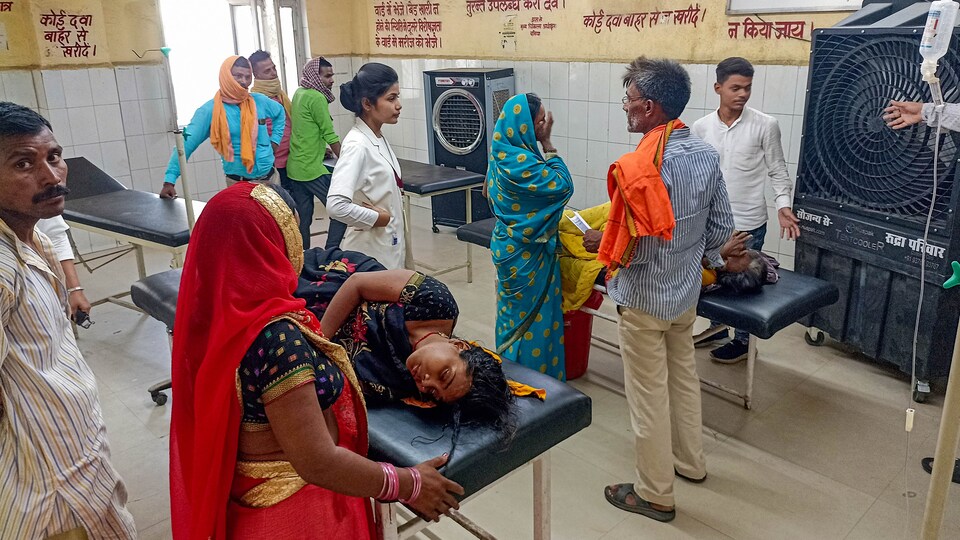
Uttar Pradesh’s standard operating procedure for heatwave management says government agencies should prepare for intense heat months in advance. It divides the calendar into pre-heatwave (for preparatory activities before the month of May) and heatwave period, between May and June when temperatures are at their peak.
The document mandates that administrations carry out a detailed vulnerability assessment and identify heatwave hotspots. It also asks them to issue advance warnings to ensure that vulnerable people are moved to homeless shelters on heat wave days.
The Bihar heat action plan also focuses on closing shops during intense heat days, changing office and school timings, and altering work hours for labourers.
ALSO READ: Probe team says heatstroke not direct cause of Ballia deaths; finds lapses in patient management
It is not clear whether these were done. And some HAPs suffer from definitional problems. For instance, an analysis of nearly 37 heat action plans across the 18 states by the Centre for Policy Research (CPR) earlier this year, highlighted that only some even acknowledged parameters such as heat index value, urban heat island effect and UV index.
These take into account the impact of humidity, excess concretisation and urbanisation in cities and the intensity of UV radiation in worsening heat conditions during the day.
“Some HAPs consider daily variations in temperature, but most focus on seasonal variability, depicted through pre-heat, heat and post-heat periods. The state HAPs of Gujarat and Odisha, and city HAPs of Rajkot and Bhubaneswar recognise the importance of all parameters in preparing a response plan, while some other HAPs only consider relative humidity or hot nights,” the CPR report said.
Aditya Pillai from CPR, the lead author of the study, said that impact of heat does not solely depend on the day’s maximum and minimum temperatures.
“During the Navi Mumbai incident, technically the maximum temperature was not to the levels which could cause deaths. However, the temperature, clubbed with the humidity levels, overcrowding in the venue, lack of proper infrastructure to protect the participants, especially the vulnerable populations including senior citizens, women and children, was what caused the conditions to worsen. This is why these factors need to be a part of the HAPs,” Pillai said. His reference is to an April 16 incident when 13 people died after participating in a public event in Mumbai.
Then, there are cities, districts, and states that do not have HAPs. Delhi, for instance, does not have one.
According to experts, HAPs are becoming increasingly imperative with many countries in South Asia, including India, in April this year faced extreme heat conditions. Mercury levels soared in parts of Thailand and Laos, with the city of Tak in Thailand recording the country’s hottest ever temperature, 45.4 degrees Celsius. Bangladesh also recorded its highest maximum temperature in several decades, with the maximum temperature touching 40.6 degrees Celsius.
Many parts of India too faced extreme heat conditions in April. An investigation into the Navi Mumbai deaths revealed that the maximum temperature recorded at the nearest weather station to the event venue was nearly 34 degrees Celsius. However, the temperature coupled with high humidity levels caused the event to be deadly.
One of the biggest deficiencies of heat action plans is that they only take maximum and minimum temperatures into consideration before sounding off alerts under each category. Humidity levels, which become an important factor for increasing discomfort and causing health issues during heat conditions, are often not taken into consideration.
And some HAPs also make the mistake of ignoring who they are meant for — the most vulnerable population.
“Ideally, HAPs assess vulnerability at a localised level — neighbourhoods and sub-districts with a high concentration of hazardous built infrastructure and low coping capacity — and then direct resources to these areas. In our review, we find that very few HAPs base their actions on vulnerability assessments, and instead draw on a fairly homogenised characterisation of vulnerable groups, which results in a high risk of misdirected efforts,” the CPR report said.
Abhiyant Tiwari, lead (climate resilience and health, India Program) at the Natural Resources Defense Council (NRDC), who played a key role in the formulation of the Ahmedabad heat action plan, which was the first HAP in the country, and the more recent Jodhpur HAP, said that such assessments are essential to ensure proper implementation of the plans.
“The Jodhpur plan was developed based on local data and community input and enables the city to better organize local heat actions that protect public health. Heat action plans are not merely a paper exercise; scientific evidence indicates that such plans can help to make measurable reductions in mortality after implementation,” Tiwari said. Ahmedabad, he added, has saved over 1,100 lives every year since 2013, simply because the HAP works.
HAPs require all major government agencies to be stakeholders.
For instance, when temperatures start rising, the India Meteorological Department and the National Disaster Management Authority (NDMA) become the primary agencies that send out alerts and temperature warnings to state governments, which in turn become the nodal agency to sound off alerts to other local agencies. The state governments, in most cases, are also responsible for carrying out vulnerability assessments, setting up infrastructure to accommodate homeless people, setting up spaces for them to cool off, and make allowances for water dispensers etc. Municipal agencies also contribute to these activities. Meanwhile, the police, fire department and hospitals play a key role in ensuring that minimum damage to life and health occur. While this process might look great on paper, the coordination between agencies is often patchy.
“No plan is executed to perfection. There will be issues, but as a plan progresses every year, agencies get better. Every year, we are able to reduce the number of fatalities due to heat events and also reduce the hospitalisations. Once a plan is in place, half the battle is won,” said Dr Dilip Mavalankar, director of the Gandhinagar-based Indian Institute of Public Health, who also spearheaded the Ahmedabad heat action plan.


