E-Paper



Uttarakhand: Kedarnath, Badrinath receive season’s first snowfall; temp dips sharply
The Badrinath-Kedarnath Temple Committee president said that all roads leading to Badrinath remain open and that pilgrims can continue visiting the shrine safely

 Prefer HTon Google


Mussoorie: The higher reaches of Uttarakhand witnessed the season’s first snowfall on Wednesday morning, blanketing the peaks around Kedarnath and Badrinath in a pristine layer of white.
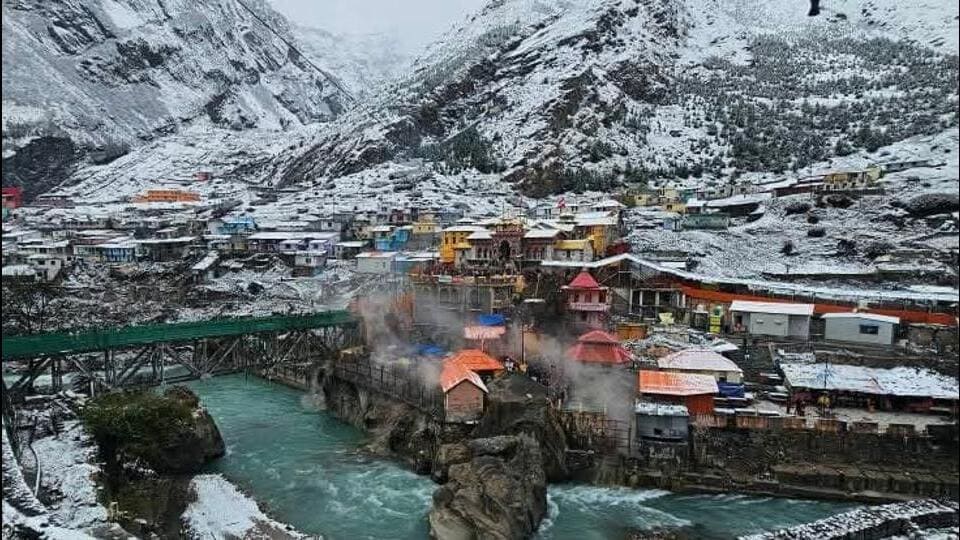
According to officials, snowfall began around 3 am in the Badrinath Dham area, covering the temple complex, surrounding hills, and approaching roads in thick layers of snow.
“The spell of snow that began at 3 am continued till around 7 am, leading to a sharp dip in temperature and heralding the onset of the winter season here,” executive officer of the Badrinath Nagar Panchayat, Sunil Purohit, said.
Over 1,000 pilgrims are currently visiting Badrinath. “It was freezing cold, but we couldn’t resist stepping out to see the snow-covered temple,” said Shubankar Chatterjee, a 45-year-old pilgrim from Kolkata.
“The shrine remains under the watch of Indo-Tibetan Border Police (ITBP) personnel and members of the Badrinath-Kedarnath Temple Committee (BKTC) even after closure for the winter,” temple priest of the Kedar Sabha, Anand Shukla, said, adding that the snowfall extended down to Garud Chatti.
A similar scene was reported from Kedarnath Dham, where the temple complex, walking paths, and surrounding mountain peaks were all blanketed in snow.
BKTC president Hemant Dwivedi said that the snowfall in Badrinath lasted for around four to five hours. “While snow continues to be visible on the higher reaches around Badrinath, the Kedarnath shrine area experienced a slightly longer spell,” he said.
He added that all roads leading to Badrinath remain open and that pilgrims can continue visiting the shrine safely. “The portal of the Badrinath temple is scheduled to close on November 25,” Dwivedi said.