E-Paper



Uttarakhand’s agricultural land declines nearly 16% since state formation in 2000: Govt
Uttarakhand’s agricultural land has fallen nearly 16% since 2000, with net sown area declining and fallow land rising, government tells assembly

 Prefer HTon Google


The total agricultural area in Uttarakhand has declined by nearly 16% since the state’s formation in 2000, the state government informed the assembly in a written reply.
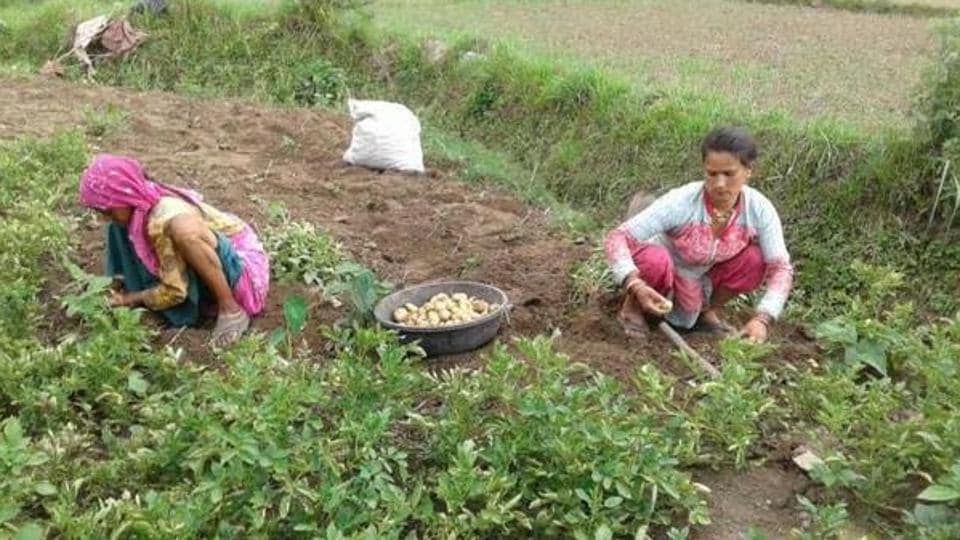
The net sown area — the land actually cultivated with crops — has declined from 7.70 lakh hectares in 2000 to 5.27 lakh hectares at present, while fallow land — agricultural land left uncultivated for a period — has increased from 1.07 lakh hectares to 2.08 lakh hectares, the reply read.
The government was replying to a question by Bharatiya Janata Party (BJP) MLA from Doiwala, Brij Bhushan Gairola.
Also Read: About 11% food samples fail safety tests in Uttarakhand in 3 years: Govt
“At the time of formation of Uttarakhand state, the agricultural area was 8.77 lakh hectares (net sown area 7.70 lakh hectares and fallow land 1.07 lakh hectares), which is currently 7.35 lakh hectares (net sown area 5.27 lakh hectares and fallow land 2.08 lakh hectares),” the government said.
The legislator had asked how much agricultural land there was in the state at the time of its formation and how much remains at present.
Gairola also asked whether agricultural land in the state was turning into a “concrete jungle.”
In its response, the government said that urbanisation and increasing demand for residential and industrial purposes are leading to changes in land use.
When asked whether the government has prepared any plan to address the decline in agricultural land, it said the department is implementing several schemes for farmers, including the State Millet Policy, Very Intensive Apple Horticulture Scheme, Kiwi Policy, Dragon Fruit Policy, and Mehak Kranti Policy for aromatic farming, along with various centrally sponsored and state-sector schemes.