
 E-Paper



Vajpayee a symbol of peace, development and equality
Atal Behari Vajpayee was a quintessential personification of a modern-day democrat, who practised what he championed.

 Prefer HTon Google


There are innumerable anecdotes that his friends, peers, colleagues and commentators cite about former Prime Minister Bharat Ratna late Atal Behari Vajpayee. Here’s one that I often feel strikingly encapsulates the person, his politics, and his life that was pillared on a nation-first principle, focusing on modernity, progress, and equality.
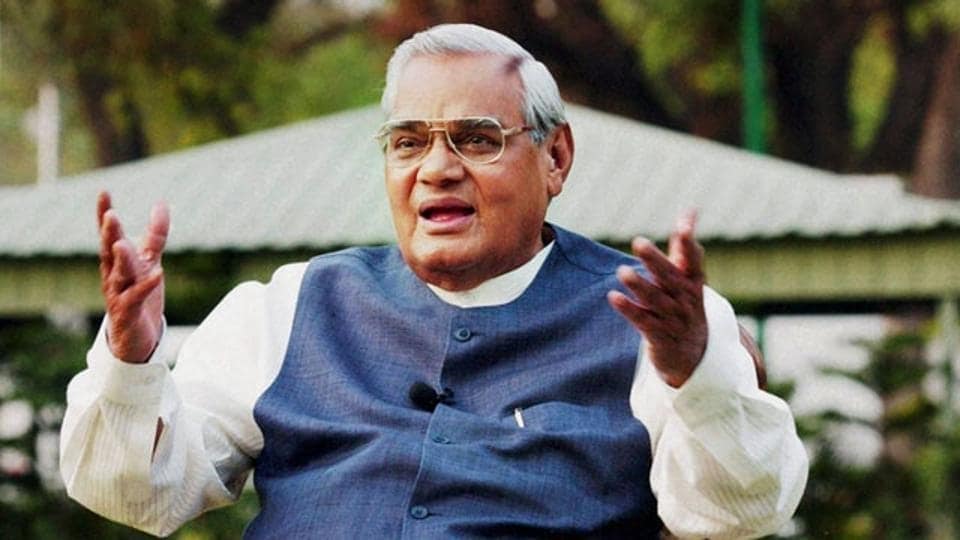
Speaking at a meeting of the scheduled caste community, Atal ji had said: “Na hum Manuvaadi hain, na brahmanvadi hain, ham samvidhaanvadi hain, Isilye hum Ambedakaravadi hain”. Translated, this reads: “We are neither Manuvadi, nor Brahminical. We are Constitutionalists, and, that is why we follow the principles espoused by [BR] Ambedkar”. This, in many ways, neatly sums up Atal ji’s deep and abiding belief in the principles and practice of social egalitarianism.
He was a quintessential personification of a modern-day democrat, one who practised what he championed, never hesitating to take up the cudgels to fiercely protect democratic values. His imprisonment during the dark days of Emergency is an example of this attribute.
Atal ji was a deeply rooted organisation man too, someone who took immense pride in his identity with his political party. To save democracy, Jan Sangh had merged with the Janata Party in 1978, a step that bubbled with enormous hope and promise. Atal ji was deeply disappointed with the failure of this political experiment, which found expression in famous poem “Rah kaunsi jaoon main (Which way shall I go)”.
But, like a true statesman and powered by his strong belief in his political vision, Atal ji wrote: “Geet Naya Gata Hoon”(I sing a new song)”, a deeply motivational poem that inspired the formation of the Bharatiya Janata Party (BJP) in 1980, offering a political alternative which has now evolved into the world’s biggest political party.
His concluding remarks at the party’s Mumbai session were laced with hope and positivity that laid down the vision inspiring millions. He said “Andhera Chhatega, Sooraj Niklega, Kamal Khilega” meaning “The darkness will cease, the sun will rise, the lotus will bloom.” This was more than a metaphorical alliteration. This offered new hope to hundreds of millions in this country who sought an alternative to the dynasty-ruled Congress, which had by then come to be characterised by ugly syndicates, corrupt practices, and arbitrary administration.
Atal ji dedicated his whole life to the country. For him, India was not just a piece of geographical expanse, it was an ever-evolving organic civilisation. The love for motherland found expression in his words and poetry. He famously wrote: “Yah vandan ki bhoomi hai, abhinandan ki bhoomi hai, yah tarpan kee bhoomi hai, yah arpan kee bhoomi hai | iska kankad-kankad shankar, isaka bindu-bindu gangaajal hai. ham jiyenge to iske liye, marenge to iske liye” Or, “this is the land of worship, this is the land of greetings, this is the land of offerings. Its pebbles symbolise Lord Shankar, Gangajal can be found in every point. We shall live and die for this motherland.”
Atal ji symbolised development. The Golden Quadrilateral, the Pradhan Mantril Gram Sadak Yojana, and other such iconic projects, were conceptualised and executed during his tenure.
Vajpayee’s unwavering and persistent focus on the nation’s territorial integrity shaped India’s foreign policy. He was always willing to give peace a chance, but not at cost of the nation’s security and territorial integrity, which to him was non-negotiable. His politics had deep philosophical underpinnings. He had immense faith in the power of society. He kept the nation’s interest paramount and rose above sectarian and political differences to solve complex problems. He was unafraid of taking a principled stand. On his birth anniversary today, let us rededicate ourselves to his vision to make India a self-reliant, safe, modern and progressive country.
(Shiv Prakash is National Joint Secretary, Organisation, BJP. The views are personal)


