
 E-Paper



Vedic mathematics to astronomy: UGC's draft guidelines for training teachers
The University Grants Commission (UGC) has issued draft guidelines for training of faculty members in Indian Knowledge System (IKS) prescribing several courses in a range of areas.

 Prefer HTon Google


The University Grants Commission (UGC) has issued draft guidelines for training of faculty members in Indian Knowledge System (IKS) prescribing several courses in areas including astronomy, Vedic mathematics, Indian economic history, lessons from the Mahabharata and Arthashastra, contributions of ancient and medieval Indians in chemistry and metallurgy, and ayurveda, among others.
The higher education regulator has released the draft of guidelines titled “Training of Faculty on Indian Knowledge Systems” on Wednesday and invited suggestions from stakeholders on the same till December 28. The guidelines have been prepared by a 10-member expert committee constituted by the UGC.
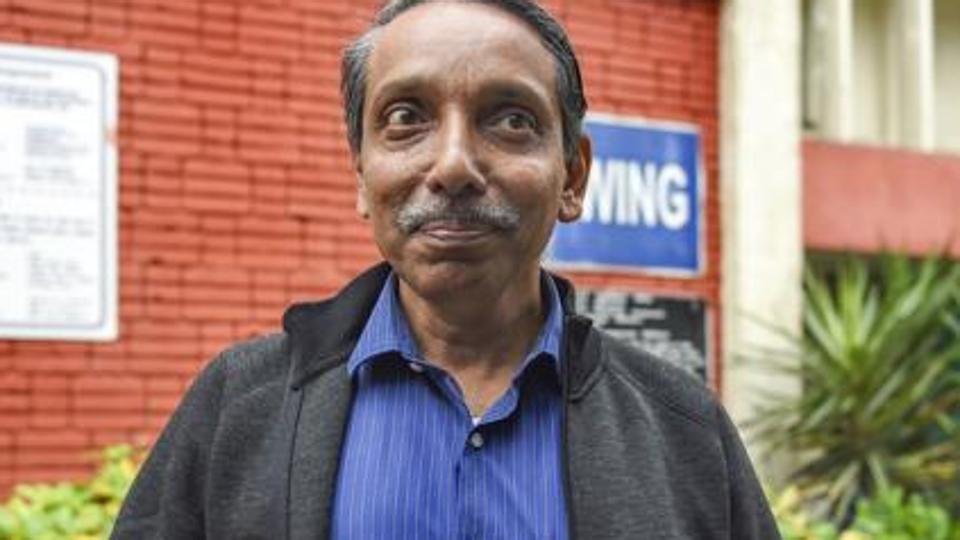
UGC chairperson M Jagadesh Kumar said the guidelines have been issued in line with the National Education Policy (NEP) 2020 that emphasizes on incorporating the Indian knowledge system at every level of education. “The guidelines provide a roadmap to familiarise and enthuse our faculty members about the IKS and identify strategies to incorporate it into their classroom teachings. These guidelines will make our youth aware of the vast repositories of traditional knowledge in India and map this knowledge with modern scientific advancements and technologies,” Kumar said.
“It will facilitate the seamless integration of Indian traditional knowledge with modern subjects and contribute to creative and innovative solutions to our challenges as a human society,” he added.
According to the draft guidelines, the IKS training will be a part of the existing annual faculty refresher and induction training programmes. Under the UGC’s Career Advancement Scheme (CAS), induction programmes are organised for newly appointed teachers and refresher courses for existing faculty. The faculty are required to attend a mandatory induction programme and periodic refresher courses for their continued professional advancement.
“The IKS-related content should be allocated a minimum of 10% of the total time spent during the induction programme. This will translate to about 17.5-20 hours for a typical induction programme,” the guidelines stated.
Under Indian science and technology syllabus module, the UGC guidelines suggested topics including “the discovery of calculus by Kerala astronomers”, “Vedanga Jyotish & measuring time and calendar”, “Nakshatra Gyaan and Agriculture”, and “Harappan and traditional water management system of Gujarat”, among others.
For metallurgy and chemistry, the UGC draft norms prescribed topics like “Arthaśhāstra as the earliest text describing gold, silver, and other metals”, and “zinc distillation as mentioned in Rasārṇava and Rasaratnasamukāyā”.
The guidelines further suggested various topics under “Indian Astronomy” including “possibility of eclipses”, Indian calendars, and “Śīghra correction to planets and their significance”, among others.
The guidelines emphasised that the faculty should visit nearby IKS-related prominent places such as temples, gurukuls, historical sites, ayurvedic healing centers, and astronomical observatories (Jantar Mantar) that enable teachers to “appreciate the various manifestations of IKS”.
It further emphasised that faculty members must be exposed to the primary texts (Sutra Text) which are required for understanding the sources and origin of IKS. It also stressed that the list of IKS content should be available in regional languages in universities and colleges for the benefit of non-English medium teachers.
The draft norms recommended that the courses under the IKS training should be usually designed using multiple source texts as the reference material. It stated that courses should be carefully chosen by a team of experts in both traditional shastras and modern subjects as most of the IKS subjects are organised differently than the organisation of modern disciplines.
Several faculty members in Delhi University (DU) raised objections over the guidelines.
“Under these faculty training courses, the UGC should focus on providing knowledge in advanced technology and present-day requirements instead of going back in time,” said Rajesh Jha, political science professor at DU’s Rajdhani College. “In higher education, faculty members should be given training in areas of their expertise. The guidelines are prejudiced that the academia doesn’t have a positive attitude towards the Indian knowledge system. Also, why do the guidelines only mention temples and not to gurdwaras and mosques?”
Abha Dev Habib, associate professor, Miranda House, said, “The IKS courses will not serve the actual purpose of the faculty development programmes. They should rather be focused on teachers’ areas of expertise instead.”


