
 E-Paper



'Not too late, HC will ensure justice': Tahir Hussain on life term in Ankit Sharma murder case
The Delhi Police argued for the death penalty, describing the killing of Ankit Sharma as "exceptionally brutal" and "cold-blooded".

 Prefer HTon Google


Former Aam Aadmi Party (AAP) councillor Tahir Hussain on Friday said he would seek justice from the Delhi High Court after a trial court sentenced him to life imprisonment for the murder of Intelligence Bureau (IB) staffer Ankit Sharma during the 2020 northeast Delhi riots.
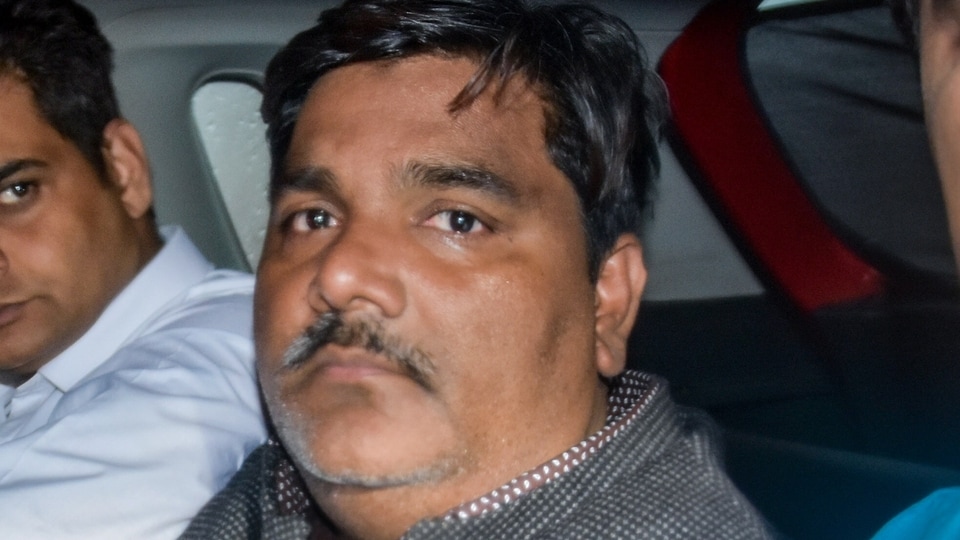
While being escorted out of the Karkardooma court, Hussain told reporters, "Insaaf High Court se milega (Justice will come from the High Court)." He added, "The High Court will give justice; it is not too late."
ALSO READ | Delhi riots: Ex-AAP councillor Tahir Hussain gets life term in IB official Ankit Sharma murder case
Court declines death penalty
Additional Sessions Judge Parveen Singh handed down life imprisonment to Hussain and four other convicts in the case. The judge rejected the Delhi Police's plea for the death penalty.
The Delhi Police had argued for the death penalty, describing the killing of Ankit Sharma as “exceptionally brutal” and “cold-blooded.”
Pronouncing the sentence, the court observed that although the offence was brutal and involved a murderous mob that killed the victim, the case did not meet the threshold for the “rarest of the rare” category warranting capital punishment.
The judge orally noted that the prosecution failed to establish that the convicts were beyond the possibility of reform or that their continued imprisonment would pose a lasting threat to society.
ALSO READ | 2020 Delhi riots: HC seeks police's stand on Umar Khalid's bail plea in UAPA case
IB officer's murder
Hussain, a former AAP councillor, was among five people convicted in the murder of Sharma, whose body was recovered from a drain during the communal violence in northeast Delhi in February 2020.
The sentencing order was pronounced by Additional Sessions Judge Parveen Singh at the Karkardooma Courts.
2020 Delhi riots: What happened?
The 2020 Delhi riots were among the deadliest episodes of communal violence in the national capital in decades. The clashes erupted in northeast Delhi between February 23 and 26, 2020, amid protests over the Citizenship (Amendment) Act (CAA) and the proposed National Register of Citizens (NRC).
Violence broke out after clashes between supporters and opponents of the CAA allegedly escalated into communal unrest. Mobs pelted stones, resorted to arson and vandalism. Homes, shops, vehicles and places of worship were set ablaze across several neighbourhoods, including Jaffrabad, Maujpur, Chand Bagh, Bhajanpura and Karawal Nagar.
At least 53 people were killed and more than 500 others were injured. Most of those who died were civilians, while a Delhi Police head constable was also among the victims.
One of the high-profile cases arising from the riots was the murder of Ankit Sharma, an Intelligence Bureau staffer. His body was recovered from a drain in Chand Bagh on February 26, 2020, with multiple stab injuries.
Several activists, politicians and alleged conspirators were booked under various provisions of the Indian Penal Code, while some were also charged under the Unlawful Activities (Prevention) Act (UAPA).
What Ankit Sharma's family said
Earlier this month, Ankit Sharma's family said that Hussain's conviction brought them some relief but had also reopened painful memories of the incident.
ALSO READ | Kin of IB officer killed in 2020 Delhi riots want ex-AAP leader Tahir Hussain, other convicts hanged
Speaking to PTI, a family member said the verdict had forced them to relive the trauma of losing Sharma. “There is a sense of relief because the court has convicted some of the accused, but at the same time, all the painful memories have come rushing back,” the family member said.
Sharma's brother said no judgment could fill the void left by his death. “There is grief, there is anger, and there is an emptiness that can never be filled. We lost one of the strongest pillars of our family, and no judgment can bring him back,” he said.
The family said they left Delhi within months of the riots and now live in rented accommodation in Uttar Pradesh. They said they never felt safe staying in the city after the violence.


