E-Paper



‘Inquiry marked by unfairness': Justice Yashwant Varma withdraws from cash-pile probe after resignation
The letter, dated April 9, was sent on the same day Justice Varma tendered his resignation to President Droupadi Murmu.

 Prefer HTon Google


In a strongly worded communication to the Lok Sabha-constituted inquiry committee, Allahabad high court judge Yashwant Varma has alleged that the proceedings against him were vitiated by “unfairness” from the very inception, asserting that history would one day judge the manner in which a sitting constitutional court judge was treated.
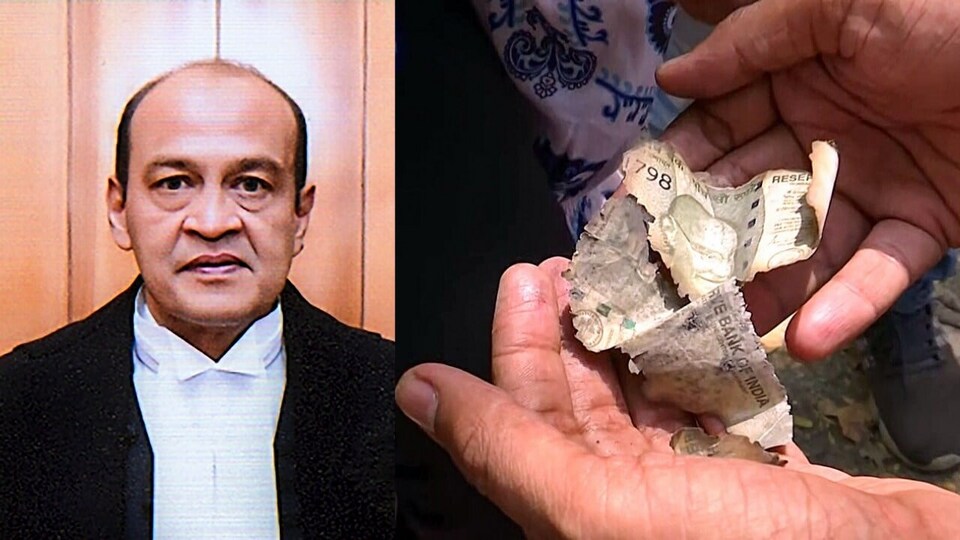
The letter, dated April 9, was sent on the same day Justice Varma tendered his resignation to President Droupadi Murmu, effectively bringing to a close the parliamentary inquiry into allegations arising from the recovery of unaccounted cash at his official residence in Delhi following a fire incident in March 2025.
In his 13-page letter, Justice Varma contended that the proceedings against him before the committee were marred by serious procedural lapses, absence of credible evidence, and a “predetermined” approach that led to his public vilification even before he was heard. The committee comprised Supreme Court judge Aravind Kumar, Bombay high court chief justice Shree Chandrashekhar and senior advocate BV Acharya.
The letter, accessed by HT, laid out a detailed critique of how the inquiry unfolded, arguing that the process itself fell short of the standards of fairness expected in proceedings involving a sitting constitutional court judge.
He asserted that the inquiry was “marked by unfairness from its very inception”, suggesting that the outcome appeared pre-judged and that the process became a formality rather than a genuine fact-finding exercise.
The judge complained that he was not afforded a meaningful and effective opportunity to defend himself, alleging that key procedural safeguards, which were central to ensuring fairness in quasi-judicial proceedings, were either diluted or ignored. According to him, the manner in which the inquiry progressed created an impression that his guilt had been presumed at the outset.
Justice Varma’s letter hinged significantly on what he describes as the absence of reliable and legally tenable evidence. He questioned the evidentiary basis of the proceedings, particularly the reliance on video recordings purportedly showing cash at his official residence. He also pointed out that these recordings were made in his absence, without his knowledge, and without any formal process ensuring their authenticity or integrity.
Raising concerns about the chain of custody, he suggested that the material relied upon by the committee lacked the safeguards necessary to inspire confidence. He further emphasised that no direct link had been established between him and the alleged cash, calling into question the foundational premise of the inquiry.
The letter claimed that he was not given adequate opportunity to test the evidence against him or to effectively present his version of events, besides suggesting that the process lacked transparency, with critical steps unfolding without his full knowledge or participation.
A significant portion of the letter has been devoted to what Justice Varma described as his public “vilification” in the wake of the incident.
He pointed to the rapid circulation of videos and the emergence of a “sensational narrative” that, in his view, portrayed him as culpable without any adjudication. The fact that such material entered the public domain, including being placed on the website of the Supreme Court of India, only deepened the prejudice against him, he suggested.
Justice Varma lamented that this trial by media, coupled with the manner in which the inquiry was conducted, effectively eroded the presumption of innocence and caused irreparable damage to his reputation.
On merits, Justice Varma reiterated his categorical denial of any connection with the alleged cash discovered at his residence following a fire incident in March 2025.
He maintained that the storeroom in question was not under his direct use and that the events leading to the recovery occurred in his absence. He further stressed that no evidence had been produced to establish his ownership, possession, or knowledge of the cash.
“I withdraw with the deepest sadness, conscious of the gravity of my decision and with the hope that history will one day record the unfairness with which a sitting High Court Judge was treated and that has marked this entire episode from its inception,” his letter concluded.