
 E-Paper



Village in Pakistan recalls fond memories of ‘Mohna’
To the older residents of Gah Begal, a nondescript village 80km south of Pakistan’s capital Islamabad, former prime minister Manmohan Singh was “Mohna”

 Prefer HTon Google


To the older residents of Gah Begal, a nondescript village 80km south of Pakistan’s capital Islamabad, he was “Mohna”, the bright and industrious kid who studied in the local Urdu-medium primary school before moving to Peshawar.
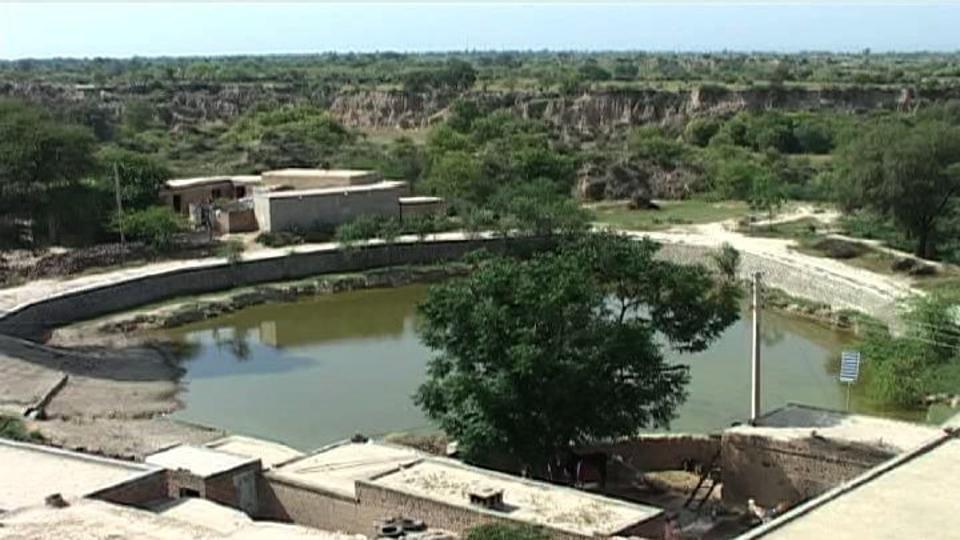
It was in Gah Begal, now part of Chakwal district in Pakistan’s Punjab province, that former premier Manmohan Singh was born on September 26, 1932. His father, Gurmukh Singh Kohli, worked as a clerk for a dry fruits trader and his mother, Amrit Kaur, died when he was five months old, leaving him to be raised by his paternal grandmother Jamna Devi.
In 2009, when India was holding general elections, this writer travelled to Gah Begal as a young journalist for Dawn News Television, then Pakistan’s only English news channel, since we were assigned to get as much exclusive content as we could. I’d recently gone to a friend’s farm in Chakwal, where he told me stories about a small village that was once home to Hindus and Sikhs, who fled during Partition. My friend also mentioned the name “Manmohan Singh”.
Muhammad Ashraf was 81 when I met him, with a toothless smile and holding on to his hookah as he sat on a charpoy, gazing at the motorway near his ancestral village of Gah Begal. “If every man was as fortunate as my Mohna, the world would be a better place,” Ashraf, who died in 2010, said at the time.
His eyes, clouded yet filled with the past, followed the cars rushing by but his heart was somewhere else – in the golden days of childhood. “Mohna”, Ashraf said, was his best friend in school.
“Sixty-five years ago, the land was divided…and so were we,” Ashraf said, his voice trailing off. “But friendships like ours, they can’t be partitioned.”
Muhammad Zaman, Ashraf’s son, recalled the day they learned of Singh’s rise to the post of prime minister: “My father ran to me and said, ‘Oye, apna Mohna Hindustan da wazeer ho gaya!’ (Our Mohna has become India’s prime minister!).”
Zaman said, “The entire village danced that night. Even those who had never met Singh, felt proud... Father used to tell me bedtime stories of Mohna. He made him sound like a hero from our village folk tales. ‘He studied under candlelight,’ my father used to say. ‘While I played in the fields, Mohna was preparing for exams.’”
Ashraf’s wrinkled face lit up as he recounted tales from his childhood, when he and Manmohan Singh would walk to school every day. “Once, after school, we found a berry tree on our way home. Mohna picked stones and threw them at the berries. I ate the ones that fell. He scolded me, ‘I throw the stones and you eat all the berries!’. That tree still stands. When they tried to cut it for the road, I stopped them. I said, ‘This tree belongs to Manmohan Singh,” he said.
Ghulam Mustafa, then the village school’s headmaster, had a treasure kept away in a dusty, faded, glass cabinet – Singh’s school record. “We still show this to our students. We tell them that one of them could be like him. I tell them, ‘Manmohan Singh studied right here, in these classrooms,’” Mustafa said.
The years passed, but the bond between Gah Begal and Singh endured. When Singh became prime minister, he didn’t forget his roots. He helped fund the village school’s renovation, built a hospital, and played a role in bringing solar lights to the village, the local residents said.
India’s The Energy and Resources Institute (TERI) set up two power micro grids in the village that included 51 solar-based domestic lighting systems, 16 solar street lighting systems, and solar heaters in three mosques.
Ashraf recalled at the time: “Raja Muhammad Ali, who was also our friend, became the deputy mayor of Gah. He met Mohna in Delhi in 2008. He took shawls and shoes for him. I sent him Chakwali ‘rawori.’ Raja asked him to visit Gah, but the Mumbai attacks happened, and everything changed.”
India-Pakistan relations never fully recovered from the fallout of the 2008 Mumbai terror attacks, and ties have been at an all-time low since then.
Singh remained in the village school till he was 10, when he moved to Peshawar to live with his father and continue his studies. The family moved to Amritsar in 1947, when Singh appeared for the matriculation examination. Most of the people from Singh’s generation in Gah Begal, including Ashraf, Ali and Ghulam Muhammad Khan, have since died.
In the heart of Gah Begal, Manmohan Singh’s legacy was never measured in policies or political achievements. It lives in the glowing solar lights that brighten village lanes, the schoolchildren who study under his name, and the stories passed down from fathers to sons.
(The author is an award-winning journalist based in Islamabad, Pakistan)


