E-Paper



Want to make helicopter a vehicle for common people: Scindia
“A momentous day for India as we set out to expand helicopter operations with the following nine key decisions,” Scindia said.


Dehradun: Union civil aviation minister Jyotiraditya Scindia on Friday announced nine key decisions as part of the Centre’s new helicopter policy, under which dedicated hubs and corridors would be established to boost air connectivity, as he highlighted the plans to make “helicopter a vehicle of common people”.
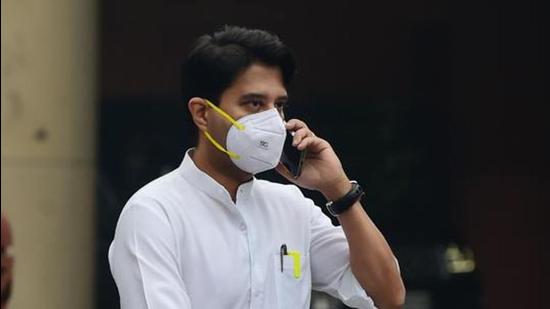
“A momentous day for India as we set out to expand helicopter operations with the following 9 key decisions,” Scindia stated during his speech at the third Helicopter Summit organised by industry body the Federation of Indian Chambers of Commerce & Industry (FICCI), in association with the Union civil aviation ministry and Pawan Hans Ltd.
As part of the new policy, he added, the central government is going to put together a dedicated helicopter-acceleration cell in the Civil Aviation Ministry that will look at the helicopter industry’s issues and help instil ease of doing business. “It is going to be a resource that you can use to facilitate your growth,” he said.
The new policy also exempts helicopter operators from landing charges or parking deposits.
Officers of the Airports Authority of India (AAI) and Air Traffic Control (ATC) will engage with the helicopter industry stakeholders so that adequate training is given to all individuals regarding helicopter issues, he added.
Under the new policy, an advisory group has been set up in the Civil Aviation Ministry to discuss any pain points of the industry. A booklet, titled Heli-Disha, was also inaugurated during the event to help district collectors understand all rules and regulations regarding helicopter operations. “This will ensure ease of operations at all levels”, he said.
A centralised Heli-Seva portal will be upgraded to a level so that all permissions for a helicopter flight could be granted online. The government has also decided to build Heli-hubs in Mumbai, Guwahati, Delhi and HAL airport in Bengaluru. “As a beginning, we are going to start with three dedicated corridors for helicopters -- Juhu-Pune-Juhu, Mahalakshmi race course-Pune-Mahalakshmi racecourse and Gandhinagar-Ahmedabad-Gandhinagar,” Scindia said.
He added that the ministry has identified 10 cities and 82 routes to develop helicopter corridors across the country, starting with six between Juhu and Pune; Malakshmi Race Course and Pune; Gandhinagar and Ahmedabad.
To further strengthen the helicopter emergency medical services in India, heliports will be developed alongside three expressways (Delhi-Bombay, Ambala-Kotpuli and Ambala-Bhatinda-Jamnagar) to ensure timely evacuation and medical treatment for accident victims, he said.
Scindia said Helicopter penetration is a priority in India and with this thought must come action. “This is epitomized by the Prime Minister’s actionable ideas, ways of thinking and working.”
“We are trying to make helicopters a vehicle of common people. We aim to provide the best service when it comes to helicopters,” he added.
Minister of State in the ministry of civil aviation and former chief of Army Staff Gen (Retd) VK Singh in his address said Helicopters are extremely effective in hilly areas with limited space. “We are trying to make it economically viable for the common people”, he said.