
 E-Paper



West Bengal government’s power to withhold CBI consent is not absolute: Centre to SC
The West Bengal government moved the SC in August, accusing the central agency of probing post-poll violence cases in the state without state nod

 Prefer HTon Google


The Centre on Friday told the Supreme Court that no relief can be granted against ongoing Central Bureau of Investigation (CBI) probe in cases falling within the state unless the state discloses the reasons including file noting that led to the 2018 decision of withdrawing general consent.
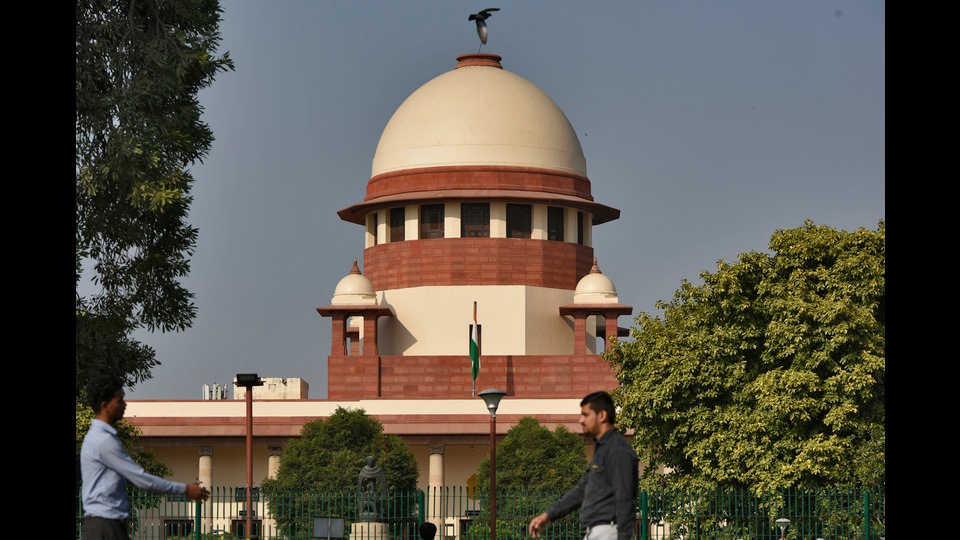
The Mamata Banerjee -led Trinamool Congress government in West Bengal moved the Supreme Court against the Union government in August where it alleged the central agency was probing post-poll violence cases in the state, even though the state government withdrew general consent to CBI on November 16, 2018 under Section 6 of the Delhi Special Police Establishment Act of 1946.
In an affidavit filed on Thursday, the Centre said, “The defendant (Union) calls upon the plaintiff (West Bengal government) to produce before this Court the procedure followed and the reasons, if any, recorded by the State Government while passing an order dated November 16, 2018 which appears to be an omnibus order de hors the effects of any particular case.”
The [state] order, the affidavit said, “reflects an omnibus exercise of power without application of mind and recording of reasons,” and hence, it added, “Unless the plaintiff places the file notings which culminated into the order (of November 2018) and satisfies this Court about its validity, the plaintiff is not entitled to pray for any relief.”
The Centre through Department of Personnel and Training submitted, “A statutory power conferred upon the State Government under Section 6 of DSPE Act is always coupled with a responsibility to exercise that power on a case-to-case basis with an inbuilt condition of exercising the same in larger public interest and not to shield any accused or purely on political considerations.”
Senior advocate Kapil Sibal appearing for the state cited urgency as the CBI was continuing with probe in cases in the absence of state’s consent. The state government cited in its suit over a dozen cases including alleged pilferage of coal in Eastern Coalfields Limited mines where Trinamool Congress MP and Mamata Banerjee’s nephew Abhishek Banerjee is being probed along with his wife for his alleged role in the coal mining scam
The affidavit stated that the Central Vigilance Commission can give directions to the CBI to discharge the responsibilities entrusted to it and the autonomy of the investigative agency is statutorily maintained and cannot be interfered with even by the Centre.
“In the event of offence being committed by a Central Government employee or an offence having multi-state or pan-India implication, an investigation made by the central agency would not harm or affect the federal structure or take away the right of the State Government to investigate offences within the State’s jurisdiction,” the Centre said, adding, “It is made abundantly clear that CBI do not require a prior consent from the State Government before engaging in an investigation concerning its own officials/employees, irrespective of whether or not the concerned employees are residing/ working within the territorial jurisdiction, as provided under the DSPE Act.”
The bench of Justices L Nageswara Rao and BR Gavai hearing the matter posted the matter for hearing on November 16.


