
 E-Paper



What is a ‘Blood Moon’, rare celestial event to be visible tonight?
The “Blood Moon” will be visible across India, Asia, parts of Africa, and Europe. However, people on both Americas will not be able to witness the event.

 Prefer HTon Google


Several regions of the world, including India, will witness a rare celestial event on Sunday: a total lunar eclipse, also known as a “Blood Moon.”
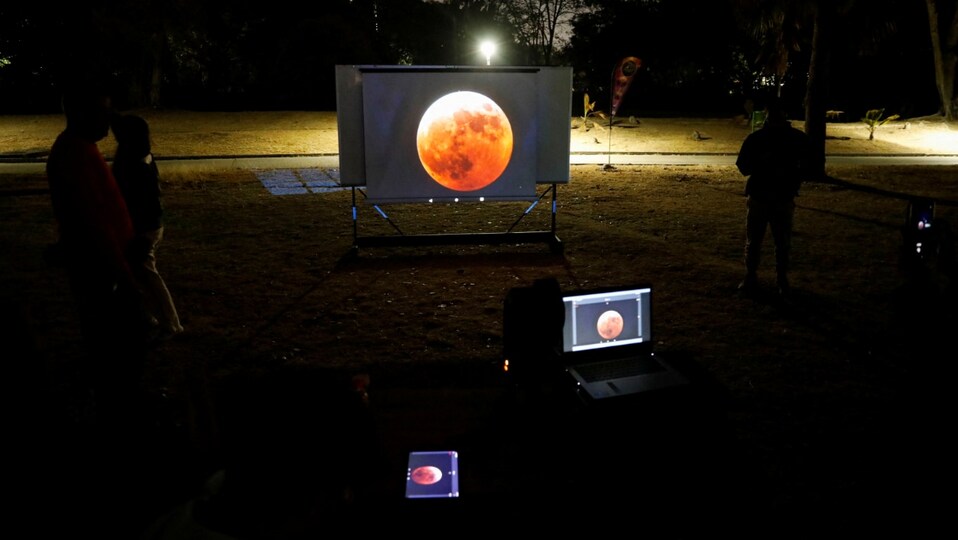
The “Blood Moon” will be visible across the country, Asia, parts of Africa, and Europe. However, people and enthusiasts on both American continents will not be able to witness the event.
On such an occasion, a question arises: What exactly is a “Blood Moon” or total lunar eclipse?
What is a ‘Blood Moon’?
A total lunar eclipse, popularly known as a “Blood Moon,” occurs when the Sun, Earth, and Moon align, causing Earth’s shadow to fall on the Moon and cast it in a deep red hue. The sight of the “Blood Moon” has both intrigued and terrified humankind for centuries.
According to Ryan Milligan, an astrophysicist at Queen’s University Belfast in Northern Ireland, the moon's redness during a lunar eclipse is due to the blue light being more easily scattered in the Earth’s atmosphere than the red light.
“The Moon appears red during lunar eclipses because the only sunlight reaching it is reflected and scattered through the Earth’s atmosphere. Blue light is scattered more easily than red, leaving the Moon with its iconic ‘bloody glow’,” AFP quoted Milligan as saying.
Sunday’s Blood Moon will be the second such event in 2025. The last time it happened was back in March.
Another cause of excitement for astronomy buffs is that this would be the longest total lunar eclipse since 2022.
The “Blood Moon” total lunar eclipse will begin at 11.00 PM IST on September 7 and end at 12.22 AM IST on September 8. The Moon will enter the penumbral phase slightly earlier, around 10:01 PM IST, as it starts moving into Earth’s outer shadow.
Unlike solar eclipses, which require special glasses or pinhole projectors, lunar eclipses are safe to watch with the naked eye, provided the sky is clear and the location is suitable.


