
 E-Paper



What is ‘Kallakkadal phenomenon’ that occurs near Kerala, Tamil Nadu coastlines?
Kallakkadal: INCOIS, the agency responsible for issuing weather warnings to fishermen nationwide, recommended safely anchoring fishing vessels in harbours.

 Prefer HTon Google


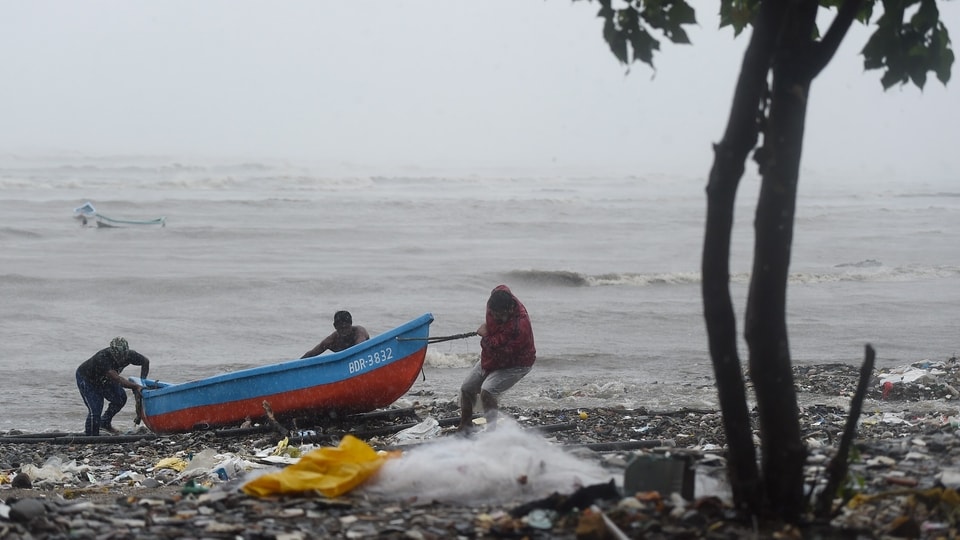
The coastal areas of Kerala and Tamil Nadu are likely to experience the “Kallakkadal phenomenon” until 11.30 pm on Monday, prompting authorities to issue alerts to coastal residents and fishermen in the region, news agency PTI reported, citing the Indian National Centre for Ocean Information Services (INCOIS). This phenomenon entails a “sudden swell of the seas, resulting in rough waves.”
Also Read | India among worst hit by extreme heat, floods, glacier disaster in 2023: WMO
“As the rough seas are likely to intensify, stay away from the danger zone areas as per the instructions of the authorities,” PTI quoted Indian National Centre for Ocean Information Services (INCOIS) as saying.
INCOIS, the agency responsible for issuing weather warnings to fishermen nationwide, recommended safely anchoring fishing vessels in harbours. “Keeping a safe distance between boats can avoid the risk of collision. The safety of fishing equipment should be ensured,” the central agency said.
Furthermore, INCOIS advised against visiting beaches and engaging in sea-related activities altogether.
Why the name ‘Kallakkadal’?
- “Kallakkadal” translates to “a sea that comes suddenly like a thief.” INCOIS explains that swell surges result from strong winds in the southern part of the Indian Ocean, occurring suddenly without any specific indications or warnings, hence the name.
- The term, commonly used by local fishermen, originates from a fusion of two Malayalam words: “Kallan” meaning thief, and “Kadal” meaning sea. When spoken, these words are combined and pronounced as "Kallakkadal," signifying an ocean that approaches swiftly and unexpectedly, like a thief.
- The Kerala State Disaster Management Authority (KSDMA) states that INCOIS attributes swell surging to sudden strong winds in the southern Indian Ocean, leading to the term “Kallakkadal”.
- In 2012, the term “Kallakkadal” received formal approval from the United Nations Educational, Scientific and Cultural Organization (UNESCO).
- During Kallakkadal events, the sea rushes onto land, inundating vast areas. These events gained attention, particularly after the 2004 Indian Ocean tsunami, as many mistake Kallakkadal for tsunamis.
- Tsunamis and Kallakkadal or swell surge are distinct types of waves with entirely different causes or mechanisms.
INCOIS's forecast system to predict ‘Kallakkadal’
- INCOIS, an autonomous institute under the Ministry of Earth Sciences, launched the “Swell Surge Forecast System” in 2020 to predict Kallakkadal or swell surge events along the Indian coast, especially the west coast.
- Kallakkadal events are flash-flood occurrences that occur suddenly without any noticeable change in local winds or coastal conditions, catching the local population off guard.
- According to a study by INCOIS scientists, these events are caused by specific meteorological conditions in the Southern Ocean south of 30°S.
- Long-period swells generated in the Southern Ocean travel northward and reach Indian coasts in 3-5 days, causing havoc in coastal areas. The newly launched system predicts Kallakkadal events and provides warnings to concerned authorities at least 2-3 days in advance.
- This advance warning helps local authorities to prepare contingency plans and minimise damage in affected coastal areas.
(With PTI, PIB inputs)


