
 E-Paper



Who is Justice Sanjiv Khanna, the new Chief Justice of India?
President Droupadi Murmu administered the oath to Justice Sanjiv Khanna at Rashtrapati Bhavan. He will serve a six-month term as the Chief Justice of India.

 Prefer HTon Google


Justice Sanjiv Khanna, senior judge of the Supreme Court, was sworn in as the 51st Chief Justice of India at Rashtrapati Bhavan on Monday, November 11.
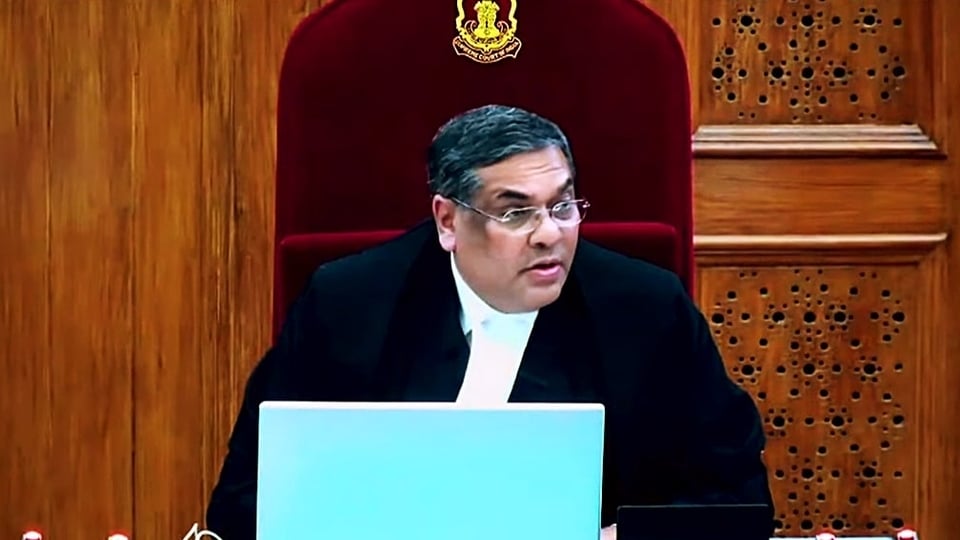
President Droupadi Murmu administered the oath of office to him at 10 am. He is set to serve a six-month term as Chief Justice of India.
Justice Sanjiv Khanna, the second-most senior judge of the Supreme Court, was proposed for the role of Chief Justice by the outgoing CJI DY Chandrachud, who retired on November 10, after serving since November 9, 2022.
Born on May 14, 1960, Sanjiv Khanna began his legal career in 1983 as an advocate with the Delhi Bar Council. He has extensive experience in constitutional law, taxation, arbitration, commercial law, and environmental law.
Read: Exclusive: DY Chandrachud on his plans after retiring as Chief Justice of India
Justice Khanna also served as the Senior Standing Counsel for the Income Tax Department. In 2004, he was appointed Standing Counsel (Civil) for the National Capital Territory of Delhi.
Justice Khanna was appointed an additional judge of the Delhi High Court in 2005 and became a permanent judge in 2006, marking the beginning of his significant judicial career.
During his tenure, Justice Khanna also made significant contributions to the Delhi Judicial Academy, Delhi International Arbitration Centre, and District Court Mediation Centres, playing a key role in shaping the judicial landscape.
On January 18, 2019, Justice Khanna was appointed as a Judge of the Supreme Court without having previously served as Chief Justice of a High Court.
Justice Khanna has made many landmark judgements including granting interim bail to former Delhi chief minister Arvind Kejriwal. This decision enabled Kejriwal to campaign during the Lok Sabha elections.
In another important ruling, Justice Khanna emphasised that delays in proceedings could serve as a valid ground for granting bail under the Prevention of Money Laundering Act (PMLA). This decision came in a case involving Delhi's former deputy chief minister Manish Sisodia.


