The Election Commission of India told the Supreme Court on Thursday that it is “caught between the struggle of political parties” during a hearing on the Special Intensive Revision (SIR) of the electoral rolls in Bihar.
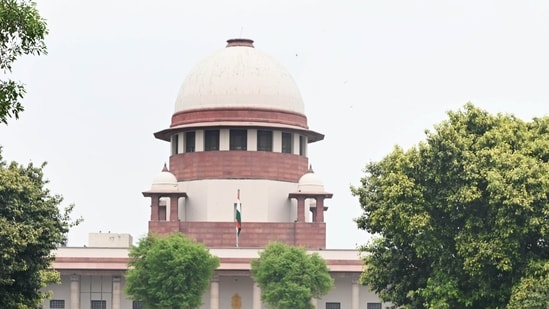
The Supreme Court asked EC to share names of the voters deleted from the state's electoral rolls, to which the apex poll body agreed after a grilling.
According to the EC, electronic voting machines (EVMs) are good if a political party wins, but if a party loses, they suddenly turn bad. The arguments were presented before a bench of Justices Surya Kant and Joymalya Bagchi, which resumed the hearing on a plea challenging the June 24 EC decision to conduct the SIR in Bihar.
“Caught between struggle of political parties, if they win EVM is good, if they lose EVM is bad," ECI said during the hearing.
The top court asked the EC, “Why can't you disclose the names of people who have died, migrated, or shifted to other constituencies?" According to EC, such names have already been given to the political parties in the state.
“Why can't you put these names on a display board or on a website? Those aggrieved can take remedial measures within 30 days,” the Supreme Court asked, adding that it doesn't want citizens to be dependent on political parties.
{{/usCountry}}“Why can't you put these names on a display board or on a website? Those aggrieved can take remedial measures within 30 days,” the Supreme Court asked, adding that it doesn't want citizens to be dependent on political parties.
{{/usCountry}}The EC agreed to share the names of voters deleted in Bihar SIR after the Supreme Court grilling.
Also read | Supreme Court allows claims against name deletion in Bihar SIR with Aadhaar Card
The top court asked the apex polling body to consider issuing a public notice for details of websites or a place, where info about people -- dead, migrated or shifted-- is shared.
Opposition to the Bihar SIR
Leaders of opposition parties, including the Rashtriya Janata Dal (RJD), the Congress, and the NGO Association for Democratic Reforms (ADR), have challenged the electoral roll revision drive in Bihar.
The Supreme Court on August 13 observed that electoral rolls cannot remain "static" and that there is bound to be a revision. The top court said the expanded list of acceptable documents of identity from seven to 11 for Bihar's Special Intensive Revision (SIR) of voters’ list was, in fact, "voter-friendly and not exclusionary."